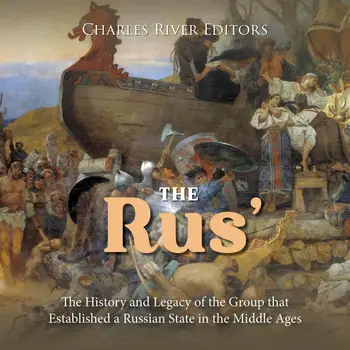
The Rus’: The History and Legacy of the Group that Established a Russian State in the Middle Ages

For many, the Rus might be synonyms for Russia or Russians, perhaps an early form of the civilization that later became Russia. This is partly true. Modern-day Russia lays claim as a successor to the Rus, particularly the Kievan Rus empire that dominated, with oscillating borders, the area around today’s Kiev and Ukraine between the 8th and 11th centuries. Crucially, the Rus had roots in the Nordic region. Initially, they would travel into modern-day Russia, Ukraine, and beyond to trade. Only later would they start to settle in the region and then become known as the Rus.

As with many other groups, the origins of the Rus are tied to the dominance of the Vikings over Western Europe in the early part of the Dark Ages or Medieval Era. Their Scandinavian brethren also traveled eastwards, behaving in similar ways but ultimately settling and assimilating in the region in an idiosyncratic manner. The Rus focused on several trade routes. The most important of these was the “eastern” route towards the Caspian Sea and stretching as far as Baghdad in the Middle East. This then gave way to the “western” route leading through Kiev to the Black Sea and Byzantine capital city Constantinople. The Rus also developed other trade routes, including to Western Europe.

Eventually, the Rus began to establish permanent settlements, firstly in Novgorod and then south to Kiev. This will be accompanied by the exploration of growing Rus dominance of this region, particularly through historical figures in the Rurikid dynasty such as Rurik, Oleg, Igor, Olga, Svyatoslav, Vladimir, and Yaroslav. During this time, the Kievan Rus empire was established and rose steadily to become a major regional power, even challenging the dominant Byzantines.
À propos de ce livre

For many, the Rus might be synonyms for Russia or Russians, perhaps an early form of the civilization that later became Russia. This is partly true. Modern-day Russia lays claim as a successor to the Rus, particularly the Kievan Rus empire that dominated, with oscillating borders, the area around today’s Kiev and Ukraine between the 8th and 11th centuries. Crucially, the Rus had roots in the Nordic region. Initially, they would travel into modern-day Russia, Ukraine, and beyond to trade. Only later would they start to settle in the region and then become known as the Rus.

As with many other groups, the origins of the Rus are tied to the dominance of the Vikings over Western Europe in the early part of the Dark Ages or Medieval Era. Their Scandinavian brethren also traveled eastwards, behaving in similar ways but ultimately settling and assimilating in the region in an idiosyncratic manner. The Rus focused on several trade routes. The most important of these was the “eastern” route towards the Caspian Sea and stretching as far as Baghdad in the Middle East. This then gave way to the “western” route leading through Kiev to the Black Sea and Byzantine capital city Constantinople. The Rus also developed other trade routes, including to Western Europe.

Eventually, the Rus began to establish permanent settlements, firstly in Novgorod and then south to Kiev. This will be accompanied by the exploration of growing Rus dominance of this region, particularly through historical figures in the Rurikid dynasty such as Rurik, Oleg, Igor, Olga, Svyatoslav, Vladimir, and Yaroslav. During this time, the Kievan Rus empire was established and rose steadily to become a major regional power, even challenging the dominant Byzantines.
Commencez ce livre dès aujourd'hui pour 0 €

  • Accédez à tous les livres de l'app pendant la période d'essai
  • Sans engagement, annulez à tout moment
Essayer gratuitement
Plus de 52 000 personnes ont noté Nextory 5 étoiles sur l'App Store et Google Play.

  1. The Counter-Reformation: The History of the Catholic Church’s Response to the Protestant Reformation

    Charles River Editors

  2. The Age of Sail’s Most Famous Battles: The History of the Naval Engagements that Shaped Europe in the Early Modern Period

    Charles River Editors

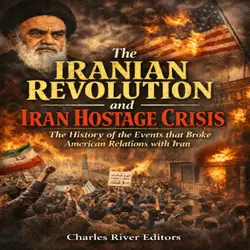
  3. The Iranian Revolution and Iran Hostage Crisis: The History of the Events that Broke American Relations with Iran

    Charles River Editors

  4. The Christianization of Rome: The History of the Roman Empire’s Religious Conversion

    Charles River Editors

  5. Indian Removal: The History of the Battles and Policies that Displaced Native Americans East of the Mississippi River

    Charles River Editors

  6. Persepolis and Susa: The History of the Achaemenid Persian Empire’s Capitals

    Charles River Editors

  7. The Height of the Cold War: The History of the Events that Brought the Soviet Union and United States to the Brink

    Charles River Editors

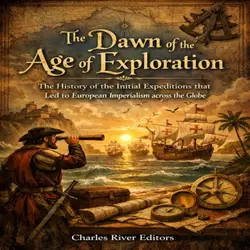
  8. The Dawn of the Age of Exploration: The History of the Initial Expeditions that Led to European Imperialism across the Globe

    Charles River Editors

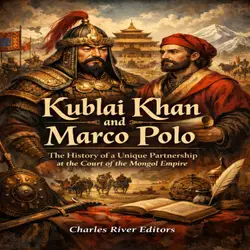
  9. Kublai Khan and Marco Polo: The History of a Unique Partnership at the Court of the Mongol Empire

    Charles River Editors

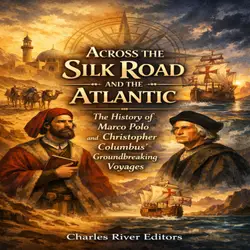
  10. Across the Silk Road and the Atlantic: The History of Marco Polo and Christopher Columbus’ Groundbreaking Voyages

    Charles River Editors

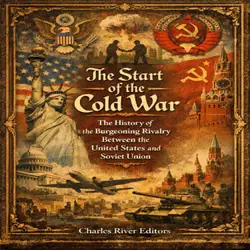
  11. The Start of the Cold War: The History of the Burgeoning Rivalry Between the United States and Soviet Union

    Charles River Editors

  12. Ancient Greek Astronomy and Astrology: The History of Celestial Observations in Greece

    Charles River Editors