Beyond Figures: Introduction to Financial Accounting : European Financial Accounting Manual

This manual is an introduction to financial accounting for first year students of the Bachelors of Administration and Economics degree program taught in English. It is prepared according to the active learning methodology by Finnish and Spanish teachers of financial accounting. Financial accounting is essential for business students in order to understand the language of enterprises to make decisions on behalf of all of their stakeholders. The manual begins with the concept of accounting and its theoretical framework in line with International Financial Reporting Standards. Following that, elements of annual reports are presented, and the book-keeping process and the accounting cycle are described. The manual continues with explanation of the accounting of the most common transactions in business and ends with an introduction to financial statement analysis. All chapters have the following common structure according to the active learning methodology: outline, learning objectives, motivation behind the chapter and discussion point, theoretical contents, self study questions (quizzes), exercises (C class exercises with a solution proposed and H home exercises to be solved), workshop (work in groups), summary and further readings. At the end of the end of the book there are four appendices: glossary of terms, glossary of translations for accounting terminology (English, Spanish, Finnish, French and Chinese to help ERASMUS students), chart of accounts, and Excel in Accounting. The content of the manual provides a comprehensive introduction to financial accounting and motivates students to learn by doing.

Tietoa kirjasta

This manual is an introduction to financial accounting for first year students of the Bachelors of Administration and Economics degree program taught in English. It is prepared according to the active learning methodology by Finnish and Spanish teachers of financial accounting. Financial accounting is essential for business students in order to understand the language of enterprises to make decisions on behalf of all of their stakeholders. The manual begins with the concept of accounting and its theoretical framework in line with International Financial Reporting Standards. Following that, elements of annual reports are presented, and the book-keeping process and the accounting cycle are described. The manual continues with explanation of the accounting of the most common transactions in business and ends with an introduction to financial statement analysis. All chapters have the following common structure according to the active learning methodology: outline, learning objectives, motivation behind the chapter and discussion point, theoretical contents, self study questions (quizzes), exercises (C class exercises with a solution proposed and H home exercises to be solved), workshop (work in groups), summary and further readings. At the end of the end of the book there are four appendices: glossary of terms, glossary of translations for accounting terminology (English, Spanish, Finnish, French and Chinese to help ERASMUS students), chart of accounts, and Excel in Accounting. The content of the manual provides a comprehensive introduction to financial accounting and motivates students to learn by doing.

Aloita kirja saman tien hintaan 0 €

  • Kokeilujakson aikana käytössäsi on kaikki sovelluksen kirjat
  • Ei sitoumusta, voit perua milloin vain
Kokeile nyt ilmaiseksi
Yli 52 000 ihmistä on antanut Nextorylle viisi tähteä App Storessa ja Google Playssä.

  1. 1. lokak.

    Ética digital

    Ramón Salvador Vallès, Piercarlo Maggiolini, Norberto Patrignani

  2. 3. syysk.

    Fundamentos de contabilidad de sociedades

    Beatriz Torvisco Manchón, Rosa Olías Heras

  3. 3. syysk.

    Introducción al marketing

    Manuel Alonso Santos

  4. 3. syysk.

    Administración de los recursos humanos en las empresas turísticas

    Inmaculada Martín Rojo, Ana Isabel González

  5. 3. syysk.

    Contabilidad financiera : El Plan General de Contabilidad

    David Pons Florit, Raquel Herranz Bascones, Patricia Horrach Roselló, Antonio Socías Salvá, Gabriel Jover Arbona, Antonio Llull Gilet

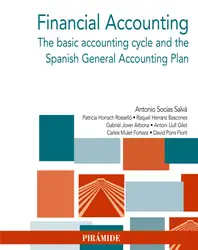
  6. Financial accounting : The basic accounting cycle and the Spanish General Accounting Plan

    Antonio Socías Salvá, Patricia Horrach Roselló, Raquel Herranz Bascones, Gabriel Jover Arbona, Antonio Llull Gilet, Carles Mulet Forteza, David Pons Florit

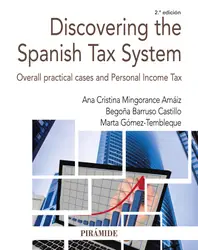
  7. Discovering the Spanish Tax System : Overall practical cases and Personal Income Tax

    Ana Cristina Mingorance Arnáiz, Begoña Barruso Castillo, Marta Gómez-Tembleque

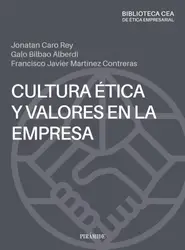
  8. Cultura y valores en la empresa. Una revisión desde la ética

    Jonatan Caro Rey, Francisco Javier Martínez Contreras, Galo Bilbao Alberdi

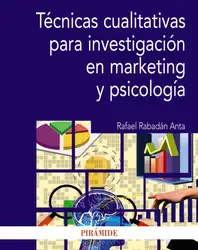
  9. Técnicas cualitativas para investigación en marketing y psicología

    Rafael Rabadán Anta

  10. Historia económica del turismo en España (1820-2020) : De los viajeros románticos al pasaporte COVID

    Carmelo Pellejero Martínez, José Joaquín García Gómez

  11. Métodos mixtos de investigación : Integrando métodos cuantitativos y cualitativos

    José Francisco Molina Azorín, Sergi Fàbregues Feijóo, Elsa Lucía Escalante Barrios

  12. Estrategia y control del mercado : Casos de historia empresarial

    María Vázquez-Fariñas