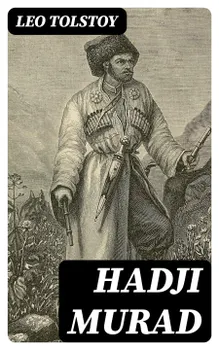
Hadji Murad : Enriched edition. A Chechen Warrior's Honor Amid Imperial War—Loyalty, Betrayal, and Moral Dilemmas in the 19th-Century Caucasus

Hadji Murad stands as a testament to Leo Tolstoy's masterful narrative style and philosophical depth, intertwining themes of loyalty, honor, and the complexities of conflict. Set against the tumultuous backdrop of the Chechen Wars in the 19th century, the novella offers a nuanced portrayal of its titular character, a Chechen warrior caught between his tribal loyalties and the imperial ambitions of Russia. Tolstoy employs a vivid, realistic prose style that captures the stark realities of war while exploring the profound moral dilemmas faced by individuals caught in larger sociopolitical currents, thus reflecting his lifelong engagement with questions of ethics and human existence. Leo Tolstoy, one of literature's most revered figures, imbued his works with a deep moral inquiry stemming from his own experiences in the military and in Russian society. The themes of Hadji Murad were partially inspired by Tolstoy's observations of the Caucasian conflict, where he grappled with the implications of imperialism and the nature of freedom. His own philosophical evolution, particularly his advocacy for non-violence and spiritual integrity, underlies the moral complexities presented in this novella. Hadji Murad is highly recommended for both scholars and casual readers interested in the intricacies of human behavior in the face of adversity. Tolstoy's narrative not only engages with historical realism but also invites profound reflection on the nature of power, identity, and morality—making it a highly relevant and compelling read for contemporary audiences.

In this enriched edition, we have carefully created added value for your reading experience:

- A succinct Introduction situates the work's timeless appeal and themes.

- The Synopsis outlines the central plot, highlighting key developments without spoiling critical twists.

- A detailed Historical Context immerses you in the era's events and influences that shaped the writing.

- An Author Biography reveals milestones in the author's life, illuminating the personal insights behind the text.

- A thorough Analysis dissects symbols, motifs, and character arcs to unearth underlying meanings.

- Reflection questions prompt you to engage personally with the work's messages, connecting them to modern life.

- Hand‐picked Memorable Quotes shine a spotlight on moments of literary brilliance.

- Interactive footnotes clarify unusual references, historical allusions, and archaic phrases for an effortless, more informed read.
Tietoa kirjasta

Hadji Murad stands as a testament to Leo Tolstoy's masterful narrative style and philosophical depth, intertwining themes of loyalty, honor, and the complexities of conflict. Set against the tumultuous backdrop of the Chechen Wars in the 19th century, the novella offers a nuanced portrayal of its titular character, a Chechen warrior caught between his tribal loyalties and the imperial ambitions of Russia. Tolstoy employs a vivid, realistic prose style that captures the stark realities of war while exploring the profound moral dilemmas faced by individuals caught in larger sociopolitical currents, thus reflecting his lifelong engagement with questions of ethics and human existence. Leo Tolstoy, one of literature's most revered figures, imbued his works with a deep moral inquiry stemming from his own experiences in the military and in Russian society. The themes of Hadji Murad were partially inspired by Tolstoy's observations of the Caucasian conflict, where he grappled with the implications of imperialism and the nature of freedom. His own philosophical evolution, particularly his advocacy for non-violence and spiritual integrity, underlies the moral complexities presented in this novella. Hadji Murad is highly recommended for both scholars and casual readers interested in the intricacies of human behavior in the face of adversity. Tolstoy's narrative not only engages with historical realism but also invites profound reflection on the nature of power, identity, and morality—making it a highly relevant and compelling read for contemporary audiences.

In this enriched edition, we have carefully created added value for your reading experience:

- A succinct Introduction situates the work's timeless appeal and themes.

- The Synopsis outlines the central plot, highlighting key developments without spoiling critical twists.

- A detailed Historical Context immerses you in the era's events and influences that shaped the writing.

- An Author Biography reveals milestones in the author's life, illuminating the personal insights behind the text.

- A thorough Analysis dissects symbols, motifs, and character arcs to unearth underlying meanings.

- Reflection questions prompt you to engage personally with the work's messages, connecting them to modern life.

- Hand‐picked Memorable Quotes shine a spotlight on moments of literary brilliance.

- Interactive footnotes clarify unusual references, historical allusions, and archaic phrases for an effortless, more informed read.
Aloita kirja saman tien hintaan 0 €

  • Kokeilujakson aikana käytössäsi on kaikki sovelluksen kirjat
  • Ei sitoumusta, voit perua milloin vain
Kokeile nyt ilmaiseksi
Yli 52 000 ihmistä on antanut Nextorylle viisi tähteä App Storessa ja Google Playssä.

  1. 4.0

    Anna Karenina

    Leo Tolstoy

  2. 3.0

    50 Masterpieces you have to read before you die vol: 1 (2020 Edition) : Included: Little Women, The Richest Man in Babylon Emma, The Call Of The Wild ....

    Louisa May Alcott, Dante Alighieri, Marcus Aurelius, Jane Austen, L. Frank Baum, Charlotte Brontë, Emily Brontë, Anne Brontë, Miguel de Cervantes, Agatha Christie, George S. Clason, Arthur Conan Doyle, Joseph Conrad, Charles Dickens, Fyodor Dostoyevsky, Alexandre Dumas, George Eliot, G.K. Chesterton, G.K. Chesterton, Zane Grey, Nathaniel Hawthorne, Napoleon Hill, Homer, Victor Hugo, Frances Hodgson Burnett, Washington Irving, Henry James, Franz Kafka, Rudyard Kipling, Jack London, Leo Tolstoy, H.P. Lovecraft, Lucy Maud Montgomery, Joseph Murphy, Robert Louis Stevenson, Edgar Allan Poe, Marcel Proust, Publius, Mary Shelley, Bram Stoker, Mark Twain, Sun Tzu, Lew Wallace, Wallace D. Wattles, H.G. Wells

  3. 5.0

    Anna Karenina - Audiobook

    Leo Tolstoy, Classic Audiobooks

  4. Sevastopol Tales

    Leo Tolstoy

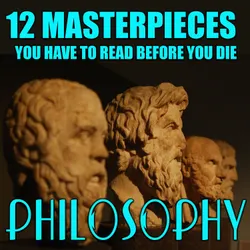
  5. 12 Masterpieces You Have to Read Before You Die. Philosophy

    Niccolo Machiavelli, Tommaso Campanella, Francis Bacon, Thomas More, John Stuart Mill, Immanuel Kant, Kahlil Gibran, Leo Tolstoy, G.K. Chesterton, Henry David Thoreau

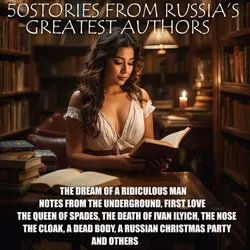
  6. 50 Stories from Russia's Greatest Authors

    Fyodor Dostoevsky, Ivan Turgenev, Aleksandr Kuprin, Alexander Pushkin, Leo Tolstoy, Anton Chekhov, Leonid Andreyev, Maxim Gorky, Mikhail Bulgakov, Nikolai Gogol

  7. World's Greatest Short Stories

    Daniel Defoe, Benjamin Franklin, Washington Irving, Mateo Falcone, Charlotte Bronte, Mary Shelley, Nathaniel Hawthorne, Nikolai Gogol, Edgar Allan Poe, Fyodor Dostoyevsky, Charles Dickens, Herman Melville, Mark Twain, Guy De Maupassant, Oscar Wilde, Leo Tolstoy, H.G. Wells, Ambrose Bierce, Stephen Crane, Kate Chopin, Jack London, E. M. Forster

  8. 50 Masterpieces you have to read before you die vol: 2

    Louisa, Jane Austen, Joseph Conrad, D. H. Lawrence, George Eliot, Leo Tolstoy, James Joyce, Charles Dickens, Bram Stoker, Oscar Wilde, Honoré de Balzac, Edgar Rice Burroughs, Anne Brontë, Charlotte Brontë, Emily Brontë, Lewis Carroll, Willa Cather, Miguel de Cervantes, E. E. Cummings, Fyodor Dostoyevsky, Daniel Defoe, Arthur Conan Doyle, Alexandre Dumas, Gustave Flaubert, Henry James, Victor Hugo, Bookish

  9. #1

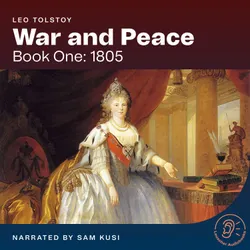
    War and Peace (Book One: 1805)

    Leo Tolstoy

  10. #1

    Anna Karenina (Part 1)

    Leo Tolstoy

  11. Jingle All The Way: 180+ Christmas Classics in One Volume (Illustrated Edition) : The Gift of the Magi, A Christmas Carol, The Heavenly Christmas Tree, Little Women…

    Selma Lagerlöf, Charles Dickens, Mark Twain, Harriet Beecher Stowe, Robert Louis Stevenson, Henry Wadsworth Longfellow, George MacDonald, William Wordsworth, Carolyn Wells, Sophie May, Louisa May Alcott, Walter Scott, Anthony Trollope, Rudyard Kipling, Beatrix Potter, Emily Dickinson, Lucas Malet, O.Henry, Alice Hale Burnett, Walter Crane, Amy Ella Blanchard, Amanda M. Douglas), Ernest Ingersoll, L. Frank Baum, J.M. Barrie, Eleanor H. Porter, Annie F. Johnston, Jacob A. Riis, E T A Hoffmann, Hans Christian Andersen, William Butler Yeats, Henry van Dyke, Lucy Maud Montgomery, Leo Tolstoy, Fyodor Dostoevsky, Alfred Lord Tennyson, Juliana Horatia Ewing, Brothers Grimm, Clement Moore, Susan Anne Livingston, Ridley Sedgwick

  12. 3.5

    War and Peace

    Leo Tolstoy