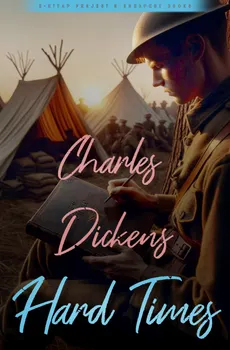
Hard Times

Hard Times – For These Times (commonly known as "Hard Times") is the tenth novel by Charles Dickens, first published in 1854. The book appraises English society and highlights the social and economic pressures of the times.

Hard Times is unusual in several respects. It is by far the shortest of Dickens' novels, barely a quarter of the length of those written immediately before and after it. Also, unlike all but one of his other novels, Hard Times has neither a preface nor illustrations. Moreover, it is his only novel not to have scenes set in London.

Instead the story is set in the fictitious Victorian industrial Coketown, a generic Northern English mill-town, in some ways similar to Manchester, though smaller. Coketown may be partially based on 19th-century Preston.

One of Dickens's reasons for writing Hard Times was that sales of his weekly periodical, Household Words, were low, and it was hoped the novel's publication in instalments would boost circulation – as indeed proved to be the case. Since publication it has received a mixed response from critics. Critics such as George Bernard Shaw and Thomas Macaulay have mainly focused on Dickens's treatment of trade unions and his post–Industrial Revolution pessimism regarding the divide between capitalist mill owners and undervalued workers during the Victorian era. F. R. Leavis, a great admirer of the book, included it—but not Dickens' work as a whole—as part of his Great Tradition of English novels.

***

‘Now, what I want is, Facts. Teach these boys and girls nothing but Facts. Facts alone are wanted in life. Plant nothing else, and root out everything else. You can only form the minds of reasoning animals upon Facts: nothing else will ever be of any service to them. This is the principle on which I bring up my own children, and this is the principle on which I bring up these children. Stick to Facts, sir!’

The scene was a plain, bare, monotonous vault of a school-room, and the speaker’s square forefinger emphasized his observations by underscoring every sentence with a line on the schoolmaster’s sleeve. The emphasis was helped by the speaker’s square wall of a forehead, which had his eyebrows for its base, while his eyes found commodious cellarage in two dark caves, overshadowed by the wall. The emphasis was helped by the speaker’s mouth, which was wide, thin, and hard set. The emphasis was helped by the speaker’s voice, which was inflexible, dry, and dictatorial.

The emphasis was helped by the speaker’s hair, which bristled on the skirts of his bald head, a plantation of firs to keep the wind from its shining surface, all covered with knobs, like the crust of a plum pie, as if the head had scarcely warehouse-room for the hard facts stored inside. The speaker’s obstinate carriage, square coat, square legs, square shoulders,—nay, his very neckcloth, trained to take him by the throat with an unaccommodating grasp, like a stubborn fact, as it was,—all helped the emphasis.

‘In this life, we want nothing but Facts, sir; nothing but Facts!’

The speaker, and the schoolmaster, and the third grown person present, all backed a little, and swept with their eyes the inclined plane of little vessels then and there arranged in order, ready to have imperial gallons of facts poured into them until they were full to the brim.
Tietoa kirjasta

Hard Times – For These Times (commonly known as "Hard Times") is the tenth novel by Charles Dickens, first published in 1854. The book appraises English society and highlights the social and economic pressures of the times.

Hard Times is unusual in several respects. It is by far the shortest of Dickens' novels, barely a quarter of the length of those written immediately before and after it. Also, unlike all but one of his other novels, Hard Times has neither a preface nor illustrations. Moreover, it is his only novel not to have scenes set in London.

Instead the story is set in the fictitious Victorian industrial Coketown, a generic Northern English mill-town, in some ways similar to Manchester, though smaller. Coketown may be partially based on 19th-century Preston.

One of Dickens's reasons for writing Hard Times was that sales of his weekly periodical, Household Words, were low, and it was hoped the novel's publication in instalments would boost circulation – as indeed proved to be the case. Since publication it has received a mixed response from critics. Critics such as George Bernard Shaw and Thomas Macaulay have mainly focused on Dickens's treatment of trade unions and his post–Industrial Revolution pessimism regarding the divide between capitalist mill owners and undervalued workers during the Victorian era. F. R. Leavis, a great admirer of the book, included it—but not Dickens' work as a whole—as part of his Great Tradition of English novels.

***

‘Now, what I want is, Facts. Teach these boys and girls nothing but Facts. Facts alone are wanted in life. Plant nothing else, and root out everything else. You can only form the minds of reasoning animals upon Facts: nothing else will ever be of any service to them. This is the principle on which I bring up my own children, and this is the principle on which I bring up these children. Stick to Facts, sir!’

The scene was a plain, bare, monotonous vault of a school-room, and the speaker’s square forefinger emphasized his observations by underscoring every sentence with a line on the schoolmaster’s sleeve. The emphasis was helped by the speaker’s square wall of a forehead, which had his eyebrows for its base, while his eyes found commodious cellarage in two dark caves, overshadowed by the wall. The emphasis was helped by the speaker’s mouth, which was wide, thin, and hard set. The emphasis was helped by the speaker’s voice, which was inflexible, dry, and dictatorial.

The emphasis was helped by the speaker’s hair, which bristled on the skirts of his bald head, a plantation of firs to keep the wind from its shining surface, all covered with knobs, like the crust of a plum pie, as if the head had scarcely warehouse-room for the hard facts stored inside. The speaker’s obstinate carriage, square coat, square legs, square shoulders,—nay, his very neckcloth, trained to take him by the throat with an unaccommodating grasp, like a stubborn fact, as it was,—all helped the emphasis.

‘In this life, we want nothing but Facts, sir; nothing but Facts!’

The speaker, and the schoolmaster, and the third grown person present, all backed a little, and swept with their eyes the inclined plane of little vessels then and there arranged in order, ready to have imperial gallons of facts poured into them until they were full to the brim.

Aloita kirja saman tien hintaan 0 €

  • Kokeilujakson aikana käytössäsi on kaikki sovelluksen kirjat
  • Ei sitoumusta, voit perua milloin vain
Kokeile nyt ilmaiseksi
Yli 52 000 ihmistä on antanut Nextorylle viisi tähteä App Storessa ja Google Playssä.

  1. 5.0

    The Power of Darkness : The Legend of Sleepy Hollow, Sweeney Todd, Frankenstein, Dracula, The Haunted House, Dead Souls…

    Wilhelm Hauff, Charles Dickens, Mark Twain, Harriet Beecher Stowe, Adelbert von Chamisso, Oscar Wilde, Robert Louis Stevenson, Edgar Allan Poe, William Hope Hodgson, Joseph Sheridan Fanu, John Buchan, Louis Tracy, Bram Stoker, Anatole France, Charlotte Brontë, Emily Brontë, Jack London, Henry James, Théophile Gautier, Arthur Conan Doyle, Richard Le Gallienne, Jane Austen, Ralph Adams Cram, Thomas De Quincey, John Meade Falkner, Guy De Maupassant, Thomas Hardy, William Archer, Daniel Defoe, John Kendrick Bangs, Cleveland Moffett, Brander Matthews, Marie Belloc Lowndes, Horace Walpole, Rudyard Kipling, Lafcadio Hearn, Hugh Walpole, Ambrose Bierce, Frederick Marryat, Ellis Parker Butler, Washington Irving, Leonid Andreyev, David Lindsay, Nathaniel Hawthorne, Grant Allen, Arthur Machen, Wilkie Collins, William Makepeace Thackeray, Thomas Peckett Prest, James Malcolm Rymer, Fergus Hume, Edward Bellamy, Walter Hubbell, Charlotte Perkins Gilman, Leopold Kompert, Richard Marsh, Florence Marryat, Catherine Crowe, John William Polidori, Vincent O'Sullivan, H.G. Wells, Robert W. Chambers, W. W. Jacobs, M.P. Shiel, E F Benson, Jerome K Jerome, M. R. James, E. T. Hoffmann, Stanley G. Weinbaum, George W. Reynolds, H.P. Lovecraft, Robert E. Howard, Edith Nesbit, Sabine Baring-Gould, William Thomas Beckford, Francis Marion Crawford, Lucy Maud Montgomery, Mary Elizabeth Braddon, Mary Louisa Molesworth, Mary E. Freeman, Nikolai Gogol, Mary Shelley, Elizabeth Gaskell, Edward Bulwer-Lytton, Frank R. Stockton, A. T. Quiller-Couch, Ann Radcliffe, Louisa M. Alcott, Amelia B. Edwards, Leonard Kip, Matthew Gregory Lewis, Fitz-James O’Brien, Katherine Rickford, Bithia Mary Croker, Catherine L. Pirkis, Émile Erckmann, Alexandre Chatrian, Pedro De Alarçon, H. H. (Saki), Pliny the Younger, Helena Blavatsky, Villiers de Adam, William F. Harvey, Fiona Macleod, William T. Stead, Gambier Bolton, Andrew Jackson Davis, Nizida, Walter F. Prince, Chester Bailey Fernando

  2. 5.0

    50 Masterpieces You Must Read Before You Die: Volume 2 : Unleash Your Inner Bookworm

    Louisa May Alcott, Jane Austen, Joseph Conrad, D. H. Lawrence, George Eliot, Leo Tolstoy, James Joyce, Charles Dickens, Bram Stoker, Oscar Wilde, Honoré de Balzac, Edgar Rice Burroughs, Anne Brontë, Charlotte Brontë, Emily Brontë, Lewis Carroll, Willa Cather, Miguel de Cervantes, E. E. Cummings, Fyodor Dostoyevsky, Daniel Defoe, Arthur Conan Doyle, Alexandre Dumas, Gustave Flaubert, Henry James, Victor Hugo, Pocket Classic

  3. 3.0

    50 Masterpieces you have to read before you die vol: 1 (2020 Edition) : Included: Little Women, The Richest Man in Babylon Emma, The Call Of The Wild ....

    Louisa May Alcott, Dante Alighieri, Marcus Aurelius, Jane Austen, L. Frank Baum, Charlotte Brontë, Emily Brontë, Anne Brontë, Miguel de Cervantes, Agatha Christie, George S. Clason, Arthur Conan Doyle, Joseph Conrad, Charles Dickens, Fyodor Dostoyevsky, Alexandre Dumas, George Eliot, G.K. Chesterton, G.K. Chesterton, Zane Grey, Nathaniel Hawthorne, Napoleon Hill, Homer, Victor Hugo, Frances Hodgson Burnett, Washington Irving, Henry James, Franz Kafka, Rudyard Kipling, Jack London, Leo Tolstoy, H.P. Lovecraft, Lucy Maud Montgomery, Joseph Murphy, Robert Louis Stevenson, Edgar Allan Poe, Marcel Proust, Publius, Mary Shelley, Bram Stoker, Mark Twain, Sun Tzu, Lew Wallace, Wallace D. Wattles, H.G. Wells

  4. 50 Masterpieces you have to read before you die vol: 2

    Louisa, Jane Austen, Joseph Conrad, D. H. Lawrence, George Eliot, Leo Tolstoy, James Joyce, Charles Dickens, Bram Stoker, Oscar Wilde, Honoré de Balzac, Edgar Rice Burroughs, Anne Brontë, Charlotte Brontë, Emily Brontë, Lewis Carroll, Willa Cather, Miguel de Cervantes, E. E. Cummings, Fyodor Dostoyevsky, Daniel Defoe, Arthur Conan Doyle, Alexandre Dumas, Gustave Flaubert, Henry James, Victor Hugo, Bookish

  5. 4.2

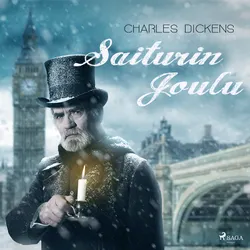
    Saiturin joulu

    Charles Dickens

  6. 4.2

    Saiturin Joulu

    Charles Dickens

  7. 3.0

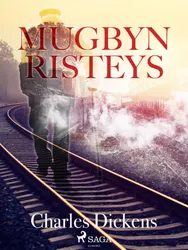
    Mugbyn risteys

    Charles Dickens

  8. SINISTER OMENS : Victorian Ghosts, Gothic Horrors & Classic Monster Tales

    H.P. Lovecraft, H.G. Wells, Edgar Allan Poe, Henry James, Hugh Walpole, M. R. James, Wilkie Collins, E F Benson, Nathaniel Hawthorne, Ambrose Bierce, Arthur Machen, William Hope Hodgson, Arthur Conan Doyle, Grant Allen, Mary Shelley, Bram Stoker, Théophile Gautier, Richard Marsh, Joseph Sheridan Fanu, Thomas Hardy, Charles Dickens, Rudyard Kipling, Guy De Maupassant, Elizabeth Gaskell, Mark Twain, Daniel Defoe, Jerome K Jerome, Fitz-James O’Brien, Catherine Crowe, Émile Erckmann, Alexandre Chatrian, Pedro De Alarçon, Amelia B. Edwards, Washington Irving, John Meade Falkner, Harriet Beecher Stowe, Mary E. Freeman, Louisa M. Alcott, Edith Nesbit, Mary Louisa Molesworth, Francis Marion Crawford, John Kendrick Bangs, John Buchan, Sabine Baring-Gould, Cleveland Moffett, Louis Tracy, Nikolai Gogol, James Malcolm Rymer, Thomas Peckett Prest, Frederick Marryat, Oscar Wilde, Robert Louis Stevenson, Charlotte Perkins Gilman, W. W. Jacobs, Saki, Wilhelm Hauff, Mary Elizabeth Braddon, Robert W. Chambers, Edward Bulwer-Lytton, Thomas De Quincey, William Makepeace Thackeray, E. T. Hoffmann, Robert E. Howard, David Lindsay, Marie Belloc Lowndes, Edward Bellamy, Jack London, Pliny the Younger, Helena Blavatsky, Fergus Hume, Florence Marryat, Villiers de Adam, William Archer, William F. Harvey, Katherine Rickford, Ralph Adams Cram, Leopold Kompert, Brander Matthews, Vincent O'Sullivan, Ellis Parker Butler, A. T. Quiller-Couch, Fiona Macleod, Lafcadio Hearn, William T. Stead, Gambier Bolton, Andrew Jackson Davis, Nizida, Walter F. Prince, Chester Bailey Fernando, Leonard Kip, Frank R. Stockton, Bithia Mary Croker, Catherine L. Pirkis, Leonid Andreyev, Anatole France, Richard Le Gallienne, Lucy Maud Montgomery, Stanley G. Weinbaum, Horace Walpole, William Thomas Beckford, Matthew Gregory Lewis, Ann Radcliffe, Jane Austen, William Polidori, Charlotte Brontë, Emily Brontë, Walter Hubbell, George W. Reynolds, M.P. Shiel, Adelbert von Chamisso

  9. 4.1

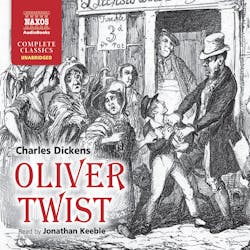
    Oliver Twist

    Charles Dickens

  10. 3.7

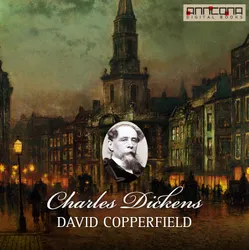
    David Copperfield

    Charles Dickens

  11. Uusi

    50 Masterpieces you have to read before you die vol 1

    Louisa May Alcott, Jane Austen, Joseph Conrad, Edwin Abbott Abbott, George Eliot, Leo Tolstoy, James Joyce, Charles Dickens, Bram Stoker, Oscar Wilde, Honoré de Balzac, Edgar Rice Burroughs, Anne Brontë, Charlotte Brontë, Emily Brontë, Lewis Carroll, Willa Cather, Miguel de Cervantes, E. E. Cummings, Fyodor Dostoyevsky, Daniel Defoe, Arthur Conan Doyle, Alexandre Dumas, Gustave Flaubert, Henry James, Victor Hugo

  12. Uusi

    50 Masterpieces You Must Read Before You Die : Timeless Classics That Will Enrich Your Mind and Soul

    Louisa May Alcott, Jane Austen, Joseph Conrad, D. H. Lawrence, George Eliot, Leo Tolstoy, James Joyce, Charles Dickens, Bram Stoker, Oscar Wilde, Honoré de Balzac, Edgar Rice Burroughs, Anne Brontë, Charlotte Brontë, Emily Brontë, Lewis Carroll, Willa Cather, Miguel de Cervantes, E. E. Cummings, Fyodor Dostoyevsky, Daniel Defoe, Arthur Conan Doyle, Alexandre Dumas, Gustave Flaubert, Henry James, Victor Hugo


Liittyvät kategoriat