Incidents on land and water

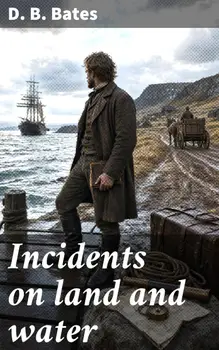
D. B. Bates's Incidents on Land and Water belongs to the nineteenth-century tradition of travel narrative and memoir, weaving together episodes of movement, observation, and personal experience across contrasting environments. The book appears to unite adventure, anecdote, and descriptive reporting, likely juxtaposing the unpredictability of maritime passage with the hazards and curiosities of inland life. Its style is characteristically direct and episodic, favoring vivid incident over sustained plot, and thus reflects a period when readers prized firsthand accounts for both instruction and entertainment. In literary context, it stands near the border of autobiography, voyage literature, and social record. Although D. B. Bates is not among the most canonized nineteenth-century authors, the very texture of such a work suggests a writer shaped by lived experience rather than purely literary ambition. Bates likely wrote from observation, preserving events that seemed exemplary of a changing world in which travel, commerce, and mobility exposed individuals to danger, novelty, and reflection. This lends the book a documentary value: it records not only incidents themselves, but also the sensibility of someone compelled to witness and recount them. This book is especially recommended to readers interested in historical travel writing, maritime culture, and lesser-known autobiographical narratives. It rewards those who value authentic experience, period detail, and the intimate record of a life tested by circumstance.
Tietoa kirjasta

D. B. Bates's Incidents on Land and Water belongs to the nineteenth-century tradition of travel narrative and memoir, weaving together episodes of movement, observation, and personal experience across contrasting environments. The book appears to unite adventure, anecdote, and descriptive reporting, likely juxtaposing the unpredictability of maritime passage with the hazards and curiosities of inland life. Its style is characteristically direct and episodic, favoring vivid incident over sustained plot, and thus reflects a period when readers prized firsthand accounts for both instruction and entertainment. In literary context, it stands near the border of autobiography, voyage literature, and social record. Although D. B. Bates is not among the most canonized nineteenth-century authors, the very texture of such a work suggests a writer shaped by lived experience rather than purely literary ambition. Bates likely wrote from observation, preserving events that seemed exemplary of a changing world in which travel, commerce, and mobility exposed individuals to danger, novelty, and reflection. This lends the book a documentary value: it records not only incidents themselves, but also the sensibility of someone compelled to witness and recount them. This book is especially recommended to readers interested in historical travel writing, maritime culture, and lesser-known autobiographical narratives. It rewards those who value authentic experience, period detail, and the intimate record of a life tested by circumstance.

Aloita kirja saman tien hintaan 0 €

  • Kokeilujakson aikana käytössäsi on kaikki sovelluksen kirjat
  • Ei sitoumusta, voit perua milloin vain
Kokeile nyt ilmaiseksi
Yli 52 000 ihmistä on antanut Nextorylle viisi tähteä App Storessa ja Google Playssä.