3.0(2)

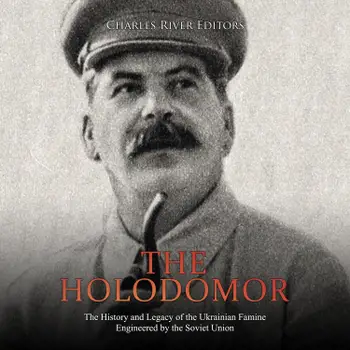
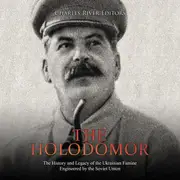
The Holodomor: The History and Legacy of the Ukrainian Famine Engineered by the Soviet Union

Famine – one of the four horsemen of the apocalypse in the Book of Revelation – continues to be one of the most crippling and destructive scourges of humanity. This inexorable affliction, traumatically fatal in the worst-case scenarios, has terrorized every single continent at some point throughout history, some more so than others. Perhaps the most famous was the notorious Irish Potato Famine of 1845, during which a noxious, fungus-like microorganism known as the “Phytophthora infestans” destroyed half of Ireland's potatoes and three-fourths of the crop in the following seven years, resulting in the deaths of 1.5 million and the forced migration of some two million citizens. The catastrophic Bengal Famine of 1943, which was precipitated by a dreadful cyclone and tidal waves the previous year, led to the deaths of an estimated seven million Bengalis.

Among some of history’s famines, the Holodomor’s death toll is considerably lower than others, such as the the Chalisa and South India Famines between 1782 to 1784, which killed roughly 11 million people altogether, or the Chinese Famine of 1907, which claimed up to 25 million lives in northern China. The Holodomor, however, which ravaged Ukraine between 1932 and 1933, was not a natural occurrence, but a ghastly man-made famine brought about by Stalinist policies. While Ukrainians marked this tragedy as the Holodomor (a composite of the Ukrainian words hunger (holod) and extermination (mor)), and the modern Ukrainian state recognized the period as a genocide in 2006, the Holomodor was deliberately swept under the rug for several decades. As a result, it remains widely unacknowledged to this day, and the nature of the famine – particularly whether it should be considered a genocide – is still debated by scholars.


Tietoa kirjasta

Famine – one of the four horsemen of the apocalypse in the Book of Revelation – continues to be one of the most crippling and destructive scourges of humanity. This inexorable affliction, traumatically fatal in the worst-case scenarios, has terrorized every single continent at some point throughout history, some more so than others. Perhaps the most famous was the notorious Irish Potato Famine of 1845, during which a noxious, fungus-like microorganism known as the “Phytophthora infestans” destroyed half of Ireland's potatoes and three-fourths of the crop in the following seven years, resulting in the deaths of 1.5 million and the forced migration of some two million citizens. The catastrophic Bengal Famine of 1943, which was precipitated by a dreadful cyclone and tidal waves the previous year, led to the deaths of an estimated seven million Bengalis.

Among some of history’s famines, the Holodomor’s death toll is considerably lower than others, such as the the Chalisa and South India Famines between 1782 to 1784, which killed roughly 11 million people altogether, or the Chinese Famine of 1907, which claimed up to 25 million lives in northern China. The Holodomor, however, which ravaged Ukraine between 1932 and 1933, was not a natural occurrence, but a ghastly man-made famine brought about by Stalinist policies. While Ukrainians marked this tragedy as the Holodomor (a composite of the Ukrainian words hunger (holod) and extermination (mor)), and the modern Ukrainian state recognized the period as a genocide in 2006, the Holomodor was deliberately swept under the rug for several decades. As a result, it remains widely unacknowledged to this day, and the nature of the famine – particularly whether it should be considered a genocide – is still debated by scholars.
Aloita kirja saman tien hintaan 0 €

  • Kokeilujakson aikana käytössäsi on kaikki sovelluksen kirjat
  • Ei sitoumusta, voit perua milloin vain
Kokeile nyt ilmaiseksi
Yli 52 000 ihmistä on antanut Nextorylle viisi tähteä App Storessa ja Google Playssä.

  1. 5.0

    The Evolution of Modern Mathematics: The Lives of Influential Mathematicians Who Helped Bring Math into the Computer Age Kindle

    Charles River Editors

  2. 5.0

    The Rise and Fall of the Third Reich: The History and Legacy of Nazi Germany under Adolf Hitler

    Charles River Editors

  3. Persepolis and Susa: The History of the Achaemenid Persian Empire’s Capitals

    Charles River Editors

  4. Indian Removal: The History of the Battles and Policies that Displaced Native Americans East of the Mississippi River

    Charles River Editors

  5. Kublai Khan and Marco Polo: The History of a Unique Partnership at the Court of the Mongol Empire

    Charles River Editors

  6. Zoroastrianism and Manichaeism: The History of Ancient Persia’s Influential Religions

    Charles River Editors

  7. The Byzantines and Ottomans: The History of the Medieval Middle East’s Most Influential Empires

    Charles River Editors

  8. 3.0

    Operation Speedy Express: The History and Legacy of One of the Vietnam War’s Most Controversial Campaigns

    Charles River Editors

  9. 4.0

    The Rise and Fall of the Banate of Bosnia: The History of Bosnia’s Struggle for Independence in the Middle Ages

    Charles River Editors

  10. The Armenian Empire: The History and Legacy of the Ancient Kingdom of Greater Armenia

    Charles River Editors

  11. Nostradamus and Baba Vanga: The Controversial Lives and Prophecies of the Modern Era’s Most Famous Seers

    Charles River Editors

  12. 4.0

    The Siege of Vienna (1529): The History and Legacy of the Decisive Battle that Prevented the Ottoman Empire’s Expansion into Western Europe

    Charles River Editors