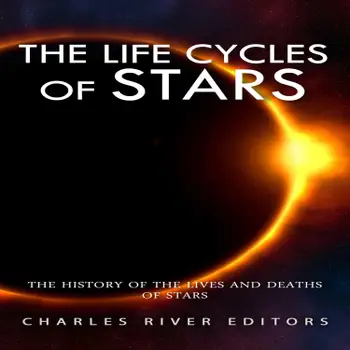
The Life Cycles of Stars: The History of the Lives and Deaths of Stars

When people look up into the night sky, the stars seem fixed and immutable, as unchanging as the darkness of space itself, but the truth is that stars are born, live and die in a never-ending cycle of creation and annihilation. These cycles stretch over such vast spans of time that, to short-lived humans, they seem to last forever.

No one knows just how many stars there are, but their number is almost beyond comprehension. When people look up into the night sky, they can see further than they might guess: up to 19 quadrillion miles, the distance to Deneb in Cygnus, a star that is visible from most inhabited parts of Earth. In total, around five thousand stars are visible to the naked eye, though only around two thousand are visible at any one time from a particular place on Earth. All the visible stars are bigger and brighter than the Sun.

Of course, there are many more known stars than those that can be seen with the naked eye. Astronomers estimate that in the Milky Way, there may be more than three hundred billion stars, and every other galaxy may have a similar number of stars. How many galaxies are there in the Universe? Again, no one is certain, but most astronomers agree that there must be many billions.

Stars begin as vast clouds of dust and gas within galaxies and are known as nebulae. Due to Newton’s Law of Global Attraction, the densest areas in these nebulae pull-in matter from the surrounding space. The more mass they gain, the more mass they attract. Over time, this accumulation can lead to the creation of a star. From that moment on, an eternal battle begins: gravity tends to contract the star while its growing inner pressure tends to expand it. Nebulae are stellar nurseries, the places where stars are created and an essential part of the life cycle of the Universe.
Tietoa kirjasta

When people look up into the night sky, the stars seem fixed and immutable, as unchanging as the darkness of space itself, but the truth is that stars are born, live and die in a never-ending cycle of creation and annihilation. These cycles stretch over such vast spans of time that, to short-lived humans, they seem to last forever.

No one knows just how many stars there are, but their number is almost beyond comprehension. When people look up into the night sky, they can see further than they might guess: up to 19 quadrillion miles, the distance to Deneb in Cygnus, a star that is visible from most inhabited parts of Earth. In total, around five thousand stars are visible to the naked eye, though only around two thousand are visible at any one time from a particular place on Earth. All the visible stars are bigger and brighter than the Sun.

Of course, there are many more known stars than those that can be seen with the naked eye. Astronomers estimate that in the Milky Way, there may be more than three hundred billion stars, and every other galaxy may have a similar number of stars. How many galaxies are there in the Universe? Again, no one is certain, but most astronomers agree that there must be many billions.

Stars begin as vast clouds of dust and gas within galaxies and are known as nebulae. Due to Newton’s Law of Global Attraction, the densest areas in these nebulae pull-in matter from the surrounding space. The more mass they gain, the more mass they attract. Over time, this accumulation can lead to the creation of a star. From that moment on, an eternal battle begins: gravity tends to contract the star while its growing inner pressure tends to expand it. Nebulae are stellar nurseries, the places where stars are created and an essential part of the life cycle of the Universe.

Aloita kirja saman tien hintaan 0 €

  • Kokeilujakson aikana käytössäsi on kaikki sovelluksen kirjat
  • Ei sitoumusta, voit perua milloin vain
Kokeile nyt ilmaiseksi
Yli 52 000 ihmistä on antanut Nextorylle viisi tähteä App Storessa ja Google Playssä.

  1. The Dutch Golden Age: The Rise of the Netherlands as a Global Power in the 17th Century

    Charles River Editors

  2. 3.4

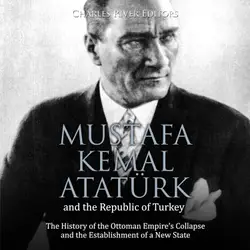
    Mustafa Kemal Atatürk and the Republic of Turkey: The History of the Ottoman Empire’s Collapse and the Establishment of a New State

    Charles River Editors

  3. The Ancient Kingdoms of Africa: The History and Legacy of the African Continent’s Most Prominent Kingdoms in Antiquity

    Charles River Editors

  4. 5.0

    The Rise and Fall of the Third Reich: The History and Legacy of Nazi Germany under Adolf Hitler

    Charles River Editors

  5. Uusi

    The Women of Athens and Sparta: The History of Women’s Lives and Social Roles in Ancient Greece’s Most Powerful City-States

    Charles River Editors

  6. The Counter-Reformation: The History of the Catholic Church’s Response to the Protestant Reformation

    Charles River Editors

  7. The Iranian Revolution and Iran Hostage Crisis: The History of the Events that Broke American Relations with Iran

    Charles River Editors

  8. Kublai Khan and Marco Polo: The History of a Unique Partnership at the Court of the Mongol Empire

    Charles River Editors

  9. 5.0

    The Evolution of Modern Mathematics: The Lives of Influential Mathematicians Who Helped Bring Math into the Computer Age Kindle

    Charles River Editors

  10. 3.0

    Flat Earth and Hollow Earth Theories: A History of Strange Tales and Bizarre Beliefs about the Planet

    Charles River Editors

  11. Persia and Islam: The History of the Islamic Empires that have Ruled Persia Since the Middle Ages

    Charles River Editors

  12. 3.4

    Albert Speer and Germania: The History of Nazi Germany’s Lead Architect and His Plans for a Future German Capital

    Charles River Editors