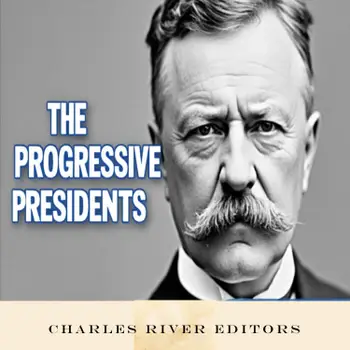
The Progressive Presidents

When William McKinley was assassinated in 1901, young Theodore Roosevelt was thrust into the presidency, one that would earn him a place on Mount Rushmore, Roosevelt’s “Square Deal” domestic policies favored average citizens while busting trusts and monopolies. Roosevelt also promoted conservation as an environmental stance, while his “speak softly and carry a big stick” foreign policy is still an oft used phrase today. Roosevelt even earned a Nobel Prize during his presidency.

As one of the most influential men of the 20th century, there is no shortage of adjectives to use when describing Woodrow Wilson’s two terms as president of the United States. Wilson was a pioneer of the Progressive movement both before and during his presidency, becoming a populist champion a generation before Franklin Roosevelt’s New Deal. He ran for reelection by touting his neutrality during World War I, only to lead his nation into the war and become the architect of a world body that would lead to greater inter-connection among nations. Today Wilson is best remembered for his Fourteen Points, one of the most forceful arguments for an idealistic foreign policy in American history.

Franklin Delano Roosevelt might be America’s greatest 20th century president, but there’s no question that he was the most unique. A well-connected relative of Theodore Roosevelt, FDR was groomed for greatness until he was struck down by what was widely believed to be polio at the time. Nevertheless, he persevered, rising through New York politics to reach the White House just as the country faced its greatest challenge since the Civil War. For over a decade, Roosevelt threw everything he had at the Great Depression, and then threw everything the country had at the Axis powers during World War II. Ultimately, he succumbed to illness in the middle of his fourth term, just before the Allies won the war.
Tietoa kirjasta

When William McKinley was assassinated in 1901, young Theodore Roosevelt was thrust into the presidency, one that would earn him a place on Mount Rushmore, Roosevelt’s “Square Deal” domestic policies favored average citizens while busting trusts and monopolies. Roosevelt also promoted conservation as an environmental stance, while his “speak softly and carry a big stick” foreign policy is still an oft used phrase today. Roosevelt even earned a Nobel Prize during his presidency.

As one of the most influential men of the 20th century, there is no shortage of adjectives to use when describing Woodrow Wilson’s two terms as president of the United States. Wilson was a pioneer of the Progressive movement both before and during his presidency, becoming a populist champion a generation before Franklin Roosevelt’s New Deal. He ran for reelection by touting his neutrality during World War I, only to lead his nation into the war and become the architect of a world body that would lead to greater inter-connection among nations. Today Wilson is best remembered for his Fourteen Points, one of the most forceful arguments for an idealistic foreign policy in American history.

Franklin Delano Roosevelt might be America’s greatest 20th century president, but there’s no question that he was the most unique. A well-connected relative of Theodore Roosevelt, FDR was groomed for greatness until he was struck down by what was widely believed to be polio at the time. Nevertheless, he persevered, rising through New York politics to reach the White House just as the country faced its greatest challenge since the Civil War. For over a decade, Roosevelt threw everything he had at the Great Depression, and then threw everything the country had at the Axis powers during World War II. Ultimately, he succumbed to illness in the middle of his fourth term, just before the Allies won the war.

Aloita kirja saman tien hintaan 0 €

  • Kokeilujakson aikana käytössäsi on kaikki sovelluksen kirjat
  • Ei sitoumusta, voit perua milloin vain
Kokeile nyt ilmaiseksi
Yli 52 000 ihmistä on antanut Nextorylle viisi tähteä App Storessa ja Google Playssä.

  1. The Dutch Golden Age: The Rise of the Netherlands as a Global Power in the 17th Century

    Charles River Editors

  2. 3.4

    Mustafa Kemal Atatürk and the Republic of Turkey: The History of the Ottoman Empire’s Collapse and the Establishment of a New State

    Charles River Editors

  3. The Ancient Kingdoms of Africa: The History and Legacy of the African Continent’s Most Prominent Kingdoms in Antiquity

    Charles River Editors

  4. 5.0

    The Rise and Fall of the Third Reich: The History and Legacy of Nazi Germany under Adolf Hitler

    Charles River Editors

  5. Uusi

    The Women of Athens and Sparta: The History of Women’s Lives and Social Roles in Ancient Greece’s Most Powerful City-States

    Charles River Editors

  6. The Counter-Reformation: The History of the Catholic Church’s Response to the Protestant Reformation

    Charles River Editors

  7. The Iranian Revolution and Iran Hostage Crisis: The History of the Events that Broke American Relations with Iran

    Charles River Editors

  8. Kublai Khan and Marco Polo: The History of a Unique Partnership at the Court of the Mongol Empire

    Charles River Editors

  9. 5.0

    The Evolution of Modern Mathematics: The Lives of Influential Mathematicians Who Helped Bring Math into the Computer Age Kindle

    Charles River Editors

  10. 3.0

    Flat Earth and Hollow Earth Theories: A History of Strange Tales and Bizarre Beliefs about the Planet

    Charles River Editors

  11. Persia and Islam: The History of the Islamic Empires that have Ruled Persia Since the Middle Ages

    Charles River Editors

  12. 3.4

    Albert Speer and Germania: The History of Nazi Germany’s Lead Architect and His Plans for a Future German Capital

    Charles River Editors