THE SLEEPER AWAKES & THE TIME MACHINE (Dystopian Classics)

In 'The Sleeper Awakes' and 'The Time Machine,' H. G. Wells masterfully intertwines the threads of science fiction and social commentary, crafting two seminal works that explore the implications of human progress and societal evolution. Both narratives employ a vivid literary style characterized by rich imagery and intricate plots that challenge the boundaries of time and existence. 'The Time Machine' introduces the concept of time travel as a mechanism to critique Victorian society, revealing a dystopian future where class disparities have starkly evolved. Meanwhile, 'The Sleeper Awakes' offers a chilling glimpse into a world transformed by technology, reflecting Wells' concerns about industrialization and its repercussions on humanity. H. G. Wells, often hailed as the father of science fiction, drew inspiration from the technological advancements and social upheavals of his time. Born in 1866, his upbringing amid the rapid changes of the Victorian era fueled his fascination with the future and the potential consequences of unchecked scientific progress. His keen intellect and progressive ideals influenced his writing, allowing him to pose profound questions about civilization's trajectory and human agency. These classics not only entertain but provoke thoughtful reflection on issues of power, identity, and the human condition. For readers eager to delve into the enigma of existence and the consequences of innovation, Wells' works are indispensable literary artifacts that resonate with contemporary anxieties about the future.

Tietoa kirjasta

In 'The Sleeper Awakes' and 'The Time Machine,' H. G. Wells masterfully intertwines the threads of science fiction and social commentary, crafting two seminal works that explore the implications of human progress and societal evolution. Both narratives employ a vivid literary style characterized by rich imagery and intricate plots that challenge the boundaries of time and existence. 'The Time Machine' introduces the concept of time travel as a mechanism to critique Victorian society, revealing a dystopian future where class disparities have starkly evolved. Meanwhile, 'The Sleeper Awakes' offers a chilling glimpse into a world transformed by technology, reflecting Wells' concerns about industrialization and its repercussions on humanity. H. G. Wells, often hailed as the father of science fiction, drew inspiration from the technological advancements and social upheavals of his time. Born in 1866, his upbringing amid the rapid changes of the Victorian era fueled his fascination with the future and the potential consequences of unchecked scientific progress. His keen intellect and progressive ideals influenced his writing, allowing him to pose profound questions about civilization's trajectory and human agency. These classics not only entertain but provoke thoughtful reflection on issues of power, identity, and the human condition. For readers eager to delve into the enigma of existence and the consequences of innovation, Wells' works are indispensable literary artifacts that resonate with contemporary anxieties about the future.

Aloita kirja saman tien hintaan 0 €

  • Kokeilujakson aikana käytössäsi on kaikki sovelluksen kirjat
  • Ei sitoumusta, voit perua milloin vain
Kokeile nyt ilmaiseksi
Yli 52 000 ihmistä on antanut Nextorylle viisi tähteä App Storessa ja Google Playssä.

  1. 4.0

    Maailmojen sota

    H.G. Wells

  2. Uni

    H.G. Wells

  3. 3.0

    50 Masterpieces you have to read before you die vol: 1 (2020 Edition) : Included: Little Women, The Richest Man in Babylon Emma, The Call Of The Wild ....

    Louisa May Alcott, Dante Alighieri, Marcus Aurelius, Jane Austen, L. Frank Baum, Charlotte Brontë, Emily Brontë, Anne Brontë, Miguel de Cervantes, Agatha Christie, George S. Clason, Arthur Conan Doyle, Joseph Conrad, Charles Dickens, Fyodor Dostoyevsky, Alexandre Dumas, George Eliot, G.K. Chesterton, G.K. Chesterton, Zane Grey, Nathaniel Hawthorne, Napoleon Hill, Homer, Victor Hugo, Frances Hodgson Burnett, Washington Irving, Henry James, Franz Kafka, Rudyard Kipling, Jack London, Leo Tolstoy, H.P. Lovecraft, Lucy Maud Montgomery, Joseph Murphy, Robert Louis Stevenson, Edgar Allan Poe, Marcel Proust, Publius, Mary Shelley, Bram Stoker, Mark Twain, Sun Tzu, Lew Wallace, Wallace D. Wattles, H.G. Wells

  4. 3.4

    Näkymätön mies

    H.G. Wells

  5. H. G. Wells Collection

    H.G. Wells

  6. 3.0

    Kauhun saari

    H.G. Wells

  7. Uusi
    4.1

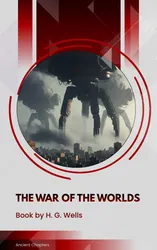
    The War of the Worlds

    H.G. Wells

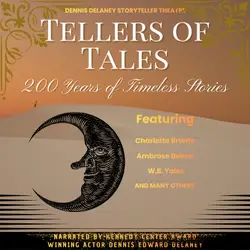
  8. Tellers of Tales 200 Years of Timeless Stories : Featuring Charlotte Bronte, Ambrose Bierce, W.B. Yates and Many Others. Narrated by Kennedy Center Award Winning Actor Dennis Edward Delaney.

    Charlotte Bronte, Ambrose Bierce, W.B. Yates, Saki, Evelyn Everett, Carl Stephensen, Mark Twain, Prosper Merimee, Anna Katherine Green, David Earl DeWitt, O.Henry, Agatha Christie, Harriet H. Jacobs, H.G. Wells, Arthur Conan Doyle, Richard Middleton, Hans Christian Anderson, Rudyard Kipling, Edgar Allan Poe, W. Jacobs, Mary Shelley, Bret Harte, G.K. Chesterton, George G. Toudouze, Dennis Edward Delaney

  9. 4.0

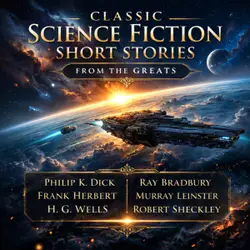
    Classic Science Fiction Short Stories from the Greats

    Philip K Dick, Frank Herbert, H.G. Wells, Ray Bradbury, Murray Leinster, Robert Sheckley

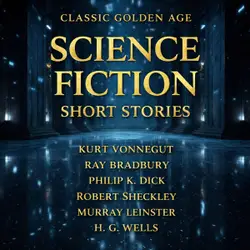
  10. Classic Golden Age Science Fiction Short Stories

    Kurt Vonnegut, Ray Bradbury, Philip K Dick, Robert Sheckley, Murray Leinster, H.G. Wells

  11. The Time Machine :

    H.G. Wells

  12. The Essential Classics Collection : 1984; Great Expectations; The Brothers Karamazov; Pride and Prejudice; & The War of the Worlds

    George Orwell, Fyodor Dostoyevsky, Charles Dickens, Jane Austen, H.G. Wells