3.0(2)

Utopia

'For if you suffer your people to be ill-educated and their manners to be corrupted from their infancy, and then punish them for those crimes to which their first education disposed them, what else is to be concluded from this, but that you first make thieves and then punish them.'

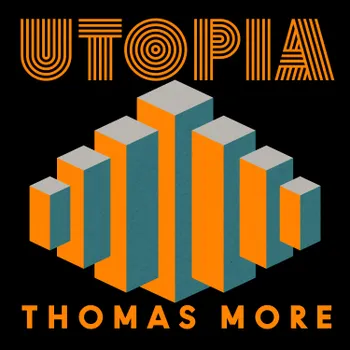
A classic work of socio-political satire and still widely read and studied to this day, Utopia sees a fictional traveller describe an ideal society; a vehicle for More to highlight the flaws of sixteenth-century Europe.

First published in 1516, Utopia is a political and philosophical satire presented as a dialogue between More and the traveller Raphael Hythlodaeus. Raphael recounts his time visiting the island of Utopia, where private property ceases to exist, all citizens work, and the laws promote equality, education and religious tolerance. Through this imagined society, More indirectly challenges the injustices of European politics, and cleverly reflects on the meaning of justice, governance and what it takes to create a 'perfect' society.

Thomas More (1478 – 1535) was an English philosopher, statesman, lawyer and author. Venerated in the Catholic Church, More served Henry VIII as Lord Chancellor from 1529 to 1532. Today, he is noted for being a Renaissance humanist, and is best known for his political work, Utopia.
Tietoa kirjasta

'For if you suffer your people to be ill-educated and their manners to be corrupted from their infancy, and then punish them for those crimes to which their first education disposed them, what else is to be concluded from this, but that you first make thieves and then punish them.'

A classic work of socio-political satire and still widely read and studied to this day, Utopia sees a fictional traveller describe an ideal society; a vehicle for More to highlight the flaws of sixteenth-century Europe.

First published in 1516, Utopia is a political and philosophical satire presented as a dialogue between More and the traveller Raphael Hythlodaeus. Raphael recounts his time visiting the island of Utopia, where private property ceases to exist, all citizens work, and the laws promote equality, education and religious tolerance. Through this imagined society, More indirectly challenges the injustices of European politics, and cleverly reflects on the meaning of justice, governance and what it takes to create a 'perfect' society.

Thomas More (1478 – 1535) was an English philosopher, statesman, lawyer and author. Venerated in the Catholic Church, More served Henry VIII as Lord Chancellor from 1529 to 1532. Today, he is noted for being a Renaissance humanist, and is best known for his political work, Utopia.
Aloita kirja saman tien hintaan 0 €

  • Kokeilujakson aikana käytössäsi on kaikki sovelluksen kirjat
  • Ei sitoumusta, voit perua milloin vain
Kokeile nyt ilmaiseksi
Yli 52 000 ihmistä on antanut Nextorylle viisi tähteä App Storessa ja Google Playssä.

  1. 12 Masterpieces You Have to Read Before You Die. Philosophy

    Niccolo Machiavelli, Tommaso Campanella, Francis Bacon, Thomas More, John Stuart Mill, Immanuel Kant, Kahlil Gibran, Leo Tolstoy, G.K. Chesterton, Henry David Thoreau

  2. 33 Human Science Masterpieces You Must Read Before You Die. Illustrated : The Art of Public Speaking, The Meditations, The Kama Sutra and other masterpieces

    Edwin A. Abbott, Aristotle, Dale Carnegie, Gilbert Chesterton, René Descartes, Epictetus, Marcus Aurelius Antoninus, Sigmund Freud, Hermann Hesse, David Hume, Lao Tzu, Confucius, Swami Abhedananda, Anonimous, David Herbert Lawrence, Niccolò Machiavelli, Benedictus de Spinoza, John Mill, Prentice Mulford, Thomas More, Friedrich Nietzsche, J. Allanson Picton, Plato, Sun Tzu, Vatsyayana, Voltaire, H.G. Wells, Frances Bacon

  3. #1

    Utopia : A socio-political satire by Thomas More (unabridged text)

    Thomas More

  4. 3.3

    Utopia

    Thomas More

  5. Utopia

    Thomas More

  6. Utopia : A Visionary Blueprint for Ideal Society

    Thomas More

  7. 50 citations de Thomas More

    Thomas More

  8. 1800 Citations de philosophes

    Aristote, Épicure, Platon, Thalès de Milet, – Socrate, Protagoras, Anaximandre, Épictète, Héraclite, Marc Aurèle, René Descartes, Michel de Montaigne, Alexis de Tocqueville, Voltaire, Charles De Montesquieu, Jean-Jacques Rousseau, Emmanuel Kant, Hannah Arendt, Gottfried Wilhelm Leibniz, Georg Wilhelm Friedrich Hegel, Friedrich Nietzsche, Arthur Schopenhauer, David Hume, John Locke, Francis Bacon, Thomas Hobbes, Thomas More, Confucius, Érasme, Lao Tseu, Baruch Spinoza, Søren Kierkegaard, Nicolas Machiavel, Thomas d'Aquin, Henry David Thoreau

  9. Comprendre Thomas More

    Thomas More

  10. 250 citations de philosophes anglais

    David Hume, John Locke, Francis Bacon, Thomas Hobbes, Thomas More

  11. Utopia : Thomas More's Visionary Blueprint for an Ideal Society

    Thomas More