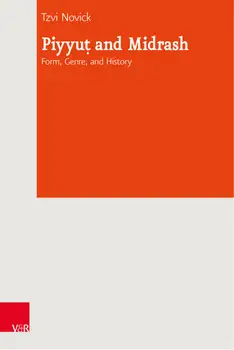
Piyyuṭ and Midrash : Form, Genre, and History

Novick studies the relationship between rabbinic midrash and classical (and to a lesser extent pre-classical) piyyut?. The first focuses on features of piyyut? that distinguish it, at least prima facie, from rabbinic midrash: its performative character, its formal constraints, and its character as prayer. The second part considers midrash and piyyut? together via an analysis of a narrative form that looms large in both corpora. The "serial narrative" is a narrative that binds biblical history together by stringing together instance of the "same" event across multiple time periods. Thereby, Novick surveys basic features of serial narratives in midrash and piyyut?. Subsequent chapters take up instance of specific serial narrative forms from Second Temple literature to piyyut: the kingdom series, the salvation history, and the serial confession. Together, the two parts yield a nuanced account of the continuities and discontinuities between the two great corpora produced by rabbinic and para-rabbinic circles in Roman Palestine.
À propos de ce livre

Novick studies the relationship between rabbinic midrash and classical (and to a lesser extent pre-classical) piyyut?. The first focuses on features of piyyut? that distinguish it, at least prima facie, from rabbinic midrash: its performative character, its formal constraints, and its character as prayer. The second part considers midrash and piyyut? together via an analysis of a narrative form that looms large in both corpora. The "serial narrative" is a narrative that binds biblical history together by stringing together instance of the "same" event across multiple time periods. Thereby, Novick surveys basic features of serial narratives in midrash and piyyut?. Subsequent chapters take up instance of specific serial narrative forms from Second Temple literature to piyyut: the kingdom series, the salvation history, and the serial confession. Together, the two parts yield a nuanced account of the continuities and discontinuities between the two great corpora produced by rabbinic and para-rabbinic circles in Roman Palestine.

Commencez ce livre dès aujourd'hui pour 0 €

  • Accédez à tous les livres de l'app pendant la période d'essai
  • Sans engagement, annulez à tout moment
Essayer gratuitement
Plus de 52 000 personnes ont noté Nextory 5 étoiles sur l'App Store et Google Play.