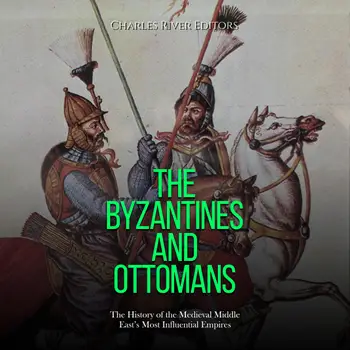
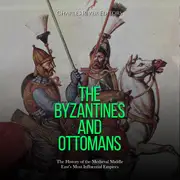
The Byzantines and Ottomans: The History of the Medieval Middle East’s Most Influential Empires

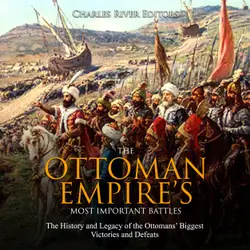
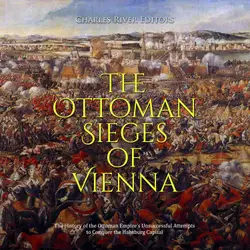
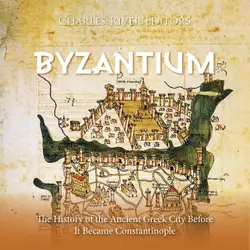
In terms of geopolitics, perhaps the most seminal event of the Middle Ages was the successful Ottoman siege of Constantinople in 1453. The city had been an imperial capital as far back as the 4th century, when Constantine the Great shifted the power center of the Roman Empire there, effectively establishing two almost equally powerful halves of antiquity’s greatest empire. Constantinople would continue to serve as the capital of the Byzantine Empire even after the Western half of the Roman Empire collapsed in the late 5th century. Naturally, the Ottoman Empire would also use Constantinople as the capital of its empire after their conquest effectively ended the Byzantine Empire, and thanks to its strategic location, it has been a trading center for years and remains one today under the Turkish name of Istanbul.

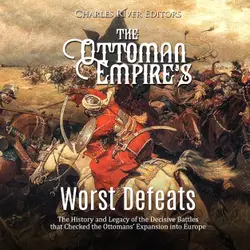
The end of the Byzantine Empire had a profound effect not only on the Middle East but Europe as well. Constantinople had played a crucial part in the Crusades, and the fall of the Byzantines meant that the Ottomans now shared a border with Europe. The Islamic empire was viewed as a threat by the predominantly Christian continent to their west, and it took little time for different European nations to start clashing with the powerful Turks. In fact, the Ottomans would clash with Russians, Austrians, Venetians, Polish, and more before collapsing as a result of World War I, when they were part of the Central Powers.

The Ottoman conquest of Constantinople also played a decisive role in fostering the Renaissance in Western Europe. The Byzantine Empire’s influence had helped ensure that it was the custodian of various ancient texts, most notably from the ancient Greeks, and when Constantinople fell, Byzantine refugees flocked west to seek refuge in Europe. Those refugees brought books that helped spark an interest in antiquity that fueled the Italian Renaissance and essentially put an end to the Middle Ages altogether.
Commencez ce livre dès aujourd’hui pour 0 €

  • Accédez à tous les livres de l'app pendant la période d'essai
  • Sans engagement, annulez à tout moment
Essayer gratuitement
Plus de 52 000 personnes ont noté Nextory 5 étoiles sur l'App Store et Google Play.

  1. Nouveau

    The Mosque-Cathedral of Córdoba and Mosque of Cristo de la Luz: The History the Moors’ Most Famous Mosques in Spain

    Charles River Editors

  2. Nouveau

    The Most Famous Leaders of Native American Resistance: The History of the Indigenous Chiefs Who Fought the Expansion of White Settlers

    Charles River Editors

  3. Nouveau
    3.6

    The Battle of Kosovo: The History and Legacy of the Battle Between the Serbs and Ottomans that Forged Serbia's National Identity

    Charles River Editors

  4. Nouveau

    Famous Dirigibles: The History and Legacy of Lighter than Air Vehicles from the Renaissance to Today

    Charles River Editors

  5. Nouveau

    Franz Kafka: The Life and Legacy of One of the 20th Century’s Most Influential Writers

    Charles River Editors

  6. Nouveau
    3.0

    Mansa Musa and and Timbuktu: The History of the West African Emperor and Medieval Africa’s Most Fabled City

    Charles River Editors

  7. Nouveau
    3.0

    SETI: The History and Legacy of the Search for Extraterrestrial Life

    Charles River Editors

  8. Nouveau
    4.0

    Russian Cyber Warfare: The History of Russia’s State-Sponsored Attacks across the World

    Charles River Editors

  9. Nouveau
    4.0

    19th Century America’s Forgotten Wars: The History and Legacy of the Overseas Conflicts that Influenced American Imperialism

    Charles River Editors

  10. Nouveau

    The Creoles: The History and Legacy of Some of the Americas’ Most Unique Ethnic Groups

    Charles River Editors

  11. Nouveau

    History for Kids: The Life of Walt Whitman

    Charles River Editors

  12. Nouveau

    The Legendary Mongol Khans: The Lives and Legacies of Genghis Khan, Kublai Khan, and Tamerlane

    Charles River Editors