3.0(1)

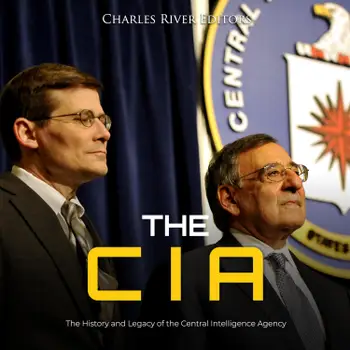
The CIA: The History and Legacy of the Central Intelligence Agency

In time, all the hard work led to the growth of the OSS into an organization with over 13,000 staff and 40 offices scattered across the world. Its purposes were initially similar to that of Britain’s Special Operations Executive, including espionage, sabotage, and intelligence assessments, but with time and experience, it expanded to include economic, psychological, and guerrilla warfare, as well as counter-intelligence work. And of course, it would all chart a path for the early days of America’s most famous intelligence agency, the CIA.

The 28-year period from 1933-1961, bracketed on one end by Hitler’s rise to power in Germany and on the other by the very height of the Cold War, was marked by a remarkably stable succession of American presidents. In fact, only three men held office in this period, and that predictability led to a general stability among government agencies. The CIA had five different directors in its first 15 years, from 1946-1961, but nine different directors in the next 20, with four of those directors serving less than a year. Although plagued by its own share of problems in its early existence during World War II and the early Cold War years, the agency’s early problems, smoothed over by a string of tenured presidents, paled in comparison to those it would face in the coming decades.

Through the 1980s and 1990s, presidential terms regained a measure of predictability, but the agency continued to struggle through the traps it had set for itself in the prior decades while trying to find its place in the new world of computers, 24 hour news coverage, and the sheer avalanche of information that came with technological advancements. When the Soviet Union collapsed in 1991, it appeared the CIA might no longer have an adversary formidable enough to keep the agency funded and staffed, but 9/11 ended that fairy tale and brought the CIA’s next era into sharp focus.
Commencez ce livre dès aujourd’hui pour 0 €

  • Accédez à tous les livres de l'app pendant la période d'essai
  • Sans engagement, annulez à tout moment
Essayer gratuitement
Plus de 52 000 personnes ont noté Nextory 5 étoiles sur l'App Store et Google Play.

  1. Nouveau

    The Mosque-Cathedral of Córdoba and Mosque of Cristo de la Luz: The History the Moors’ Most Famous Mosques in Spain

    Charles River Editors

  2. Nouveau

    The Most Famous Leaders of Native American Resistance: The History of the Indigenous Chiefs Who Fought the Expansion of White Settlers

    Charles River Editors

  3. Nouveau
    3.6

    The Battle of Kosovo: The History and Legacy of the Battle Between the Serbs and Ottomans that Forged Serbia's National Identity

    Charles River Editors

  4. Nouveau

    Famous Dirigibles: The History and Legacy of Lighter than Air Vehicles from the Renaissance to Today

    Charles River Editors

  5. Nouveau

    Franz Kafka: The Life and Legacy of One of the 20th Century’s Most Influential Writers

    Charles River Editors

  6. Nouveau
    3.0

    Mansa Musa and and Timbuktu: The History of the West African Emperor and Medieval Africa’s Most Fabled City

    Charles River Editors

  7. Nouveau
    3.0

    SETI: The History and Legacy of the Search for Extraterrestrial Life

    Charles River Editors

  8. Nouveau
    4.0

    Russian Cyber Warfare: The History of Russia’s State-Sponsored Attacks across the World

    Charles River Editors

  9. Nouveau
    4.0

    19th Century America’s Forgotten Wars: The History and Legacy of the Overseas Conflicts that Influenced American Imperialism

    Charles River Editors

  10. Nouveau

    The Creoles: The History and Legacy of Some of the Americas’ Most Unique Ethnic Groups

    Charles River Editors

  11. Nouveau

    History for Kids: The Life of Walt Whitman

    Charles River Editors

  12. Nouveau

    The Legendary Mongol Khans: The Lives and Legacies of Genghis Khan, Kublai Khan, and Tamerlane

    Charles River Editors