4.0(2)

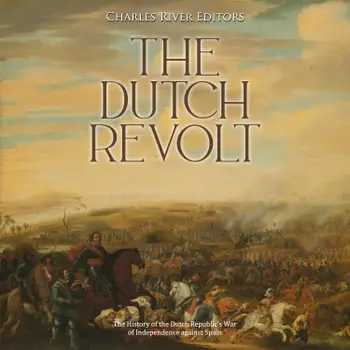
The Dutch Revolt: The History of the Dutch Republic’s War of Independence against Spain

The Netherlands has had a complex and turbulent history involving the interplay of multiple political entities, ethnicities, and languages. The term "Netherlands" (Nederland in Dutch, Pay-Bas in French) refers to the low-lying topography of the region and today is used specifically to describe the country bordering Germany and Belgium, but historically it referred to the entire region occupied by Netherlands, Belgium, and Luxembourg. In English, the term "Low Countries" is still used in this sense.

What made the Netherlands’ global influence in the 17th century all the more remarkable is that the Dutch had only recently achieved political independence through the process of fighting a long and brutal war of resistance against rule by the Spanish Hapsburgs, starting in 1568. In 1581, the seven northern provinces – Holland, Zeeland, Utrecht, Gelderland, Overijssel, Friesland, and Groningen – declared their independence, and fighting took place back and forth on land and sea for decades, with the Dutch receiving some much-needed assistance from England’s Queen Elizabeth I. Thousands of civilians were massacred by the rampaging Spanish armies, and on the water, Dutch “sea beggars” attacked and harassed the Spanish fleet. Pro-Spanish privateers operating out of Dunkirk did the same against Dutch shipping.

Although there were several issues behind the revolt, like heavy taxation, the war was also in large part a religious revolt. The Dutch in the northern and western provinces had mostly become Protestants, followers primarily of the French theologian John Calvin, and there were some Lutherans and Anabaptists present as well). Calvinism as institutionalized in the Dutch Reformed Church would become the officially recognized faith of independent Netherlands, but Philip II, the Catholic monarch of Spain, was determined to restore Catholicism through the strict use of the Inquisition against “heretics."
Commencez ce livre dès aujourd’hui pour 0 €

  • Accédez à tous les livres de l'app pendant la période d'essai
  • Sans engagement, annulez à tout moment
Essayer gratuitement
Plus de 52 000 personnes ont noté Nextory 5 étoiles sur l'App Store et Google Play.

  1. Nouveau

    The Mosque-Cathedral of Córdoba and Mosque of Cristo de la Luz: The History the Moors’ Most Famous Mosques in Spain

    Charles River Editors

  2. Nouveau

    The Most Famous Leaders of Native American Resistance: The History of the Indigenous Chiefs Who Fought the Expansion of White Settlers

    Charles River Editors

  3. Nouveau
    3.6

    The Battle of Kosovo: The History and Legacy of the Battle Between the Serbs and Ottomans that Forged Serbia's National Identity

    Charles River Editors

  4. Nouveau

    Famous Dirigibles: The History and Legacy of Lighter than Air Vehicles from the Renaissance to Today

    Charles River Editors

  5. Nouveau

    Franz Kafka: The Life and Legacy of One of the 20th Century’s Most Influential Writers

    Charles River Editors

  6. Nouveau
    3.0

    Mansa Musa and and Timbuktu: The History of the West African Emperor and Medieval Africa’s Most Fabled City

    Charles River Editors

  7. Nouveau
    3.0

    SETI: The History and Legacy of the Search for Extraterrestrial Life

    Charles River Editors

  8. Nouveau
    4.0

    Russian Cyber Warfare: The History of Russia’s State-Sponsored Attacks across the World

    Charles River Editors

  9. Nouveau
    4.0

    19th Century America’s Forgotten Wars: The History and Legacy of the Overseas Conflicts that Influenced American Imperialism

    Charles River Editors

  10. Nouveau

    The Creoles: The History and Legacy of Some of the Americas’ Most Unique Ethnic Groups

    Charles River Editors

  11. Nouveau

    History for Kids: The Life of Walt Whitman

    Charles River Editors

  12. Nouveau

    The Legendary Mongol Khans: The Lives and Legacies of Genghis Khan, Kublai Khan, and Tamerlane

    Charles River Editors