
In "The Essays of Arthur Schopenhauer: The Art of Controversy," Schopenhauer meticulously examines the nature of debate, rhetoric, and intellectual discourse, employing his characteristic wit and incisive prose. The work is a blend of philosophical inquiry and practical advice, exploring how arguments are constructed and deconstructed. Schopenhauer's literary style is marked by his penetrating insights and an often sardonic tone, reflecting the influence of German Romanticism and his profound skepticism. His exploration extends beyond mere logical argumentation, probing into the psychological aspects of human interaction and conflict, offering timeless strategies for persuasion that remain relevant across centuries. Arthur Schopenhauer, a pivotal figure in 19th-century philosophy, is often hailed as a precursor to existentialism and psychoanalysis. His life experiences—marked by tumultuous relationships and a penchant for solitude—shaped his philosophical outlook, emphasizing the often irrational nature of human desires and conflicts. Schopenhauer's background in metaphysics and aesthetics enriches his essays, providing a unique perspective on the art of contention, further enhancing the reader's understanding of his work. This compelling collection is an essential read for anyone interested in the dynamics of human interaction and the philosophical underpinnings of argumentation. Schopenhauer's insights are not only intellectually stimulating but also practically applicable, making it a valuable resource for scholars, students, and anyone seeking to navigate the complexities of discourse with greater acumen.
The Essays of Arthur Schopenhauer; the Art of Controversy
Commencez ce livre dès aujourd’hui pour 0 €
- Accédez à tous les livres de l'app pendant la période d'essai
- Sans engagement, annulez à tout moment
Auteur(e) :
Langue :
anglais
Format :

De la brieveté de la vie, suivi de De la tranquillité de l'âme : deux dialogues fondateurs de la pensée de Sénèque
Sénèque .
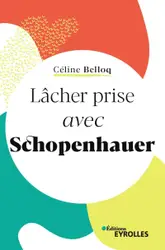
Lâcher prise avec Schopenhauer
Céline Belloq
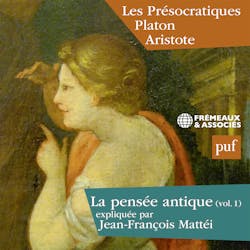
La pensée antique (Volume 1) - Les Présocratiques Platon et Aristote
Jean-François Mattéi
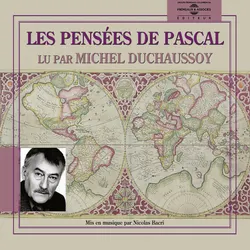
Les Pensées
Blaise Pascal
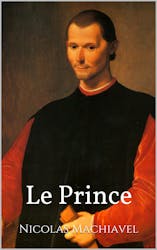
Le Prince
Nicolas Machiavel, Niccolò Machiavelli
Être heureux avec Spinoza
Balthasar Thomass
Le Prince
Nicolas Machiavel

L'homme révolté
Albert Camus

Vivre ! dans un monde imprévisible : Manuel de résilience pour surmonter les crises
Frédéric Lenoir
Ne croyez pas tout ce que vous pensez : Pourquoi la pensée est la cause et la solution de votre souffrance
Joseph Nguyen

En emigrants dagbok
Wera von Essen

Schopenhauer : A Very Short Introduction
Christopher Janaway
1800 Citations de philosophes
Aristote, Épicure, Platon, Thalès de Milet, – Socrate, Protagoras, Anaximandre, Épictète, Héraclite, Marc Aurèle, René Descartes, Michel de Montaigne, Alexis de Tocqueville, Voltaire, Charles De Montesquieu, Jean-Jacques Rousseau, Emmanuel Kant, Hannah Arendt, Gottfried Wilhelm Leibniz, Georg Wilhelm Friedrich Hegel, Friedrich Nietzsche, Arthur Schopenhauer, David Hume, John Locke, Francis Bacon, Thomas Hobbes, Thomas More, Confucius, Érasme, Lao Tseu, Baruch Spinoza, Søren Kierkegaard, Nicolas Machiavel, Thomas d'Aquin, Henry David Thoreau
L'Art d'avoir toujours raison
Arthur Schopenhauer

3500 citations ultimes
Marc Aurèle, Jane Austen, Beaumarchais, Napoléon Bonaparte, Bouddha, Winston Churchill, Cicéron, Confucius, Nicolas de Chamfort, Charles de Gaulle, Antoine de Saint-Exupéry, Léonard de Vinci, Denis Diderot, Fiodor Dostoïevski, Albert Einstein, Ralph Waldo Emerson, Anne Frank, Mahatma Gandhi, Emmanuel Kant, Søren Kierkegaard, Martin Luther King, Georg Christoph Lichtenberg, Abraham Lincoln, Montesquieu, Friedrich Nietzsche, Platon, Marcel Proust, Arthur Schopenhauer, William Shakespeare, – Socrate, Baruch Spinoza, Henry David Thoreau, Lao Tseu, Voltaire, Oscar Wilde
L'art d'avoir toujours raison
Arthur Schopenhauer
Arthur Schopenhauer: L'Art d'avoir toujours raison : La dialectique éristique
Arthur Schopenhauer

L'Art d'avoir toujours raison (L'édition intégrale) : Édition enrichie. Les stratégies de persuasion et de débat selon Schopenhauer
Arthur Schopenhauer
50 citations de Schopenhauer
Arthur Schopenhauer

Le Désenchantement des philosophes : Époque contemporaine
Brigitte Boudon, Arthur Schopenhauer, Friedrich Nietzche

Métaphysique de l'amour (L'édition intégrale) : Psychologie des désirs
Arthur Schopenhauer
2000 Final Quotations
Marcus Aurelius, Jane Austen, Buddha, Anton Chekhov, Cicero, Emil Cioran, Confucius, Albert Einstein, Anne Frank, Mahatma Gandhi, Johann Wolfgang Goethe, Carl Jung, Immanuel Kant, Friedrich Nietzsche, Marcel Proust, Arthur Schopenhauer, William Shakespeare, Baruch Spinoza, Leonardo da Vinci, Laozi

L'Art d'avoir toujours raison : une oeuvre du philosophe allemand Arthur Schopenhauer qui traite de l'art de la controverse
Arthur Schopenhauer

2000 citations ultimes
Marc Aurèle, Jane Austen, Bouddha, Cicéron, Emil Cioran, Confucius, Léonard de Vinci, Albert Einstein, Anne Frank, Mahatma Gandhi, Johann Wolfgang Goethe, Carl Jung, Emmanuel Kant, Friedrich Nietzsche, Marcel Proust, Arthur Schopenhauer, William Shakespeare, Baruch Spinoza, Anton Tchekhov, Lao Tseu