Treatises on Friendship and Old Age : Enriched edition.

In his illuminating work, *Treatises on Friendship and Old Age*, Marcus Tullius Cicero masterfully navigates the philosophical underpinnings of interpersonal relationships and the inevitable passage of time. Written in a dialogical style, reflective of the Socratic tradition, Cicero employs a conversational approach to explore the nature of friendship—its virtues, its challenges, and its significance in the human experience. In tandem, the treatise on old age presents an introspective examination of aging, reframing it not as a decline, but as an opportunity for wisdom and reflection. These works are situated within the broader context of Hellenistic philosophy, particularly reflecting the Stoic ideals that influenced Roman thought during Cicero's lifetime. Cicero, a revered statesman, lawyer, and orator of the late Roman Republic, frequently drew upon his own experiences of friendship and public service in articulating his philosophies. His life was marked by political upheaval and personal loss, which deeply informed his reflections on the significance of enduring relationships. Cicero's engagement with prominent philosophical schools might have inspired his exploration of these themes, demonstrating how they resonate with the human condition and societal dynamics. This compelling dual examination is a profound invitation for readers to embrace the complexities of friendship while reconciling with the realities of aging. Cicero's insights remain timeless, encouraging contemporary audiences to cultivate meaningful relationships and appreciate the wisdom that comes with experience. This work is essential for anyone seeking to understand the philosophical dimensions of life's most significant bonds.

In this enriched edition, we have carefully created added value for your reading experience:

- A comprehensive Introduction outlines these selected works' unifying features, themes, or stylistic evolutions.

- The Author Biography highlights personal milestones and literary influences that shape the entire body of writing.

- A Historical Context section situates the works in their broader era—social currents, cultural trends, and key events that underpin their creation.

- A concise Synopsis (Selection) offers an accessible overview of the included texts, helping readers navigate plotlines and main ideas without revealing critical twists.

- A unified Analysis examines recurring motifs and stylistic hallmarks across the collection, tying the stories together while spotlighting the different work's strengths.

- Reflection questions inspire deeper contemplation of the author's overarching message, inviting readers to draw connections among different texts and relate them to modern contexts.

- Lastly, our hand‐picked Memorable Quotes distill pivotal lines and turning points, serving as touchstones for the collection's central themes.
Commencez ce livre dès aujourd’hui pour 0 €

  • Accédez à tous les livres de l'app pendant la période d'essai
  • Sans engagement, annulez à tout moment
Essayer gratuitement
Plus de 52 000 personnes ont noté Nextory 5 étoiles sur l'App Store et Google Play.

  1. Dialogues sur l'éloquence: De oratore, Brutus, Orator : l'art de la rhétorique et du parler en public dans l'Antiquité

    Cicéron, Marcus Tullius Cicero

  2. Philosophie der Gelassenheit: Die großen Stoiker der Antike : Handbuch der Moral, Von den Pflichten, Vom Redner, Vom glückseligen Leben, Selbstbetrachtungen

    Seneca, Marcus Tullius Cicero, Epiktet, Mark Aurel

  3. Nouveau
    5.0

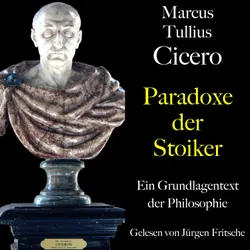
    Marcus Tullius Cicero: Paradoxe der Stoiker : Ein Grundlagentext der Philosophie

    Marcus Tullius Cicero

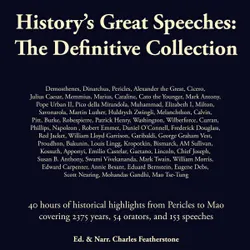
  4. History's Great Speeches: The Definitive Collection : 40 hours of historical highlights from Pericles to Mao covering 54 orators, and 153 speeches

    Julius Caesar, Marcus Tullius Cicero, Demosthenes, Pericles, William Pitt, William Lloyd Garrison, William Morris, Abraham Lincoln, Albert Apponyi, Alexander the Great, A.M. Sullivan, Annie Besant, Caius Marius, Caius Memmius, Catiline, Cato The Younger, Charles Phillips, Joseph, Daniel O'Connell, Dinarchus, EDMUND BURKE, Eduard Bernstein, Edward Carpenter, Elizabeth I, Emilio Castelar, Eugene Debs, Frederick Douglass, Mohandas Gandhi, George Graham Vest, Girolamo Savonarola, Giuseppe Garibaldi, Huldrych Zwingli, John Calvin, Gaetano, Louis Kossuth, Louis Lingg, Mao Tsetung, Mark Anthony, Mark Twain, Martin Luther, Maximillian Robespierre, Mikhail Bakunin, Muhammad, Napoleon Bonaparte, Otto von Bismarck, Peter Kropotkin, Phillip Melanchthon, Pico della Mirandola, Pierre Joseph Proudhon, Pope Urban, Red Jacket, Robert Emmet, Susan B. Anthony, Swami Vivekananda

  5. Die Kunst der Staatsführung: Regieren mit Weisheit : Die Meisterwerke philosophischer Strategie und Staatskunst: Der Staat, Selbstbetrachtungen, Der Fürst, Die Generalprinzipien des Krieges

    Niccolò Machiavelli, Platon, Marcus Aurelius, Marcus Tullius Cicero, Carl von Clausewitz, Friedrich der Große, Benjamin Franklin, Otto von Bismarck, Friedrich Christoph Dahlmann, Karel Čapek, Hans Delbrück

  6. Leitfaden für weise Herrscher: Die Philosophie des Regierens : Vom Kriege, Selbstbetrachtungen, Der Fürst, Die Generalprinzipien des Krieges, Geschichte der Kriegskunst

    Carl von Clausewitz, Friedrich der Große, Benjamin Franklin, Otto von Bismarck, Niccolò Machiavelli, Platon, Marcus Aurelius, Marcus Tullius Cicero, Friedrich Christoph Dahlmann, Karel Čapek, Hans Delbrück

  7. 50 Meisterwerke der Philosophie : Metaphysik, Das Gastmahl, Bhagavadgita, Tractatus logico-philosophicus, Kritik der reinen Vernunft, Also sprach Zarathustra, Selbstbetrachtungen von Marcus Aurelius

    Ludwig Wittgenstein, Edmund Husserl, Karl Marx, Søren Kierkegaard, Friedrich Nietzsche, Ralph Waldo Emerson, John Stuart Mill, Georg Wilhelm Friedrich Hegel, Friedrich Schelling, Johann Gottlieb Fichte, Immanuel Kant, John Locke, Montesquieu, Jean-Jacques Rousseau, David Hume, Gottfried Wilhelm Leibniz, Baruch Spinoza, - Konfuzius, Lao Tse, Platon, Xenophon, - Aristoteles, Marcus Tullius Cicero, Seneca, Epiktet, Marc Aurel, Plotin, Thomas von Aquin, Nicolaus von Cues, - Erasmus von Rotterdam, Niccolò Machiavelli, Tommaso Campanella, Martin Luther, Giordano Bruno, Samuel von Pufendorf, Abbé Castel de Saint-Pierre, Michel de Montaigne, René Descartes, Francis Bacon, Blaise Pascal

  8. Grundwerke der politischen Philosophie : Der Staat, Der Gesellschaftsvertrag, Der Fürst, Utopia, Manifest der Kommunistischen Partei, Geschichte der Socialdemokratie, Parlamentarischer Kretenismus

    Platon, - Aristoteles, Marcus Tullius Cicero, Niccolò Machiavelli, Tommaso Campanella, Thomas Morus, Samuel von Pufendorf, Abbé Castel de Saint-Pierre, Jean-Jacques Rousseau, Montesquieu, Immanuel Kant, Friedrich der Große, Johann Gottlieb Fichte, Karl Marx, Friedrich Engels, Wilhelm von Humboldt, Friedrich Christoph Dahlmann, Franz Mehring, Johann Most, John Henry Mackay, Rosa Luxemburg, Erich Mühsam

  9. Essenzielle Klassiker der politischen Philosophie : Der Staat, Der Gesellschaftsvertrag, Der Fürst, Utopia, Manifest der Kommunistischen Partei, Geschichte der Socialdemokratie

    Niccolò Machiavelli, Montesquieu, Friedrich der Große, Platon, - Aristoteles, Marcus Tullius Cicero, Tommaso Campanella, Thomas Morus, Samuel von Pufendorf, Abbé Castel de Saint-Pierre, Jean-Jacques Rousseau, Immanuel Kant, Johann Gottlieb Fichte, Karl Marx, Friedrich Engels, Wilhelm von Humboldt, Friedrich Christoph Dahlmann, Franz Mehring, Johann Most, John Henry Mackay, Rosa Luxemburg, Erich Mühsam

  10. Die Geschichte des Römischen Reiches: Wesentliche Werke und Handbücher : Römische Geschichte von Theodor Mommsen; Kaiserbiographien; Klassiker der römischen Literatur

    Theodor Mommsen, Mark Aurel, Longos von Lesbos, Apuleius, Petronius, Lukian, Vergil, Marcus Tullius Cicero, Ovid, Titus Livius, Sueton, Tacitus, Epiktet, Seneca, Ludwig Preller

  11. Handbücher der Geschichte: Römisches Reich : Vom Redner, Ab urbe condita libri, Der goldene Esel, Kaiserbiographien, Metamorphosen, Die Germania, Aeneis

    Marcus Tullius Cicero, Mark Aurel, Longos von Lesbos, Apuleius, Petronius, Lukian, Vergil, Ovid, Titus Livius, Sueton, Tacitus, Theodor Mommsen, Seneca, Epiktet, Ludwig Preller

  12. Die Ethik: Gesammelte Schriften (Vom höchsten Gut und vom größten Übel + Von den Pflichten + Cato oder Von dem Greisenalter + Lälius oder von der Freundschaft) : Bereicherte Ausgabe.

    Marcus Tullius Cicero


Catégories associées