Om denne boken

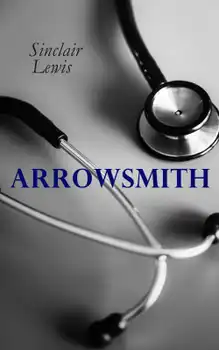
Sinclair Lewis's Arrowsmith is a searching novel of scientific vocation, following Martin Arrowsmith from medical school through private practice, public health work, and bacteriological research. Written in Lewis's lucid realist style, sharpened by satire and documentary detail, it examines the conflict between pure inquiry and institutional ambition. In the context of early twentieth-century American realism and Progressivist faith in science, the novel is both a Bildungsroman and a critique of professional culture, exposing medicine's entanglement with commerce, prestige, and bureaucracy. Lewis, already known for Main Street and Babbitt, brought to Arrowsmith his characteristic suspicion of American conformity and boosterism. His Midwestern upbringing and keen observation of professional classes helped shape his portrait of doctors, administrators, and reformers. Crucially, he drew on the expertise of microbiologist Paul de Kruif, whose knowledge gave the laboratory scenes unusual authority and helped Lewis dramatize the ethical solitude of scientific work. Arrowsmith is recommended to readers interested in medicine, science, and the moral costs of ambition. It remains compelling not merely as a period novel, but as a rigorous study of integrity under pressure.

This enriched edition has been carefully crafted to add value to your reading experience.

- A succinct Introduction situates the work's timeless appeal and themes.

- The Synopsis outlines the central plot, highlighting key developments without spoiling critical twists.

- A detailed Historical Context immerses you in the era's events and influences that shaped the writing.

- An Author Biography reveals milestones in the author's life, illuminating the personal insights behind the text.

- A thorough Analysis dissects symbols, motifs, and character arcs to unearth underlying meanings.

- Reflection questions prompt you to engage personally with the work's messages, connecting them to modern life.

- Hand‐picked Memorable Quotes shine a spotlight on moments of literary brilliance.

- Interactive footnotes clarify unusual references, historical allusions, and archaic phrases for an effortless, more informed read.
Kom i gang med denne boken i dag for 0 kr

  • Få full tilgang til alle bøkene i appen i prøveperioden
  • Ingen forpliktelser, si opp når du vil
Prøv gratis nå
Mer enn 52 000 personer har gitt Nextory 5 stjerner på App Store og Google Play.

  1. 24. okt.

    Det kan aldri hende her

    Sinclair Lewis

  2. Nobelprisen
    2.5

    It Can't Happen Here

    Sinclair Lewis

  3. Nobelprisen

    Elmer Gantry

    Sinclair Lewis

  4. Ann Vickers: Roman

    Sinclair Lewis

  5. Das kann hier nicht geschehen: Dystopischer Roman

    Sinclair Lewis

  6. 2.0

    Babbitt

    Sinclair Lewis

  7. 100 Amerikanische Klassiker - Meisterwerke, die man kennen muss : Literarische Stimmen zwischen Transzendentalismus, Gesellschaftskritik und Moderne

    Mark Twain, Louisa May Alcott, Jack London, Stephen Crane, L. Frank Baum, Walt Whitman, Herman Melville, Henry David Thoreau, Elbert Hubbard, Ralph Waldo Emerson, Ambrose Bierce, Frances Hodgson Burnett, Lew Wallace, Nathaniel Hawthorne, James Norman Hall, Edgar Allan Poe, O.Henry, H.P. Lovecraft, James Fenimore Cooper, Edward Bellamy, Bret Harte, Max Brand, Zane Grey, Willa Cather, F. Scott Fitzgerald, Kate Chopin, Charlotte Perkins Gilman, Edith Wharton, Margaret Mitchell, Henry James, Theodor Dreiser, Gertrude Stein, Sinclair Lewis, Warwick Deeping, Thomas Wolfe, Harriet Beecher Stowe

  8. Nobelprisen

    Babbitt

    Sinclair Lewis

  9. 100 Meisterwerke der englischen Literatur - Klassiker, die man kennen muss (Kommentiert) : Erweiterte Ausgabe. Hamlet, 1984, Ulysses...

    George Orwell, Charles Dickens, Jane Austen, Katherine Mansfield, H.P. Lovecraft, William Wordsworth, John Keats, Percy Bysshe Shelley, Robert Burns, John Milton, William Shakespeare, Christopher Marlowe, Geoffrey Chaucer, Laurence Sterne, Henry Fielding, Mary Shelley, Emily Brontë, Charlotte Brontë, Anne Brontë, William Makepeace Thackeray, George Eliot, D. H. Lawrence, Herman Melville, Thomas Wolfe, Virginia Woolf, Joseph Conrad, Sinclair Lewis, Walt Whitman, Edgar Allan Poe, Oscar Wilde, Jerome K Jerome, Washington Irving, Bram Stoker, H.G. Wells, Daniel Defoe, Lew Wallace, James Fenimore Cooper, Jonathan Swift, Robert Louis Stevenson, Mark Twain, Lewis Carrol, Edward Bulwer-Lytton, F. Scott Fitzgerald, Arthur Conan Doyle, Jack London, Henry David Thoreau, G.K. Chesterton, Edith Wharton, Henry James, Thomas Hardy, Margaret Mitchell, Kate Chopin, Willa Cather, Charlotte Perkins Gilman, James Joyce, John Galsworthy, Francis Hodgson Burnett, Lucy Maud Montgomery, Louisa May Alcott, Rudyard Kipling

  10. Nobelprisen
    4.0

    Babbit

    Sinclair Lewis

  11. Die größten Heldinnen der Literatur (50 Romane in einem Band) : 50 Romane über weibliche Selbstbehauptung, Bildung und gesellschaftliche Grenzen

    Charlotte Brontë, Jane Austen, Louisa May Alcott, Leo Tolstoi, Virginia Woolf, Thomas Hardy, Sinclair Lewis, Hedwig Dohm, Charlotte Perkins Gilman, Elizabeth Burgoyne Corbett, Daniel Defoe, Anne Brontë, L.M. Montgomery, Victor Hugo, Wilhelmine von Hillern, Adalbert Stifter, Luise Ahlborn, George Eliot, Lou Andreas-Salomé, Stefan Zweig, D. H. Lawrence, Henry James, Margaret Mitchell, Edith Wharton, Miles Franklin, Willa Cather, Elizabeth Gaskell, Nikolai Semjonowitsch Leskow, Theodore Dreiser, Elizabeth von Arnim, Colette, Honoré de Balzac, William Makepeace Thackeray, Gustave Flaubert, Emile Zola, Theodor Fontane, Ada Langworthy Collier, Joseph Sheridan Fanu, Johanna Schopenhauer, Nathaniel Hawthorne, Charles Dickens