Cymbeline, King of Britain

Cymbeline, also known as The Tragedie of Cymbeline or Cymbeline, King of Britain, is a play by William Shakespeare set in Ancient Britain (c. 10–14)[a] and based on legends that formed part of the Matter of Britain concerning the early Celtic British King Cunobeline. Although listed as a tragedy in the First Folio, modern critics often classify Cymbeline as a romance or even a comedy. Like Othello and The Winter's Tale, it deals with the themes of innocence and jealousy. While the precise date of composition remains unknown, the play was certainly produced as early as 1611.

Cymbeline, the Roman Empire's vassal king of Britain, once had two sons, Guiderius and Arvirargus, but they were stolen twenty years earlier as infants by an exiled traitor named Belarius. Cymbeline discovers that his only child left, his daughter Imogen (or Innogen), has secretly married her lover Posthumus Leonatus, a member of Cymbeline's court. The lovers have exchanged jewellery as tokens: Imogen with a bracelet, and Posthumus with a ring. Cymbeline dismisses the marriage and banishes Posthumus since Imogen — as Cymbeline's only child — must produce a fully royal-blooded heir to succeed to the British throne. In the meantime, Cymbeline's Queen is conspiring to have Cloten (her cloddish and arrogant son by an earlier marriage) married to Imogen to secure her bloodline. The Queen is also plotting to murder both Imogen and Cymbeline, procuring what she believes to be deadly poison from the court doctor. The doctor, Cornelius, is suspicious and switches the poison with a harmless sleeping potion. The Queen passes the "poison" along to Pisanio, Posthumus and Imogen's loving servant — the latter is led to believe it is a medicinal drug. No longer able to be with her banished Posthumus, Imogen secludes herself in her chambers, away from Cloten's aggressive advances.

Although the play is named Julius Caesar, Brutus speaks more than four times as many lines as the title character; and the central psychological drama of the play focuses on Brutus' struggle between the conflicting demands of honour, patriotism, and friendship.

Among the most significant works William Shakespeare: Hamlet, Othello, King Lear, Macbeth, Orpheus, Romeo and Juliet, Julius Caesar, Troilus and Cressida, The Tempest, Venus and Adonis, Antony and Cleopatra, Measure for Measure, The Winter's Tale and many more.

Om denne boken

Cymbeline, also known as The Tragedie of Cymbeline or Cymbeline, King of Britain, is a play by William Shakespeare set in Ancient Britain (c. 10–14)[a] and based on legends that formed part of the Matter of Britain concerning the early Celtic British King Cunobeline. Although listed as a tragedy in the First Folio, modern critics often classify Cymbeline as a romance or even a comedy. Like Othello and The Winter's Tale, it deals with the themes of innocence and jealousy. While the precise date of composition remains unknown, the play was certainly produced as early as 1611.

Cymbeline, the Roman Empire's vassal king of Britain, once had two sons, Guiderius and Arvirargus, but they were stolen twenty years earlier as infants by an exiled traitor named Belarius. Cymbeline discovers that his only child left, his daughter Imogen (or Innogen), has secretly married her lover Posthumus Leonatus, a member of Cymbeline's court. The lovers have exchanged jewellery as tokens: Imogen with a bracelet, and Posthumus with a ring. Cymbeline dismisses the marriage and banishes Posthumus since Imogen — as Cymbeline's only child — must produce a fully royal-blooded heir to succeed to the British throne. In the meantime, Cymbeline's Queen is conspiring to have Cloten (her cloddish and arrogant son by an earlier marriage) married to Imogen to secure her bloodline. The Queen is also plotting to murder both Imogen and Cymbeline, procuring what she believes to be deadly poison from the court doctor. The doctor, Cornelius, is suspicious and switches the poison with a harmless sleeping potion. The Queen passes the "poison" along to Pisanio, Posthumus and Imogen's loving servant — the latter is led to believe it is a medicinal drug. No longer able to be with her banished Posthumus, Imogen secludes herself in her chambers, away from Cloten's aggressive advances.

Although the play is named Julius Caesar, Brutus speaks more than four times as many lines as the title character; and the central psychological drama of the play focuses on Brutus' struggle between the conflicting demands of honour, patriotism, and friendship.

Among the most significant works William Shakespeare: Hamlet, Othello, King Lear, Macbeth, Orpheus, Romeo and Juliet, Julius Caesar, Troilus and Cressida, The Tempest, Venus and Adonis, Antony and Cleopatra, Measure for Measure, The Winter's Tale and many more.
Kom i gang med denne boken i dag for 0 kr

  • Få full tilgang til alle bøkene i appen i prøveperioden
  • Ingen forpliktelser, si opp når du vil
Prøv gratis nå
Mer enn 52 000 personer har gitt Nextory 5 stjerner på App Store og Google Play.

  1. 50 Masterpieces you have to read before you die

    Frances Hodgson Burnett, Homer, Charles Dickens, Lyman Frank Baum, Nathaniel Hawthorne, Thomas Hardy, Robert Louis Stevenson, Henry Haggard, Wilkie Collins, H.G. Wells, Sir Walter Scott, Lucy Maud Montgomery, Louisa May Alcott, Henry Fielding, Mary Shelley, Arthur Conan Doyle, Leo Tolstoy, Euripides, Fyodor Dostoevsky, Alexander Pushkin, James Fenimore Cooper, Daniel Defoe, Joseph Conrad, Jonathan Swift, William Shakespeare, Oscar Wilde, John Bunyan, Charles Darwin, Alfred Tennyson, Bram Stoker, James Joyce, Dante Alighieri, Howard Pyle, Jane Austen, Emily Bronte, Giovanni Boccaccio, Rudyard Kipling

  2. 3.5

    Romeo and Juliet

    William Shakespeare

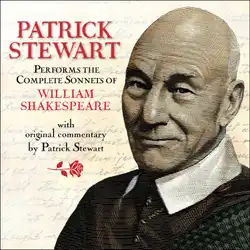
  3. Patrick Stewart Performs the Complete Sonnets of William Shakespeare : With Original Commentary by Patrick Stewart

    William Shakespeare, Patrick Stewart

  4. 5.0
    #9

    The Merchant of Venice

    William Shakespeare

  5. 5.0

    Hamlet

    William Shakespeare

  6. 5.0

    Romeo and Juliet (lättläst)

    William Shakespeare

  7. A Midsummer Night's Dream : Shakespeare's Whimsical Tale of Love, Magic & Mischief

    William Shakespeare

  8. 10 Masterpieces You Have to Read Before You Die, Vol. 3

    Edgar Allan Poe, William Shakespeare, H.P. Lovecraft, Mary W. Shelley, Osamu Dazai, Jack London, Fyodor Dostoyevsky, Nathaniel Hawthorne, Frances Hodgson Burnett, Robert Louis Stevenson

  9. 3.0

    Romeo and Juliet - Audiobook

    William Shakespeare

  10. 4.0

    King Lear : Full Cast Drama

    William Shakespeare

  11. The Plays of William Shakespeare: Romeo and Juliet, Macbeth, Hamlet, and Othello :

    William Shakespeare

  12. 4.4

    Romeo and Juliet

    William Shakespeare