Human, All Too Human

Human, All Too Human Friedrich Nietzsche - Human, All Too Human: A Book for Free Spirits (German: Menschliches, Allzumenschliches: Ein Buch für freie Geister) is a book by 19th-century philosopher Friedrich Nietzsche, originally published in 1878. A second part, Assorted Opinions and Maxims (Vermischte Meinungen und Sprüche), was published in 1879, and a third part, The Wanderer and his Shadow (Der Wanderer und sein Schatten), followed in 1880.The book is Nietzsche's first in the aphoristic style that would come to dominate his writings, discussing a variety of concepts in short paragraphs or sayings. Reflecting an admiration of Voltaire as a free thinker, but also a break in his friendship with composer Richard Wagner two years earlier, Nietzsche dedicated the original 1878 edition of Human, All Too Human to the memory of Voltaire on the celebration of the anniversary of his death, May 30, 1778. Instead of a preface, the first part originally included a quotation from Descartes's Discourse on the Method. Nietzsche later republished all three parts as a two-volume edition in 1886, adding a preface to each volume, and removing the Descartes quote as well as the dedication to Voltaire.This book represents the beginning of Nietzsche's "middle period", with a break from German Romanticism and from Wagner and with a definite positivist slant. Reluctant to construct a systematic philosophy, this book comprises more a collection of debunkings of unwarranted assumptions than an interpretation and "contains the seeds of concepts crucial to Nietzsche's later philosophy, such as the need to transcend conventional Christian morality";:back page he uses his perspectivism and the idea of the will to power as explanatory devices, though the latter remains less developed than in his later thought.

Om denne boken

Human, All Too Human Friedrich Nietzsche - Human, All Too Human: A Book for Free Spirits (German: Menschliches, Allzumenschliches: Ein Buch für freie Geister) is a book by 19th-century philosopher Friedrich Nietzsche, originally published in 1878. A second part, Assorted Opinions and Maxims (Vermischte Meinungen und Sprüche), was published in 1879, and a third part, The Wanderer and his Shadow (Der Wanderer und sein Schatten), followed in 1880.The book is Nietzsche's first in the aphoristic style that would come to dominate his writings, discussing a variety of concepts in short paragraphs or sayings. Reflecting an admiration of Voltaire as a free thinker, but also a break in his friendship with composer Richard Wagner two years earlier, Nietzsche dedicated the original 1878 edition of Human, All Too Human to the memory of Voltaire on the celebration of the anniversary of his death, May 30, 1778. Instead of a preface, the first part originally included a quotation from Descartes's Discourse on the Method. Nietzsche later republished all three parts as a two-volume edition in 1886, adding a preface to each volume, and removing the Descartes quote as well as the dedication to Voltaire.This book represents the beginning of Nietzsche's "middle period", with a break from German Romanticism and from Wagner and with a definite positivist slant. Reluctant to construct a systematic philosophy, this book comprises more a collection of debunkings of unwarranted assumptions than an interpretation and "contains the seeds of concepts crucial to Nietzsche's later philosophy, such as the need to transcend conventional Christian morality";:back page he uses his perspectivism and the idea of the will to power as explanatory devices, though the latter remains less developed than in his later thought.

Kom i gang med denne boken i dag for 0 kr

  • Få full tilgang til alle bøkene i appen i prøveperioden
  • Ingen forpliktelser, si opp når du vil
Prøv gratis nå
Mer enn 52 000 personer har gitt Nextory 5 stjerner på App Store og Google Play.

  1. 4.0

    3500 Final Quotes

    Marcus Aurelius, Jane Austen, Beaumarchais, Napoleon Bonaparte, Buddha, Winston Churchill, Cicero, Confucius, Nicolas de Chamfort, Charles de Gaulle, Antoine de Saint-Exupéry, Denis Diderot, Fyodor Dostoevsky, Albert Einstein, Ralph Waldo Emerson, Anne Frank, Mahatma Gandhi, Immanuel Kant, Søren Kierkegaard, Martin Luther King, Georg Christoph Lichtenberg, Abraham Lincoln, Montesquieu, Friedrich Nietzsche, Plato, Marcel Proust, Arthur Schopenhauer, William Shakespeare, Socrates, Baruch Spinoza, Henry David Thoreau, Leonardo da Vinci, Voltaire, Oscar Wilde, Laozi

  2. 20. okt.

    Slik talte Zarathustra

    Friedrich Nietzsche

  3. Thus Spoke Zarathustra : A Book for Everyone and No One

    Friedrich Nietzsche

  4. 4.0

    Existentialism: Philosophical and Literary Works : Notes from Underground. Fear and Trembling. Ecce Homo. The Metamorphosis and others

    Fyodor Dostoevsky, Soren Kierkegaard, Friedrich Nietzsche, Rainer Maria Rilke, Franz Kafka

  5. Friedrich Nietzsche Collection: Beyond Good and Evil, Thus Spoke Zarathustra, and The Antichrist :

    Friedrich Nietzsche

  6. 2.0

    50 Clásicos que Debes Leer Antes de Morir: Tu Pasaporte a los Tesoros de la Literatura Universal

    Dante Alighieri, Aristóteles, Jane Austen, Charles Baudelaire, Giovanni Boccaccio, Anne Brontë, C. Collodi, James Fenimore Cooper, Fedor Mikhaïlovitch Dostoïevski, Arthur Conan Doyle, Alexandre Dumas, José de Espronceda, Gustave Flaubert, Sigmund Freud, Benito Pérez Galdós, Kahlil Gibran, Johann Wolfgang Goethe, Johann Wolfgang von Goethe, Victor Hugo, Thomas Hardy, Nathaniel Hawthorne, Vicente Blasco Ibáñez, Washington Irving, James Joyce, Mariano José de Larra, Jack London, Federico García Lorca, H.P. Lovecraft, Antonio Machado, Gustav Meyrink, John Stuart Mill, Amado Nervo, Friedrich Nietzsche, Solomon Northup, Alexander Sergeyevich Pushkin, Francisco de Quevedo, Walter Scott, William Shakespeare, Robert Louis Stevenson, Harriet Beecher Stowe, Jonathan Swift, Mark Twain, Miguel De Unamuno, Ramón María del Valle-Inclán, Julio Verne, Virginia Woolf

  7. 4.0

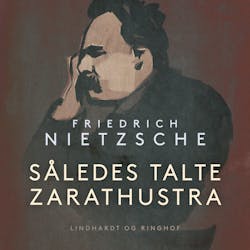
    Således talte Zarathustra

    Friedrich Nietzsche

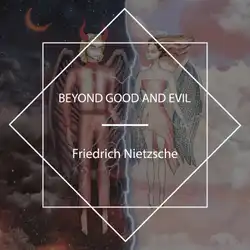
  8. Beyond Good and Evil

    Friedrich Nietzsche

  9. 33 Human Science Masterpieces You Must Read Before You Die. Illustrated : The Art of Public Speaking, The Meditations, The Kama Sutra and other masterpieces

    Edwin A. Abbott, Aristotle, Dale Carnegie, Gilbert Chesterton, René Descartes, Epictetus, Marcus Aurelius Antoninus, Sigmund Freud, Hermann Hesse, David Hume, Lao Tzu, Confucius, Swami Abhedananda, Anonimous, David Herbert Lawrence, Niccolò Machiavelli, Benedictus de Spinoza, John Mill, Prentice Mulford, Thomas More, Friedrich Nietzsche, J. Allanson Picton, Plato, Sun Tzu, Vatsyayana, Voltaire, H.G. Wells, Frances Bacon

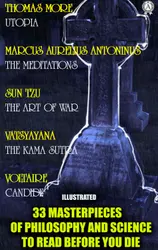
  10. 33 Masterpieces of Philosophy and Science to Read Before You Die (Illustrated) : Utopia, The Meditations, The Art of War, The Kama Sutra, Candide

    Thomas More, Marcus Aurelius Antoninus, Sun Tzu, Vatsyayana, Voltaire, Edwin A. Abbott, Aristotle, Dale Carnegie, Gilbert Keith Chesterton, René Descartes, Epictetus, Sigmund Freud, Hermann Hesse, David Hume, Lao Tzu, David Herbert Lawrence, Niccolò Machiavelli, John Mill, Prentice Mulford, Friedrich Nietzsche, Plato, Bertrand Russell, H.G. Wells, Frances Bacon

  11. 4.5

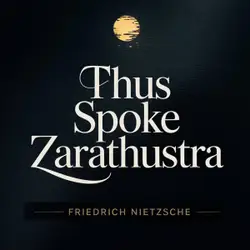
    Thus Spoke Zarathustra

    Friedrich Nietzsche

  12. 4.4

    Beyond Good and Evil

    Friedrich Nietzsche