Leaves of Grass

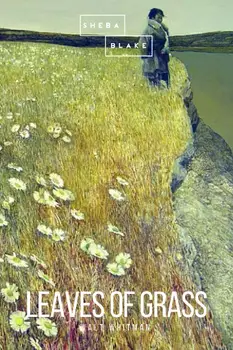
Leaves of Grass is a poetry collection by the American poet Walt Whitman. Though the first edition was published in 1855, Whitman spent most of his professional life writing and re-writing Leaves of Grass, revising it multiple times until his death. This resulted in vastly different editions over four decades.the first a small book of twelve poems and the last a compilation of over 400. The poems of Leaves of Grass are loosely connected, with each representing Whitman's celebration of his philosophy of life and humanity. This book is notable for its discussion of delight in sensual pleasures during a time when such candid displays were considered immoral. Where much previous poetry, especially English, relied on symbolism, allegory, and meditation on the religious and spiritual, Leaves of Grass (particularly the first edition) exalted the body and the material world. Influenced by Ralph Waldo Emerson and the Transcendentalist movement, itself an offshoot of Romanticism, Whitman's poetry praises nature and the individual human's role in it. However, much like Emerson, Whitman does not diminish the role of the mind or the spirit; rather, he elevates the human form and the human mind, deeming both worthy of poetic praise. With one exception, the poems do not rhyme or follow standard rules for meter and line length. Among the poems in the collection are "Song of Myself", "I Sing the Body Electric", "Out of the Cradle Endlessly Rocking". Later editions included Whitman's elegy to the assassinated President Abraham Lincoln, "When Lilacs Last in the Dooryard Bloom'd". Leaves of Grass was highly controversial during its time for its explicit sexual imagery, and Whitman was subject to derision by many contemporary critics. Over time, the collection has infiltrated popular culture and been recognized as one of the central works of American poetry.
Om denne boken

Leaves of Grass is a poetry collection by the American poet Walt Whitman. Though the first edition was published in 1855, Whitman spent most of his professional life writing and re-writing Leaves of Grass, revising it multiple times until his death. This resulted in vastly different editions over four decades.the first a small book of twelve poems and the last a compilation of over 400. The poems of Leaves of Grass are loosely connected, with each representing Whitman's celebration of his philosophy of life and humanity. This book is notable for its discussion of delight in sensual pleasures during a time when such candid displays were considered immoral. Where much previous poetry, especially English, relied on symbolism, allegory, and meditation on the religious and spiritual, Leaves of Grass (particularly the first edition) exalted the body and the material world. Influenced by Ralph Waldo Emerson and the Transcendentalist movement, itself an offshoot of Romanticism, Whitman's poetry praises nature and the individual human's role in it. However, much like Emerson, Whitman does not diminish the role of the mind or the spirit; rather, he elevates the human form and the human mind, deeming both worthy of poetic praise. With one exception, the poems do not rhyme or follow standard rules for meter and line length. Among the poems in the collection are "Song of Myself", "I Sing the Body Electric", "Out of the Cradle Endlessly Rocking". Later editions included Whitman's elegy to the assassinated President Abraham Lincoln, "When Lilacs Last in the Dooryard Bloom'd". Leaves of Grass was highly controversial during its time for its explicit sexual imagery, and Whitman was subject to derision by many contemporary critics. Over time, the collection has infiltrated popular culture and been recognized as one of the central works of American poetry.
Kom i gang med denne boken i dag for 0 kr

  • Få full tilgang til alle bøkene i appen i prøveperioden
  • Ingen forpliktelser, si opp når du vil
Prøv gratis nå
Mer enn 52 000 personer har gitt Nextory 5 stjerner på App Store og Google Play.

  1. Die Meisterwerke der Weltliterature : Bereicherte Ausgabe. 100 Klassiker die man kennen muss

    Johann Wolfgang von Goethe, Jules Verne, Gustave Flaubert, Franz Kafka, Lewis Carroll, Selma Lagerlöf, Sigmund Freud, Johanna Spyri, Theodor Storm, Rainer Maria Rilke, Charles Dickens, Stefan Zweig, Heinrich Heine, Honoré de Balzac, Theodor Fontane, Karl May, Gottfried Keller, Mark Twain, Heinrich Mann, Else Lasker-Schüler, Robert Musil, Walt Whitman, Oscar Wilde, Annette von Droste-Hülshoff, Arthur Schopenhauer, Robert Louis Stevenson, Gustav Freytag, James Fenimore Cooper, Edgar Allan Poe, Heinrich von Kleist, William Shakespeare, Dante Alighieri, Charlotte Brontë, Emily Brontë, Jack London, Arthur Conan Doyle, Joseph Conrad, Jane Austen, Herman Melville, Guy De Maupassant, Walter Scott, Jonathan Swift, Jacob Grimm, Wilhelm Grimm, Alexandre Dumas, Rudyard Kipling, Nathaniel Hawthorne, Homer, O.Henry, Voltaire, Lew Wallace, John Galsworthy, E T A Hoffmann, Marcus Aurelius, Hans Christian Andersen, Anton Pawlowitsch Tschechow, Platon, Friedrich Nietzsche, Iwan Sergejewitsch Turgenew, Tacitus, Nikolai Gogol, Miguel de Cervantes, Mary Shelley, Thomas Wolfe, Emile Zola, Fjodor Michailowitsch Dostojewski, Leo Tolstoi, Joseph Roth, Joseph von Eichendorff, Kurt Tucholsky, Iwan Alexandrowitsch Gontscharow, Oswald Spengler, Moliere, Alfred Adler, Sophie von La Roche, Klaus Mann, Rumi

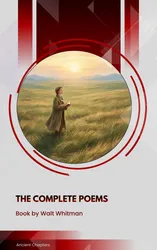
  2. The Complete Poems of Walt Whitman

    Walt Whitman

  3. Drum-Taps

    Walt Whitman

  4. The Patriotic Poems of Walt Whitman

    Walt Whitman

  5. The Wound Dresser

    Walt Whitman

  6. 3.0

    Leaves of Grass

    Walt Whitman

  7. The Letters of Anne Gilchrist and Walt Whitman

    Anne Gilchrist, Walt Whitman

  8. 3.0

    Leaves of Grass

    Walt Whitman

  9. 5.0

    O Captain! My Captain! :

    Walt Whitman

  10. Relatos

    Walt Whitman

  11. Franklin Evans, el borracho

    Walt Whitman

  12. 100 Amerikanische Klassiker - Meisterwerke, die man kennen muss : Der große Gatsby, Die Abenteuer Tom Sawyers, Kleine Frauen, Zeit der Unschuld, Porträt einer Dame, Der Rabe, Moby-Dick, Wolfsblut...

    Mark Twain, Louisa May Alcott, Jack London, Stephen Crane, L. Frank Baum, Walt Whitman, Herman Melville, Henry David Thoreau, Elbert Hubbard, Ralph Waldo Emerson, Ambrose Bierce, Frances Hodgson Burnett, Lew Wallace, Nathaniel Hawthorne, James Norman Hall, Edgar Allan Poe, O.Henry, H.P. Lovecraft, James Fenimore Cooper, Edward Bellamy, Bret Harte, Max Brand, Zane Grey, Willa Cather, F. Scott Fitzgerald, Kate Chopin, Charlotte Perkins Gilman, Edith Wharton, Margaret Mitchell, Henry James, Theodor Dreiser, Gertrude Stein, Sinclair Lewis, Warwick Deeping, Thomas Wolfe, Harriet Beecher Stowe