Om denne boken

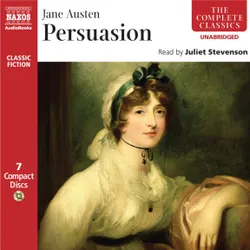
In Jane Austen's final completed novel, "Persuasion," the narrative unfolds around Anne Elliot, a woman whose mature perspective on love and societal expectations serves as a poignant critique of early 19th-century English gentry. The novel employs a richly layered literary style, combining sharp dialogue and keen social observation, often veering towards irony and self-reflection. Austen's exploration of themes such as regret, resilience, and the powerful nature of true love is set against a backdrop of shifting social dynamics, enhanced by her astute characterizations and intricate plot developments. This work stands as a testament to Austen's mastery in encapsulating human emotions, particularly the nuances of persuasion that influence personal relationships and societal positions. Jane Austen (1775-1817) was a pioneering novelist whose keen insights into the lives of women and class structures have rendered her an enduring figure in English literature. The inspiration for "Persuasion" stems from Austen's own life experiences and the societal limitations placed upon women, particularly regarding marriage and autonomy. Having remained single for much of her life, Austen's observations on love and the complexities of romantic entanglements are further enriched by her personal reflections on choices and second chances. "Persuasion" is highly recommended for readers interested in a thoughtful yet engaging exploration of love, social status, and the intricacies of human relationships. Austen's work provides a profound understanding of personal reflections and societal critique, making it not only a delightful read but also a significant contribution to the literary canon. Whether for a first-time reader or a seasoned Austen enthusiast, this novel invites contemplation on the art of persuasion in the context of enduring human emotions.

Kom i gang med denne boken i dag for 0 kr

  • Få full tilgang til alle bøkene i appen i prøveperioden
  • Ingen forpliktelser, si opp når du vil
Prøv gratis nå
Mer enn 52 000 personer har gitt Nextory 5 stjerner på App Store og Google Play.

  1. 3.0

    50 Masterpieces you have to read before you die vol: 1 (2020 Edition) : Included: Little Women, The Richest Man in Babylon Emma, The Call Of The Wild ....

    Louisa May Alcott, Dante Alighieri, Marcus Aurelius, Jane Austen, L. Frank Baum, Charlotte Brontë, Emily Brontë, Anne Brontë, Miguel de Cervantes, Agatha Christie, George S. Clason, Arthur Conan Doyle, Joseph Conrad, Charles Dickens, Fyodor Dostoyevsky, Alexandre Dumas, George Eliot, G.K. Chesterton, G.K. Chesterton, Zane Grey, Nathaniel Hawthorne, Napoleon Hill, Homer, Victor Hugo, Frances Hodgson Burnett, Washington Irving, Henry James, Franz Kafka, Rudyard Kipling, Jack London, Leo Tolstoy, H.P. Lovecraft, Lucy Maud Montgomery, Joseph Murphy, Robert Louis Stevenson, Edgar Allan Poe, Marcel Proust, Publius, Mary Shelley, Bram Stoker, Mark Twain, Sun Tzu, Lew Wallace, Wallace D. Wattles, H.G. Wells

  2. 4.5

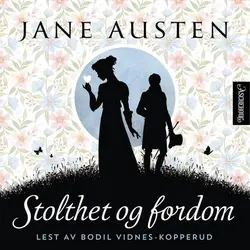
    Stolthet og fordom

    Jane Austen

  3. 3.0

    Pride and Prejudice: The Wild and Wanton Edition

    Jane Austen, Michelle Pillow

  4. 4.3

    Emma

    Jane Austen

  5. 4.5

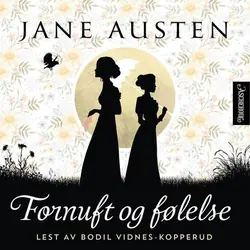
    Fornuft og følelse

    Jane Austen

  6. 4.3

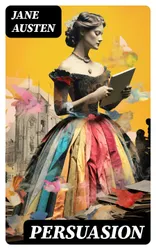
    Persuasion

    Jane Austen

  7. 50 Masterpieces you have to read before you die vol 1

    Louisa May Alcott, Jane Austen, Joseph Conrad, Edwin Abbott, George Eliot, Leo Tolstoy, James Joyce, Charles Dickens, Bram Stoker, Oscar Wilde, Honoré de Balzac, Edgar Rice Burroughs, Anne Brontë, Charlotte Brontë, Emily Brontë, Lewis Carroll, Willa Cather, Miguel de Cervantes, E. Cummings, Fyodor Dostoyevsky, Daniel Defoe, Arthur Conan Doyle, Alexandre Dumas, Gustave Flaubert, Henry James, Victor Hugo

  8. 4.2

    Mansfield Park

    Jane Austen

  9. 4.0
    #1

    Sense and Sensibility

    Jane Austen

  10. 4.5

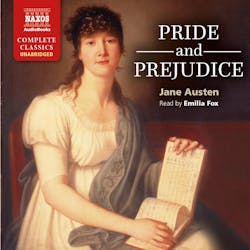
    Pride and Prejudice

    Jane Austen

  11. 4.5

    Stolthet og fordom

    Jane Austen

  12. 4.0

    3500 Final Quotes

    Marcus Aurelius, Jane Austen, Beaumarchais, Napoleon Bonaparte, Buddha, Winston Churchill, Cicero, Confucius, Nicolas de Chamfort, Charles de Gaulle, Antoine de Saint-Exupéry, Denis Diderot, Fyodor Dostoevsky, Albert Einstein, Ralph Waldo Emerson, Anne Frank, Mahatma Gandhi, Immanuel Kant, Søren Kierkegaard, Martin Luther King, Georg Christoph Lichtenberg, Abraham Lincoln, Montesquieu, Friedrich Nietzsche, Plato, Marcel Proust, Arthur Schopenhauer, William Shakespeare, Socrates, Baruch Spinoza, Henry David Thoreau, Leonardo da Vinci, Voltaire, Oscar Wilde, Laozi