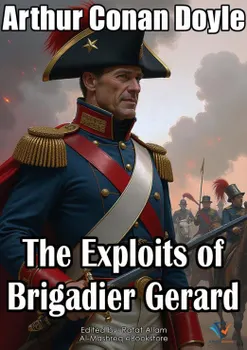
The Exploits of Brigadier Gerard

The Exploits of Brigadier Gerard is the first collection of stories about the exuberant French soldier Étienne Gerard, published in 1896. In these adventures, Arthur Conan Doyle introduces Brigadier Gerard as a dashing Hussar officer in Napoleon's army – courageous, outrageously vain, and endearingly obtuse. Through Gerard's first-person reminiscences, we gallop into battle alongside him and laugh at his grandiose self-regard. Among the eight tales: "How Brigadier Gerard Won His Medal" recounts a daring mission in Spain where Gerard, sent to capture a bridge, ends up single-handedly saving Napoleon himself (at least in Gerard's telling); "How the Brigadier Slew the Fox" transports Gerard to England during a peace, where he confuses fox-hunting with a military operation, leading to comic cultural misunderstandings. Another exploit, "The Brigadier in Three Captivities," sees Gerard imprisoned by the British, Spaniards, and Russians in turn, escaping each time by wit, charm, or sheer boldness. Doyle uses Gerard's perspective – full of hyperbolic praise for French glory and romantic chivalry – to gently spoof the era's national stereotypes while delivering genuinely thrilling action. Readers experience the smoke and sabers of early 19th-century warfare: the thick of the charge at Waterloo, covert scouting in the Alps, duels at dawn. Throughout, Brigadier Gerard's biggest antagonist is often his own ego: he cannot fathom why others don't recognize him as the world's greatest swordsman, rider, and lover. Yet Doyle ensures we also see Gerard's true heroism and kindness beneath the bombast. The brigadier's unwavering loyalty to France and to his friends renders him lovable. The Exploits of Brigadier Gerard brilliantly balances comedy and adventure – a difficult feat Doyle manages with breezy prose and affection for his character. These tales were highly popular, even rivalling Sherlock Holmes in contemporary acclaim, and they remain a delightful showcase of Doyle's storytelling range. With their mix of Napoleonic flair, humor, and swashbuckling escapade, the Exploits prove that sometimes the most memorable heroes are those who can laugh at themselves while charging headlong into danger.
Om denne boken

The Exploits of Brigadier Gerard is the first collection of stories about the exuberant French soldier Étienne Gerard, published in 1896. In these adventures, Arthur Conan Doyle introduces Brigadier Gerard as a dashing Hussar officer in Napoleon's army – courageous, outrageously vain, and endearingly obtuse. Through Gerard's first-person reminiscences, we gallop into battle alongside him and laugh at his grandiose self-regard. Among the eight tales: "How Brigadier Gerard Won His Medal" recounts a daring mission in Spain where Gerard, sent to capture a bridge, ends up single-handedly saving Napoleon himself (at least in Gerard's telling); "How the Brigadier Slew the Fox" transports Gerard to England during a peace, where he confuses fox-hunting with a military operation, leading to comic cultural misunderstandings. Another exploit, "The Brigadier in Three Captivities," sees Gerard imprisoned by the British, Spaniards, and Russians in turn, escaping each time by wit, charm, or sheer boldness. Doyle uses Gerard's perspective – full of hyperbolic praise for French glory and romantic chivalry – to gently spoof the era's national stereotypes while delivering genuinely thrilling action. Readers experience the smoke and sabers of early 19th-century warfare: the thick of the charge at Waterloo, covert scouting in the Alps, duels at dawn. Throughout, Brigadier Gerard's biggest antagonist is often his own ego: he cannot fathom why others don't recognize him as the world's greatest swordsman, rider, and lover. Yet Doyle ensures we also see Gerard's true heroism and kindness beneath the bombast. The brigadier's unwavering loyalty to France and to his friends renders him lovable. The Exploits of Brigadier Gerard brilliantly balances comedy and adventure – a difficult feat Doyle manages with breezy prose and affection for his character. These tales were highly popular, even rivalling Sherlock Holmes in contemporary acclaim, and they remain a delightful showcase of Doyle's storytelling range. With their mix of Napoleonic flair, humor, and swashbuckling escapade, the Exploits prove that sometimes the most memorable heroes are those who can laugh at themselves while charging headlong into danger.
Kom i gang med denne boken i dag for 0 kr

  • Få full tilgang til alle bøkene i appen i prøveperioden
  • Ingen forpliktelser, si opp når du vil
Prøv gratis nå
Mer enn 52 000 personer har gitt Nextory 5 stjerner på App Store og Google Play.

  1. 3.0

    50 Masterpieces you have to read before you die vol: 1 (2020 Edition) : Included: Little Women, The Richest Man in Babylon Emma, The Call Of The Wild ....

    Louisa May Alcott, Dante Alighieri, Marcus Aurelius, Jane Austen, L. Frank Baum, Charlotte Brontë, Emily Brontë, Anne Brontë, Miguel de Cervantes, Agatha Christie, George S. Clason, Arthur Conan Doyle, Joseph Conrad, Charles Dickens, Fyodor Dostoyevsky, Alexandre Dumas, George Eliot, G.K. Chesterton, G.K. Chesterton, Zane Grey, Nathaniel Hawthorne, Napoleon Hill, Homer, Victor Hugo, Frances Hodgson Burnett, Washington Irving, Henry James, Franz Kafka, Rudyard Kipling, Jack London, Leo Tolstoy, H.P. Lovecraft, Lucy Maud Montgomery, Joseph Murphy, Robert Louis Stevenson, Edgar Allan Poe, Marcel Proust, Publius, Mary Shelley, Bram Stoker, Mark Twain, Sun Tzu, Lew Wallace, Wallace D. Wattles, H.G. Wells

  2. 50 Masterpieces you have to read before you die

    Frances Hodgson Burnett, Homer, Charles Dickens, Lyman Frank Baum, Nathaniel Hawthorne, Thomas Hardy, Robert Louis Stevenson, Henry Haggard, Wilkie Collins, H.G. Wells, Sir Walter Scott, Lucy Maud Montgomery, Louisa May Alcott, Henry Fielding, Mary Shelley, Arthur Conan Doyle, Leo Tolstoy, Euripides, Fyodor Dostoevsky, Alexander Pushkin, James Fenimore Cooper, Daniel Defoe, Joseph Conrad, Jonathan Swift, William Shakespeare, Oscar Wilde, John Bunyan, Charles Darwin, Alfred Tennyson, Bram Stoker, James Joyce, Dante Alighieri, Howard Pyle, Jane Austen, Emily Bronte, Giovanni Boccaccio, Rudyard Kipling

  3. 4.0
    #1

    The Sherlock Holmes Complete Collection : 4 Novels & 5 Short Story Collections

    Arthur Conan Doyle

  4. 3.0

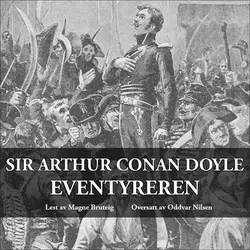
    Eventyreren

    Arthur Conan Doyle

  5. 3.9

    De fires tegn

    Arthur Conan Doyle

  6. #6

    The Return of Sherlock Holmes : Sherlock Holmes: Book #7

    Arthur Conan Doyle

  7. 3.0
    #21

    Lærtrakten

    Arthur Conan Doyle

  8. Ny

    100 Clásicos de la Literatura Universal

    Francis Scott Fitzgerald, Mary Shelley, Lyman Frank Baum, Louisa May Alcott, Dante Alighieri, Jane Austen, Ambrose Bierce, Emily Brontë, Edgar Rice Burroughs, Lewis Carroll, Wilkie Collins, René Descartes, Charles Dickens, Emily Dickinson, Alexandre Dumas, Gustave Flaubert, Benito Pérez Galdós, Johann Wolfgang von Goethe, Thomas Hardy, E T A Hoffmann, Washington Irving, Henry James, James Joyce, Franz Kafka, Gaston Leroux, Federico García Lorca, H.P. Lovecraft, Publio Virgilio Marón, Lucy Maud Montgomery, John William Polidori, Marco Polo, Antoine de Saint-Exupéry, Emilio Salgari, Walter Scott, Mark Twain, Jules Verne, Julio Verne, H.G. Wells, Edith Wharton, Mary Wollstonecraft, Stefan Zweig, Sun Tzu, Bram Stoker, - Aristoteles, George Bernard Shaw, Henryk Sienkiewicz, Concepción Arenal, Charlotte Brontë, Miguel de Cervantes, G.K. Chesterton, Daniel Defoe, Fyodor Mikhailovich Dostoyevsky, Arthur Conan Doyle, Sigmund Freud, H. Rider Haggard, Homero, Immanuel Kant, Rudyard Kipling, Molière, Friedrich Nietzsche, Fernando de Rojas, Sófocles, William Makepeace Thackeray, León Tolstói, Voltaire, Ramón María del Valle-Inclán, Oscar Wilde, Virginia Woolf

  9. Ny

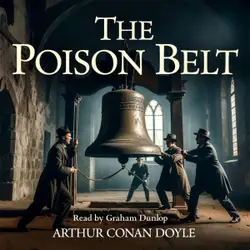
    The Poison Belt :

    Arthur Conan Doyle

  10. Ny
    4.0
    #72

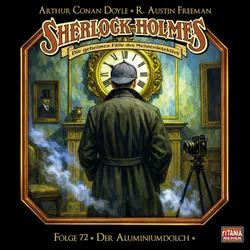
    Sherlock Holmes - Die geheimen Fälle des Meisterdetektivs, Folge 72: Der Aluminiumdolch (unabridged)

    Arthur Conan Doyle, R Austin Freeman

  11. 50 Masterpieces you have to read before you die vol 1

    Louisa May Alcott, Jane Austen, Joseph Conrad, Edwin Abbott, George Eliot, Leo Tolstoy, James Joyce, Charles Dickens, Bram Stoker, Oscar Wilde, Honoré de Balzac, Edgar Rice Burroughs, Anne Brontë, Charlotte Brontë, Emily Brontë, Lewis Carroll, Willa Cather, Miguel de Cervantes, E. Cummings, Fyodor Dostoyevsky, Daniel Defoe, Arthur Conan Doyle, Alexandre Dumas, Gustave Flaubert, Henry James, Victor Hugo

  12. 50 Masterpieces you have to read before you die vol: 2

    Louisa May Alcott, Jane Austen, Joseph Conrad, D. H. Lawrence, George Eliot, Leo Tolstoy, James Joyce, Charles Dickens, Bram Stoker, Oscar Wilde, Honoré de Balzac, Edgar Rice Burroughs, Anne Brontë, Charlotte Brontë, Emily Brontë, Lewis Carroll, Willa Cather, Miguel de Cervantes, E. Cummings, Fyodor Dostoyevsky, Daniel Defoe, Arthur Conan Doyle, Alexandre Dumas, Gustave Flaubert, Henry James, Victor Hugo