The Haunted Man and the Ghost's Bargain

In "The Haunted Man and the Ghost's Bargain," Charles Dickens crafts a poignant narrative that intertwines themes of memory, loss, and redemption. The novella employs a vivid blend of Gothic elements and socio-economic critique characteristic of Dickens's oeuvre, presenting a ghostly encounter that serves as an allegory for the burdens of past traumas. The story follows Redlaw, a tormented scholar who, after meeting a spectral figure, wishes to cast away his painful memories, unwittingly bartering away his capacity for empathy and connection. Dickens's rich prose and imaginative storytelling resonate with the Victorian public's anxieties around industrialization and personal isolation, making this work a compelling exploration of the human psyche. Charles Dickens, a stalwart of 19th-century literature, wrote "The Haunted Man" during a period marked by his maturation as an author. His own experiences with loss, including the death of his sister-in-law and his childhood poverty, undoubtedly influenced the novella's exploration of memory's significance. Dickens's keen social consciousness and mastery of character development emerge as powerful tools in elucidating the moral and emotional intricacies of his characters' lives. Readers are invited to embrace "The Haunted Man and the Ghost's Bargain" not only as a ghost story but as a profound meditation on the importance of memory in shaping our identities. Dickens's deft handling of complex themes makes this novella a timeless reflection on the human condition, worthy of both literary study and personal reflection.

Om denne boken

In "The Haunted Man and the Ghost's Bargain," Charles Dickens crafts a poignant narrative that intertwines themes of memory, loss, and redemption. The novella employs a vivid blend of Gothic elements and socio-economic critique characteristic of Dickens's oeuvre, presenting a ghostly encounter that serves as an allegory for the burdens of past traumas. The story follows Redlaw, a tormented scholar who, after meeting a spectral figure, wishes to cast away his painful memories, unwittingly bartering away his capacity for empathy and connection. Dickens's rich prose and imaginative storytelling resonate with the Victorian public's anxieties around industrialization and personal isolation, making this work a compelling exploration of the human psyche. Charles Dickens, a stalwart of 19th-century literature, wrote "The Haunted Man" during a period marked by his maturation as an author. His own experiences with loss, including the death of his sister-in-law and his childhood poverty, undoubtedly influenced the novella's exploration of memory's significance. Dickens's keen social consciousness and mastery of character development emerge as powerful tools in elucidating the moral and emotional intricacies of his characters' lives. Readers are invited to embrace "The Haunted Man and the Ghost's Bargain" not only as a ghost story but as a profound meditation on the importance of memory in shaping our identities. Dickens's deft handling of complex themes makes this novella a timeless reflection on the human condition, worthy of both literary study and personal reflection.
Kom i gang med denne boken i dag for 0 kr

  • Få full tilgang til alle bøkene i appen i prøveperioden
  • Ingen forpliktelser, si opp når du vil
Prøv gratis nå
Mer enn 52 000 personer har gitt Nextory 5 stjerner på App Store og Google Play.

  1. 3.6

    Pickwick-klubbens etterlatte papirer

    Charles Dickens

  2. 3.0

    50 Masterpieces you have to read before you die vol: 1 (2020 Edition) : Included: Little Women, The Richest Man in Babylon Emma, The Call Of The Wild ....

    Louisa May Alcott, Dante Alighieri, Marcus Aurelius, Jane Austen, L. Frank Baum, Charlotte Brontë, Emily Brontë, Anne Brontë, Miguel de Cervantes, Agatha Christie, George S. Clason, Arthur Conan Doyle, Joseph Conrad, Charles Dickens, Fyodor Dostoyevsky, Alexandre Dumas, George Eliot, G.K. Chesterton, G.K. Chesterton, Zane Grey, Nathaniel Hawthorne, Napoleon Hill, Homer, Victor Hugo, Frances Hodgson Burnett, Washington Irving, Henry James, Franz Kafka, Rudyard Kipling, Jack London, Leo Tolstoy, H.P. Lovecraft, Lucy Maud Montgomery, Joseph Murphy, Robert Louis Stevenson, Edgar Allan Poe, Marcel Proust, Publius, Mary Shelley, Bram Stoker, Mark Twain, Sun Tzu, Lew Wallace, Wallace D. Wattles, H.G. Wells

  3. 4.3

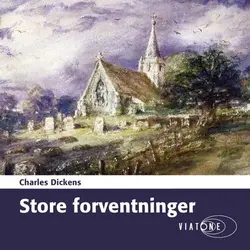
    Store forventninger

    Charles Dickens

  4. 12 Classic Books You Need to Read Before You Grow up

    Antoine de Saint Exupery, Lewis Carroll, Robert Louis Stevenson, Frances Hodgson Burnett, Mark Twain, Eleanor H. Porter, Jules Verne, Charles Dickens, Jack London, Lyman Frank Baum, Margery Williams, J.M. Barrie

  5. 50 Masterpieces you have to read before you die

    Frances Hodgson Burnett, Homer, Charles Dickens, Lyman Frank Baum, Nathaniel Hawthorne, Thomas Hardy, Robert Louis Stevenson, Henry Haggard, Wilkie Collins, H.G. Wells, Sir Walter Scott, Lucy Maud Montgomery, Louisa May Alcott, Henry Fielding, Mary Shelley, Arthur Conan Doyle, Leo Tolstoy, Euripides, Fyodor Dostoevsky, Alexander Pushkin, James Fenimore Cooper, Daniel Defoe, Joseph Conrad, Jonathan Swift, William Shakespeare, Oscar Wilde, John Bunyan, Charles Darwin, Alfred Tennyson, Bram Stoker, James Joyce, Dante Alighieri, Howard Pyle, Jane Austen, Emily Bronte, Giovanni Boccaccio, Rudyard Kipling

  6. 4.6

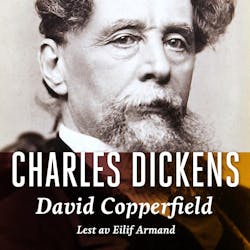
    David Copperfield

    Charles Dickens

  7. 4.0

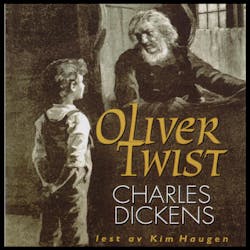
    Oliver Twist

    Charles Dickens

  8. 2.9
    #1

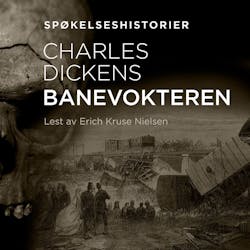
    Banevokteren

    Charles Dickens

  9. 4.3

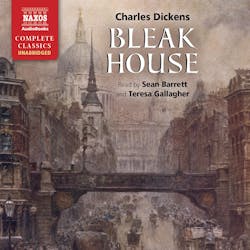
    Bleak House

    Charles Dickens

  10. 5.0

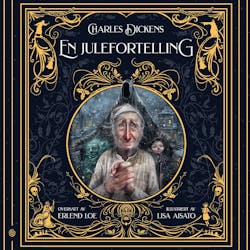
    En julefortelling

    Charles Dickens, Oversatt av Erlend Loe

  11. Ny

    100 Clásicos de la Literatura Universal

    Francis Scott Fitzgerald, Mary Shelley, Lyman Frank Baum, Louisa May Alcott, Dante Alighieri, Jane Austen, Ambrose Bierce, Emily Brontë, Edgar Rice Burroughs, Lewis Carroll, Wilkie Collins, René Descartes, Charles Dickens, Emily Dickinson, Alexandre Dumas, Gustave Flaubert, Benito Pérez Galdós, Johann Wolfgang von Goethe, Thomas Hardy, E T A Hoffmann, Washington Irving, Henry James, James Joyce, Franz Kafka, Gaston Leroux, Federico García Lorca, H.P. Lovecraft, Publio Virgilio Marón, Lucy Maud Montgomery, John William Polidori, Marco Polo, Antoine de Saint-Exupéry, Emilio Salgari, Walter Scott, Mark Twain, Jules Verne, Julio Verne, H.G. Wells, Edith Wharton, Mary Wollstonecraft, Stefan Zweig, Sun Tzu, Bram Stoker, - Aristoteles, George Bernard Shaw, Henryk Sienkiewicz, Concepción Arenal, Charlotte Brontë, Miguel de Cervantes, G.K. Chesterton, Daniel Defoe, Fyodor Mikhailovich Dostoyevsky, Arthur Conan Doyle, Sigmund Freud, H. Rider Haggard, Homero, Immanuel Kant, Rudyard Kipling, Molière, Friedrich Nietzsche, Fernando de Rojas, Sófocles, William Makepeace Thackeray, León Tolstói, Voltaire, Ramón María del Valle-Inclán, Oscar Wilde, Virginia Woolf

  12. 50 Masterpieces you have to read before you die vol 1

    Louisa May Alcott, Jane Austen, Joseph Conrad, Edwin Abbott, George Eliot, Leo Tolstoy, James Joyce, Charles Dickens, Bram Stoker, Oscar Wilde, Honoré de Balzac, Edgar Rice Burroughs, Anne Brontë, Charlotte Brontë, Emily Brontë, Lewis Carroll, Willa Cather, Miguel de Cervantes, E. Cummings, Fyodor Dostoyevsky, Daniel Defoe, Arthur Conan Doyle, Alexandre Dumas, Gustave Flaubert, Henry James, Victor Hugo