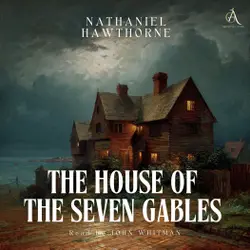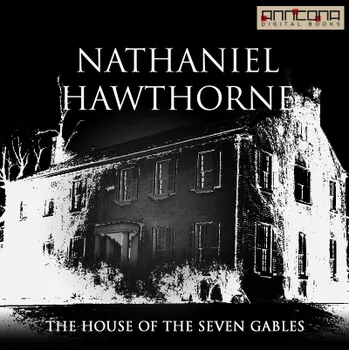
The House of the Seven Gables

The House of the Seven Gables is a Gothic novel by Nathaniel Hawthorne and published in April 1851 by Ticknor and Fields of Boston. The novel follows a New England family and their ancestral home. In the book, Hawthorne explores themes of guilt, retribution, and atonement and colors the tale with suggestions of the supernatural and witchcraft. The setting for the book was inspired by a gabled house in Salem belonging to Hawthorne's cousin Susanna Ingersoll and by ancestors of Hawthorne who had played a part in the Salem Witch Trials of 1692. The book was well received upon publication and later had a strong influence on the work of H. P. Lovecraft.

Hawthorne, frequently haunted by the sins of his ancestors in the Salem witch trials, examines guilt, retribution, and atonement in this novel. His Pyncheon family carries a great burden, for almost 200 years, as a result of the dishonest, amoral way that the land on which the titular house sits was acquired. In the Preface to the novel, he states that its moral is that "the wrongdoing of one generation lives into the successive ones and... becomes a pure and uncontrollable mischief."

The novel was adapted for the screen in 1940 with Margaret Lindsay as Hepzibah, George Sanders as Jaffrey and Vincent Price as Clifford. In this adaptation, Hepzibah and Clifford were made lovers rather than brother and sister, and the film ends with a double wedding. It was directed by Joe May with a screenplay by Lester Cole. There was also a silent short in 1910 and a remake in 1967. The novel was adapted to a 60-minute television production in 1960 for The Shirley Temple Show with Shirley Temple as Phoebe, Robert Culp as Holgrave, Agnes Moorehead as Hepzibah, and Martin Landau as Clifford. In 1963, United Artists released a horror trilogy film adaptation of three of Hawthorne's stories, with the film titled Twice-Told Tales. The three stories filmed were: "The House of the Seven Gables," "Dr. Heidegger's Experiment," and "Rappaccini's Daughter." While done on a relatively low-budget by Hollywood standards, the film is nonetheless regarded as a classic of sorts, with Vincent Price, Sebastian Cabot, and Beverly Garland delivering good performances.

Nathaniel Hawthorne (1804-1864) was an American novelist and short story writer. He was born in 1804 in Salem, Massachusetts to Nathaniel Hathorne and the former Elizabeth Clarke Manning. His ancestors include John Hathorne, the only judge involved in the Salem witch trials who never repented of his actions. Nathaniel later added a "w" to make his name "Hawthorne" in order to hide this relation. Hawthorne died on May 19, 1864, and was survived by his wife and their three children.

Hawthorne's works belong to romanticism or, more specifically, dark romanticism, cautionary tales that suggest that guilt, sin, and evil are the most inherent natural qualities of humanity. Many of his works are inspired by Puritan New England, combining historical romance loaded with symbolism and deep psychological themes, bordering on surrealism. His published works include novels, short stories, and a biography of his friend Franklin Pierce.

Normal 0 21 false false false SV X-NONE X-NONE
Om denne boken

The House of the Seven Gables is a Gothic novel by Nathaniel Hawthorne and published in April 1851 by Ticknor and Fields of Boston. The novel follows a New England family and their ancestral home. In the book, Hawthorne explores themes of guilt, retribution, and atonement and colors the tale with suggestions of the supernatural and witchcraft. The setting for the book was inspired by a gabled house in Salem belonging to Hawthorne's cousin Susanna Ingersoll and by ancestors of Hawthorne who had played a part in the Salem Witch Trials of 1692. The book was well received upon publication and later had a strong influence on the work of H. P. Lovecraft.

Hawthorne, frequently haunted by the sins of his ancestors in the Salem witch trials, examines guilt, retribution, and atonement in this novel. His Pyncheon family carries a great burden, for almost 200 years, as a result of the dishonest, amoral way that the land on which the titular house sits was acquired. In the Preface to the novel, he states that its moral is that "the wrongdoing of one generation lives into the successive ones and... becomes a pure and uncontrollable mischief."

The novel was adapted for the screen in 1940 with Margaret Lindsay as Hepzibah, George Sanders as Jaffrey and Vincent Price as Clifford. In this adaptation, Hepzibah and Clifford were made lovers rather than brother and sister, and the film ends with a double wedding. It was directed by Joe May with a screenplay by Lester Cole. There was also a silent short in 1910 and a remake in 1967. The novel was adapted to a 60-minute television production in 1960 for The Shirley Temple Show with Shirley Temple as Phoebe, Robert Culp as Holgrave, Agnes Moorehead as Hepzibah, and Martin Landau as Clifford. In 1963, United Artists released a horror trilogy film adaptation of three of Hawthorne's stories, with the film titled Twice-Told Tales. The three stories filmed were: "The House of the Seven Gables," "Dr. Heidegger's Experiment," and "Rappaccini's Daughter." While done on a relatively low-budget by Hollywood standards, the film is nonetheless regarded as a classic of sorts, with Vincent Price, Sebastian Cabot, and Beverly Garland delivering good performances.

Nathaniel Hawthorne (1804-1864) was an American novelist and short story writer. He was born in 1804 in Salem, Massachusetts to Nathaniel Hathorne and the former Elizabeth Clarke Manning. His ancestors include John Hathorne, the only judge involved in the Salem witch trials who never repented of his actions. Nathaniel later added a "w" to make his name "Hawthorne" in order to hide this relation. Hawthorne died on May 19, 1864, and was survived by his wife and their three children.

Hawthorne's works belong to romanticism or, more specifically, dark romanticism, cautionary tales that suggest that guilt, sin, and evil are the most inherent natural qualities of humanity. Many of his works are inspired by Puritan New England, combining historical romance loaded with symbolism and deep psychological themes, bordering on surrealism. His published works include novels, short stories, and a biography of his friend Franklin Pierce.

Normal 0 21 false false false SV X-NONE X-NONE
Kom i gang med denne boken i dag for 0 kr

  • Få full tilgang til alle bøkene i appen i prøveperioden
  • Ingen forpliktelser, si opp når du vil
Prøv gratis nå
Mer enn 52 000 personer har gitt Nextory 5 stjerner på App Store og Google Play.

  1. 3.0

    50 Masterpieces you have to read before you die vol: 1 (2020 Edition) : Included: Little Women, The Richest Man in Babylon Emma, The Call Of The Wild ....

    Louisa May Alcott, Dante Alighieri, Marcus Aurelius, Jane Austen, L. Frank Baum, Charlotte Brontë, Emily Brontë, Anne Brontë, Miguel de Cervantes, Agatha Christie, George S. Clason, Arthur Conan Doyle, Joseph Conrad, Charles Dickens, Fyodor Dostoyevsky, Alexandre Dumas, George Eliot, G.K. Chesterton, G.K. Chesterton, Zane Grey, Nathaniel Hawthorne, Napoleon Hill, Homer, Victor Hugo, Frances Hodgson Burnett, Washington Irving, Henry James, Franz Kafka, Rudyard Kipling, Jack London, Leo Tolstoy, H.P. Lovecraft, Lucy Maud Montgomery, Joseph Murphy, Robert Louis Stevenson, Edgar Allan Poe, Marcel Proust, Publius, Mary Shelley, Bram Stoker, Mark Twain, Sun Tzu, Lew Wallace, Wallace D. Wattles, H.G. Wells

  2. 50 Masterpieces you have to read before you die

    Frances Hodgson Burnett, Homer, Charles Dickens, Lyman Frank Baum, Nathaniel Hawthorne, Thomas Hardy, Robert Louis Stevenson, Henry Haggard, Wilkie Collins, H.G. Wells, Sir Walter Scott, Lucy Maud Montgomery, Louisa May Alcott, Henry Fielding, Mary Shelley, Arthur Conan Doyle, Leo Tolstoy, Euripides, Fyodor Dostoevsky, Alexander Pushkin, James Fenimore Cooper, Daniel Defoe, Joseph Conrad, Jonathan Swift, William Shakespeare, Oscar Wilde, John Bunyan, Charles Darwin, Alfred Tennyson, Bram Stoker, James Joyce, Dante Alighieri, Howard Pyle, Jane Austen, Emily Bronte, Giovanni Boccaccio, Rudyard Kipling

  3. The Minotaur

    Nathaniel Hawthorne

  4. The Сlassic Collection of Nathaniel Hawthorne. Novels and stories : The Scarlet Letter. The Ambitious Guest. Roger Malvin's Burial. The Christmas Banquet

    Nathaniel Hawthorne

  5. World's Greatest Short Stories

    Daniel Defoe, Benjamin Franklin, Washington Irving, Mateo Falcone, Charlotte Bronte, Mary Shelley, Nathaniel Hawthorne, Nikolai Gogol, Edgar Allan Poe, Fyodor Dostoyevsky, Charles Dickens, Herman Melville, Mark Twain, Guy De Maupassant, Oscar Wilde, Leo Tolstoy, H.G. Wells, Ambrose Bierce, Stephen Crane, Kate Chopin, Jack London, E. M. Forster

  6. 10 Masterpieces You Have to Read Before You Die, Vol. 3

    Edgar Allan Poe, William Shakespeare, H.P. Lovecraft, Mary W. Shelley, Osamu Dazai, Jack London, Fyodor Dostoyevsky, Nathaniel Hawthorne, Frances Hodgson Burnett, Robert Louis Stevenson

  7. CHRISTMAS MYSTERIES - 20 Thriller Classics in One Volume : Murder Mysteries & Intriguing Stories of Suspense, Horror and Thrill for the Holidays

    Charles Dickens, Robert Louis Stevenson, Arthur Conan Doyle, Thomas Hardy, John Kendrick Bangs, Nathaniel Hawthorne, Grant Allen, Wilkie Collins, O.Henry, Saki, William Douglas O'Connor, Catherine Crowe, Louisa M. Alcott, M. R. James, G.K. Chesterton, Leonard Kip, Emmuska Orczy

  8. Die Meisterwerke der Weltliterature : Bereicherte Ausgabe. 100 Klassiker die man kennen muss

    Johann Wolfgang von Goethe, Jules Verne, Gustave Flaubert, Franz Kafka, Lewis Carroll, Selma Lagerlöf, Sigmund Freud, Johanna Spyri, Theodor Storm, Rainer Maria Rilke, Charles Dickens, Stefan Zweig, Heinrich Heine, Honoré de Balzac, Theodor Fontane, Karl May, Gottfried Keller, Mark Twain, Heinrich Mann, Else Lasker-Schüler, Robert Musil, Walt Whitman, Oscar Wilde, Annette von Droste-Hülshoff, Arthur Schopenhauer, Robert Louis Stevenson, Gustav Freytag, James Fenimore Cooper, Edgar Allan Poe, Heinrich von Kleist, William Shakespeare, Dante Alighieri, Charlotte Brontë, Emily Brontë, Jack London, Arthur Conan Doyle, Joseph Conrad, Jane Austen, Herman Melville, Guy De Maupassant, Walter Scott, Jonathan Swift, Jacob Grimm, Wilhelm Grimm, Alexandre Dumas, Rudyard Kipling, Nathaniel Hawthorne, Homer, O.Henry, Voltaire, Lew Wallace, John Galsworthy, E T A Hoffmann, Marcus Aurelius, Hans Christian Andersen, Anton Pawlowitsch Tschechow, Platon, Friedrich Nietzsche, Iwan Sergejewitsch Turgenew, Tacitus, Nikolai Gogol, Miguel de Cervantes, Mary Shelley, Thomas Wolfe, Emile Zola, Fjodor Michailowitsch Dostojewski, Leo Tolstoi, Joseph Roth, Joseph von Eichendorff, Kurt Tucholsky, Iwan Alexandrowitsch Gontscharow, Oswald Spengler, Moliere, Alfred Adler, Sophie von La Roche, Klaus Mann, Rumi

  9. HALLOWEEN Ultimate Collection : An Enthralling Collection of Horror, Mystery, and Supernatural Tales

    Wilhelm Hauff, Charles Dickens, Mark Twain, Harriet Beecher Stowe, Edgar Allan Poe, William Hope Hodgson, John Buchan, George MacDonald, Bram Stoker, Anatole France, Jack London, Henry James, Théophile Gautier, Arthur Conan Doyle, Richard Le Gallienne, Ralph Adams Cram, Guy De Maupassant, Thomas Hardy, William Archer, Daniel Defoe, Brander Matthews, Lafcadio Hearn, Ambrose Bierce, Ellis Parker Butler, Washington Irving, Nathaniel Hawthorne, Grant Allen, Arthur Machen, Wilkie Collins, Thomas Peckett Prest, James Malcolm Rymer, Fergus Hume, Walter Hubbell, Leopold Kompert, Florence Marryat, John William Polidori, Vincent O'Sullivan, W. W. Jacobs, M.P. Shiel, E F Benson, M. R. James, H.P. Lovecraft, Francis Marion Crawford, Mary Shelley, Margaret Oliphant, Frank R. Stockton, A. T. Quiller-Couch, Leonard Kip, Katherine Rickford, Bithia Mary Croker, Catherine L. Pirkis, Pedro De Alarçon, Pliny the Younger, Helena Blavatsky, Villiers de Adam, William F. Harvey, Fiona Macleod, William T. Stead, Gambier Bolton, Andrew Jackson Davis, Nizida, Walter F. Prince, Chester Bailey Fernando

  10. True Stories from History and Biography

    Nathaniel Hawthorne

  11. A Wonder Book for Girls and Boys

    Nathaniel Hawthorne

  12. 2.0

    50 Clásicos que Debes Leer Antes de Morir: Tu Pasaporte a los Tesoros de la Literatura Universal

    Dante Alighieri, Aristóteles, Jane Austen, Charles Baudelaire, Giovanni Boccaccio, Anne Brontë, C. Collodi, James Fenimore Cooper, Fedor Mikhaïlovitch Dostoïevski, Arthur Conan Doyle, Alexandre Dumas, José de Espronceda, Gustave Flaubert, Sigmund Freud, Benito Pérez Galdós, Kahlil Gibran, Johann Wolfgang Goethe, Johann Wolfgang von Goethe, Victor Hugo, Thomas Hardy, Nathaniel Hawthorne, Vicente Blasco Ibáñez, Washington Irving, James Joyce, Mariano José de Larra, Jack London, Federico García Lorca, H.P. Lovecraft, Antonio Machado, Gustav Meyrink, John Stuart Mill, Amado Nervo, Friedrich Nietzsche, Solomon Northup, Alexander Sergeyevich Pushkin, Francisco de Quevedo, Walter Scott, William Shakespeare, Robert Louis Stevenson, Harriet Beecher Stowe, Jonathan Swift, Mark Twain, Miguel De Unamuno, Ramón María del Valle-Inclán, Julio Verne, Virginia Woolf