The Night Land

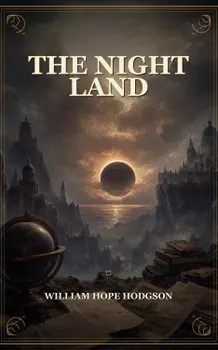
The Night Land is science fiction ahead of its time. Published in 1912, the book introduces a 17th-century gentleman who loses his wife. He soon discovers himself somehow reanimated in Earth's far future, millions of years from now, when the sun has died and the Earth has become a hellish waste. What remains of humanity lives in titanic mile-high pyramids surrounded by energy shields to protect them from the abhuman monsters lurking in the darkness. The human survivors soon receive a distress signal sent by a long-forgotten lesser pyramid, and the narrator embarks on a bloody quest to rescue the maiden of the pyramid—which he knows to be his lost love, somehow transcending time and space. On his journey the narrator is beset by countless horrifying monsters, many of them mutated former-humans. These depictions are so singular that H. P. Lovecraft called The Night Land "one of the most potent pieces of macabre imagination ever written." The novel is unique in its farsighted depiction of technology. The narrator has telepathic powers and is able to communicate with others over long distances. These powers are enabled by his "brain elements," which are possibly surgically implanted. Telepathic communications may be spied upon by the monsters of the waste, but a "master word" sent by the caller may verify the integrity of the signal—a description of a kind of early public-key cryptography. The narrator survives on food pellets and "powdered water," predicting a kind of astronaut food. His weapon of choice is a Diskos, a kind of whirling razor-sharp blade that shoots fire and energy. The machines and force fields of the human pyramid monument are powered by "Earth current," which the narrator worries is slowly becoming dimmer over the years. The pyramid itself is a jewel of imagination: described as miles wide and miles high, each layer is its own city, and it continues deep underground where artificial grow chambers provide food for millions of humans. Though the novel maintains a sort of legendary status for its grim and imaginative depiction of a monstrous future world, critics acknowledge the work as a flawed masterpiece. The narrative is written in a highly.
Om denne boken

The Night Land is science fiction ahead of its time. Published in 1912, the book introduces a 17th-century gentleman who loses his wife. He soon discovers himself somehow reanimated in Earth's far future, millions of years from now, when the sun has died and the Earth has become a hellish waste. What remains of humanity lives in titanic mile-high pyramids surrounded by energy shields to protect them from the abhuman monsters lurking in the darkness. The human survivors soon receive a distress signal sent by a long-forgotten lesser pyramid, and the narrator embarks on a bloody quest to rescue the maiden of the pyramid—which he knows to be his lost love, somehow transcending time and space. On his journey the narrator is beset by countless horrifying monsters, many of them mutated former-humans. These depictions are so singular that H. P. Lovecraft called The Night Land "one of the most potent pieces of macabre imagination ever written." The novel is unique in its farsighted depiction of technology. The narrator has telepathic powers and is able to communicate with others over long distances. These powers are enabled by his "brain elements," which are possibly surgically implanted. Telepathic communications may be spied upon by the monsters of the waste, but a "master word" sent by the caller may verify the integrity of the signal—a description of a kind of early public-key cryptography. The narrator survives on food pellets and "powdered water," predicting a kind of astronaut food. His weapon of choice is a Diskos, a kind of whirling razor-sharp blade that shoots fire and energy. The machines and force fields of the human pyramid monument are powered by "Earth current," which the narrator worries is slowly becoming dimmer over the years. The pyramid itself is a jewel of imagination: described as miles wide and miles high, each layer is its own city, and it continues deep underground where artificial grow chambers provide food for millions of humans. Though the novel maintains a sort of legendary status for its grim and imaginative depiction of a monstrous future world, critics acknowledge the work as a flawed masterpiece. The narrative is written in a highly.
Kom i gang med denne boken i dag for 0 kr

  • Få full tilgang til alle bøkene i appen i prøveperioden
  • Ingen forpliktelser, si opp når du vil
Prøv gratis nå
Mer enn 52 000 personer har gitt Nextory 5 stjerner på App Store og Google Play.

  1. The Ghost Pirates

    William Hope Hodgson

  2. The Voice in the Night :

    William Hope Hodgson

  3. 60 Gothic Classics : Enriched edition. Exploring the Haunting Depths of Classic Gothic Literature

    Charles Dickens, Oscar Wilde, Robert Louis Stevenson, Edgar Allan Poe, William Hope Hodgson, Joseph Sheridan Fanu, Anna Katharine Green, George MacDonald, Bram Stoker, Charlotte Brontë, Emily Brontë, William Godwin, Henry James, Victor Hugo, Théophile Gautier, Arthur Conan Doyle, Jane Austen, John Meade Falkner, George Eliot, Robert Hugh Benson, Horace Walpole, Frederick Marryat, Thomas love Peacock, Washington Irving, Nathaniel Hawthorne, Gaston Leroux, Grant Allen, Arthur Machen, Wilkie Collins, Thomas Peckett Prest, James Malcolm Rymer, Charles Brockden Brown, James Hogg, Charlotte Perkins Gilman, Richard Marsh, Charles Robert Maturin, John William Polidori, H.G. Wells, W. W. Jacobs, H.P. Lovecraft, William Thomas Beckford, Nikolai Gogol, Mary Shelley, Ann Radcliffe, Matthew Gregory Lewis, Fitz-James O’Brien, Eliza Parsons

  4. Beware The Silence : Ultimate Collection of Horror Classics, Macabre Tales & Supernatural Mysteries

    Wilhelm Hauff, Charles Dickens, Mark Twain, Harriet Beecher Stowe, Adelbert von Chamisso, Oscar Wilde, Robert Louis Stevenson, Edgar Allan Poe, William Hope Hodgson, Joseph Sheridan Fanu, John Buchan, Louis Tracy, Bram Stoker, Anatole France, Charlotte Brontë, Emily Brontë, Jack London, Henry James, Théophile Gautier, Arthur Conan Doyle, Richard Le Gallienne, Jane Austen, Ralph Adams Cram, Thomas De Quincey, John Meade Falkner, Guy De Maupassant, Thomas Hardy, William Archer, Daniel Defoe, John Kendrick Bangs, Cleveland Moffett, Brander Matthews, Marie Belloc Lowndes, Horace Walpole, Rudyard Kipling, Lafcadio Hearn, Hugh Walpole, Ambrose Bierce, Frederick Marryat, Ellis Parker Butler, Washington Irving, Leonid Andreyev, David Lindsay, Nathaniel Hawthorne, Grant Allen, Arthur Machen, Wilkie Collins, William Makepeace Thackeray, Thomas Peckett Prest, James Malcolm Rymer, Fergus Hume, Edward Bellamy, Walter Hubbell, Charlotte Perkins Gilman, Leopold Kompert, Richard Marsh, Florence Marryat, Catherine Crowe, John William Polidori, Vincent O'Sullivan, H.G. Wells, Robert W. Chambers, W. W. Jacobs, M.P. Shiel, E F Benson, Jerome K Jerome, M. R. James, E. T. Hoffmann, Stanley G. Weinbaum, George W. Reynolds, H.P. Lovecraft, Robert E. Howard, Edith Nesbit, Sabine Baring-Gould, William Thomas Beckford, Francis Marion Crawford, Lucy Maud Montgomery, Mary Elizabeth Braddon, Mary Louisa Molesworth, Mary E. Freeman, Nikolai Gogol, Mary Shelley, Elizabeth Gaskell, Edward Bulwer-Lytton, Frank R. Stockton, A. T. Quiller-Couch, Ann Radcliffe, Louisa M. Alcott, Amelia B. Edwards, Leonard Kip, Matthew Gregory Lewis, Fitz-James O’Brien, Katherine Rickford, Bithia Mary Croker, Catherine L. Pirkis, Émile Erckmann, Alexandre Chatrian, Pedro De Alarçon, H. H. (Saki), Pliny the Younger, Helena Blavatsky, Villiers de Adam, William F. Harvey, Fiona Macleod, William T. Stead, Gambier Bolton, Andrew Jackson Davis, Nizida, Walter F. Prince, Chester Bailey Fernando

  5. 60 Gothic Classics

    Charles Dickens, Oscar Wilde, Robert Louis Stevenson, Edgar Allan Poe, William Hope Hodgson, Joseph Sheridan Fanu, Anna Katharine Green, George MacDonald, Bram Stoker, Charlotte Brontë, Emily Brontë, William Godwin, Henry James, Victor Hugo, Théophile Gautier, Arthur Conan Doyle, Jane Austen, John Meade Falkner, George Eliot, Robert Hugh Benson, Horace Walpole, Frederick Marryat, Thomas love Peacock, Washington Irving, Nathaniel Hawthorne, Gaston Leroux, Grant Allen, Arthur Machen, Wilkie Collins, Thomas Peckett Prest, James Malcolm Rymer, Charles Brockden Brown, James Hogg, Charlotte Perkins Gilman, Richard Marsh, Charles Robert Maturin, John William Polidori, H.G. Wells, W. W. Jacobs, H.P. Lovecraft, William Thomas Beckford, Nikolai Gogol, Mary Shelley, Ann Radcliffe, Matthew Gregory Lewis, Fitz-James O’Brien, Eliza Parsons

  6. Lethal Sails - Complete Pirate Collection : History of Pirates, Trues Stories about the Most Notorious Pirates & Most Famous Pirate Novels

    Jules Verne, Charles Dickens, Robert Louis Stevenson, James Fenimore Cooper, Edgar Allan Poe, William Hope Hodgson, Charles Kingsley, Howard Pyle, Jack London, Arthur Conan Doyle, Walter Scott, Alexandre Dumas, Frederick Marryat, Washington Irving, Harold MacGrath, Joseph Lewis French, William Clark Russell, Harry Collingwood, Max Pemberton, Charles Boardman Hawes, L. Frank Baum, J.M. Barrie, R.M Ballantyne, G. A Henty, J. Allan Dunn, Robert E. Howard, F. Scott Fitzgerald, W. H. Kingston, Charles Johnson, Maturin Murray Ballou

  7. Deadly Sails - Complete Collection : History of Pirates, Trues Stories about the Most Notorious Pirates & Most Famous Pirate Novels

    Charles Johnson, Robert Louis Stevenson, Walter Scott, Howard Pyle, Edgar Allan Poe, Jack London, Jules Verne, Charles Boardman Hawes, J.M. Barrie, Arthur Conan Doyle, Frederick Marryat, R.M Ballantyne, Charles Dickens, L. Frank Baum, J. Allan Dunn, Robert E. Howard, James Fenimore Cooper, Alexandre Dumas, William Hope Hodgson, F. Scott Fitzgerald, Harold MacGrath, Harry Collingwood, W. H. Kingston, G. A Henty, Joseph Lewis French, Maturin Murray Ballou, Charles Kingsley, Washington Irving, William Clark Russell, Max Pemberton

  8. The Ghost Pirates

    William Hope Hodgson

  9. The Rise of Deathwatch : A Journey Through Gothic Horror: Explore 19th Century Dark Romance and Haunting Victorian Mysteries

    Horace Walpole, William Thomas Beckford, Eliza Parsons, William Godwin, Ann Radcliffe, Matthew Gregory Lewis, Charles Brockden Brown, Jane Austen, Mary Shelley, Thomas love Peacock, Edgar Allan Poe, John William Polidori, Washington Irving, Charles Robert Maturin, James Hogg, Victor Hugo, Frederick Marryat, Nikolai Gogol, Charlotte Brontë, Emily Brontë, James Malcolm Rymer, Thomas Peckett Prest, Nathaniel Hawthorne, George Eliot, Wilkie Collins, Robert Louis Stevenson, Charles Dickens, Joseph Sheridan Fanu, Arthur Conan Doyle, Oscar Wilde, Guy De Maupassant, Anna Katharine Green, Charlotte Perkins Gilman, Arthur Machen, George MacDonald, John Meade Falkner, H.G. Wells, Richard Marsh, Henry James, Bram Stoker, W. W. Jacobs, Robert Hugh Benson, Gaston Leroux, Théophile Gautier, William Hope Hodgson, Grant Allen

  10. Ny

    30 Occult and Supernatural masterpieces in one book

    Washington Irving, Mary Shelley, Charles Dickens, Joseph Sheridan Fanu, Elizabeth Cleghorn Gaskell, Louisa May Alcott, Oscar Wilde, Rudyard Kipling, Edith Nesbit, John Meade Falkner, Henry James, H.G. Wells, Montague Rhodes James, Arnold Bennett, Henry Rider Haggard, William Hope Hodgson, Virginia Woolf, Master Hendrick Certain, Pastor Tappau's, Lefebvre, De Lacy

  11. Ny

    Carnacki, The Ghost Finder

    William Hope Hodgson

  12. 1900 to 1939 Science Fiction - 17 Classic Science Fiction Short Stories from 1900 to 1939

    H.G. Wells, Murray Leinster, H.P. Lovecraft, Robert E. Howard, Clark Ashton Smith, Jack Williamson, Henry Kuttner, Paul Ernst, Mack Reynolds, George T. Spillman, William Hope Hodgson, August Derleth, Carl W. Ganzlin, Ambrose Bierce, Carl Jacobi, William Brittain, Edmond Hamilton, Frank Belknap Long