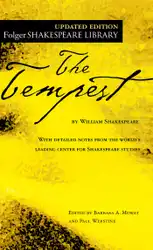
The Tempest

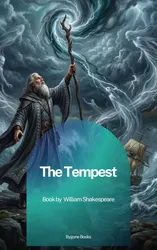
William Shakespeare's "The Tempest" stands as a quintessential exploration of themes such as power, betrayal, redemption, and the human capacity for forgiveness. Set on a remote island, the play weaves a rich tapestry of supernatural elements and intricate character dynamics, embodying Shakespeare's signature blend of poetic dialogue and profound insights into human nature. The narrative centers around Prospero, a wronged Duke who wields magic to navigate his quest for justice, encapsulating the transitional period of the early 17th century—marked by a burgeoning interest in exploration and the complexity of colonial encounters. Shakespeare, often hailed as the greatest playwright in the English language, drew from his own experiences and the contemporary socio-political landscape of England, influenced perhaps by the age's fascination with the New World and the nature of sovereignty. His intimate understanding of human psyche and societal structures enriches "The Tempest," allowing for multiple interpretations, from a post-colonial lens to a philosophical inquiry into agency and free will. Highly recommended for readers and scholars alike, "The Tempest" offers a deep philosophical reflection on the interplay between man and nature, as well as personal and collective transformation. Its layers of meaning ensure that it remains perpetually relevant, inviting the audience to engage with its enchanting narrative and the weighty moral questions it raises.

Om denne boken

William Shakespeare's "The Tempest" stands as a quintessential exploration of themes such as power, betrayal, redemption, and the human capacity for forgiveness. Set on a remote island, the play weaves a rich tapestry of supernatural elements and intricate character dynamics, embodying Shakespeare's signature blend of poetic dialogue and profound insights into human nature. The narrative centers around Prospero, a wronged Duke who wields magic to navigate his quest for justice, encapsulating the transitional period of the early 17th century—marked by a burgeoning interest in exploration and the complexity of colonial encounters. Shakespeare, often hailed as the greatest playwright in the English language, drew from his own experiences and the contemporary socio-political landscape of England, influenced perhaps by the age's fascination with the New World and the nature of sovereignty. His intimate understanding of human psyche and societal structures enriches "The Tempest," allowing for multiple interpretations, from a post-colonial lens to a philosophical inquiry into agency and free will. Highly recommended for readers and scholars alike, "The Tempest" offers a deep philosophical reflection on the interplay between man and nature, as well as personal and collective transformation. Its layers of meaning ensure that it remains perpetually relevant, inviting the audience to engage with its enchanting narrative and the weighty moral questions it raises.

Kom i gang med denne boken i dag for 0 kr

  • Få full tilgang til alle bøkene i appen i prøveperioden
  • Ingen forpliktelser, si opp når du vil
Prøv gratis nå
Mer enn 52 000 personer har gitt Nextory 5 stjerner på App Store og Google Play.

  1. 5.0

    Romeo and Juliet (lättläst)

    William Shakespeare

  2. 4.0

    3500 Final Quotes

    Marcus Aurelius, Jane Austen, Beaumarchais, Napoleon Bonaparte, Buddha, Winston Churchill, Cicero, Confucius, Nicolas de Chamfort, Charles de Gaulle, Antoine de Saint-Exupéry, Denis Diderot, Fyodor Dostoevsky, Albert Einstein, Ralph Waldo Emerson, Anne Frank, Mahatma Gandhi, Immanuel Kant, Søren Kierkegaard, Martin Luther King, Georg Christoph Lichtenberg, Abraham Lincoln, Montesquieu, Friedrich Nietzsche, Plato, Marcel Proust, Arthur Schopenhauer, William Shakespeare, Socrates, Baruch Spinoza, Henry David Thoreau, Leonardo da Vinci, Voltaire, Oscar Wilde, Laozi

  3. Hamlet

    William Shakespeare

  4. 5.0

    Hamlet

    William Shakespeare

  5. 3.5

    Romeo and Juliet

    William Shakespeare

  6. Romeo and Juliet

    William Shakespeare

  7. 3.3

    Macbeth

    William Shakespeare

  8. 4.1

    Hamlet

    William Shakespeare

  9. 5.0

    Hamlet

    William Shakespeare

  10. Hamlet

    William Shakespeare

  11. The Tragedy of Hamlet, Prince of Denmark

    William Shakespeare

  12. 4.0

    The Most Wonderful Christmas Tales Of All Time : A Multicultural Tapestry of Festive Fiction and Timeless Tales

    Bjørnstjerne Bjørnson, Selma Lagerlöf, Charles Dickens, Mark Twain, Harriet Beecher Stowe, Martin Luther, Robert Louis Stevenson, William Shakespeare, Henry Wadsworth Longfellow, Max Brand, William Wordsworth, Carolyn Wells, Charles Mackay, John Addington Symonds, Sophie May, Louisa May Alcott, Henry van Dyke, Arthur Conan Doyle, Frances Hodgson Burnett, Andrew Lang, Frances Ridley Havergal, Alphonse Daudet, William John Locke, Walter Scott, Gustavo Adolfo Bécquer, John Leighton, Booth Tarkington, Ralph Henry Barbour, Benito Pérez Galdós, Ruth McEnery Stuart, Alice Duer Miller, Elizabeth Cleghorn Gaskell, Armando Palacio Valdés, William Morris, Anthony Trollope, Marcel Prévost, Rudyard Kipling, Beatrix Potter, Robert Herrick, Mary Hartwell Catherwood, Emily Dickinson, Bret Harte, Hamilton Wright Mabie, Meredith Nicholson, Lucas Malet, Ellis Parker Butler, Washington Irving, Isaac Watts, James Russell Lowell, Willa Cather, Nathaniel Hawthorne, James Whitcomb Riley, Thomas Nelson Page, O.Henry, Phillips Brooks, Saki, Cyrus Townsend Brady, William Makepeace Thackeray, Mary Stewart Cutting, Sarah Orne Jewett, François Coppée, Oliver Bell Bunce, Susan Coolidge, Samuel McChord Crothers, Maud Lindsay, Alice Hale Burnett, Walter Crane, André Theuriet, Amy Ella Blanchard, Isabel Cecilia Williams, Evaleen Stein, Nell Speed, Amanda M. Douglas), Edgar Wallace, George Wither, Booker T. Washington, Olive Thorne Miller, Margaret Sidney, William Douglas O'Connor, Vernon Lee, Anne Hollingsworth Wharton, Henry Vaughan, Eliza Cook, Kate Upson Clark, Ben Jonson, Ernest Ingersoll, Frank Samuel Child, Willis Boyd Allen, Georgianna M. Bishop, Edward Thring, F. L. Stealey, James Selwin Tait, Tudor Jenks, L. Frank Baum, C.N. Williamson, A.M. Williamson, J.M. Barrie, Eleanor H. Porter, Annie F. Johnston, Jacob A. Riis, S. Weir Mitchell, Elbridge S. Brooks, Edward A. Rand, W.H. Murray, Florence L. Barclay, E. T. Hoffmann, Harrison S. Morris, Robert E. Howard, Marjorie L. Pickthall, Sarah P. Doughty, Hans Christian Andersen, William Butler Yeats, Richard Watson Gilder, Lucy Maud Montgomery, Anton Chekhov, Mary Elizabeth Braddon, Mary Louisa Molesworth, Leo Tolstoy, Fyodor Dostoevsky, Cecil Frances Alexander, Mary E. Freeman, Margaret Deland, William Drummond, Robert Southwell, Reginald Heber, Alfred Lord Tennyson, George MacDonald, A. S. Boyd, Maxime Du Camp, Mary Austin, Juliana Horatia Ewing, Guy De Maupassant, Brothers Grimm, Clement Moore, Susan Anne Livingston, Ridley Sedgwick, Nora A. Smith, Phebe A. Curtiss, Nellie C. King, Lucy Wheelock, Aunt Hede, Frederick E. Dewhurst, Jay T. Stocking, Anna Robinson, Florence M. Kingsley, M. A. Lane, Elizabeth Harkison, Raymond Mcalden, F. E. Mann, Winifred M. Kirkland, Katherine Pyle, Grace Margaret Gallaher, Elia W. Peattie, F. Arnstein, James Weber Linn, Antonio Maré, Pedro A. Alarcón, Jules Simon, Marion Clifford, E. E. Hale, Georg Schuster, Matilda Betham Edwards, Angelo J. Lewis, William Francis Dawson, Christopher North, Alfred Domett, Dinah Maria Mulock, James S. Park, Edmund Hamilton Sears, Edmund Bolton, C.s. Stone, Harriet F. Blodgett, John G. Whittier, Christian Burke, Emily Huntington Miller, Cyril Winterbotham, Enoch Arnold Bennett, John Punnett Peters, Laura Elizabeth Richards