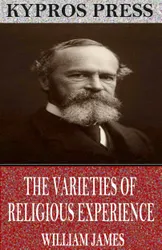
The Varieties Of Religious Experience

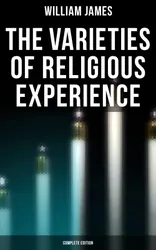
We rely on your support to help us keep producing beautiful, free, and unrestricted editions of literature for the digital age. Will you support our efforts with a donation ? The Varieties of Religious Experience is the edited form of William James's Gifford Lectures on natural theology, which he delivered at the University of Edinburgh, Scotland, between 1901 and 1902. James intended these lectures to more completely assess religion through a philosophical lens, but health problems forced him to curtail that goal, leaving the lectures largely a description of the many different ways people directly and immediately experience religion. These include ways like healthy-mindedness, saintliness, conversion, and mysticism. This work is one of the foundational texts of the field of psychology of religion, which developed alongside modern approaches to experimental psychology dating to the 1890s. The Varieties of Religious Experience has been in print since its publication and has an established place in the western canon. William James (died 1910) was a prominent voice of the late 19th and early 20th century. Their work has endured across generations and continues to be read and studied worldwide. The nonfiction literature of previous centuries offers invaluable windows into the minds and preoccupations of earlier ages. The Varieties Of Religious Experience combines the personal and the universal in ways that continue to resonate with contemporary readers seeking to understand both history and human nature.


Om denne boken

We rely on your support to help us keep producing beautiful, free, and unrestricted editions of literature for the digital age. Will you support our efforts with a donation ? The Varieties of Religious Experience is the edited form of William James's Gifford Lectures on natural theology, which he delivered at the University of Edinburgh, Scotland, between 1901 and 1902. James intended these lectures to more completely assess religion through a philosophical lens, but health problems forced him to curtail that goal, leaving the lectures largely a description of the many different ways people directly and immediately experience religion. These include ways like healthy-mindedness, saintliness, conversion, and mysticism. This work is one of the foundational texts of the field of psychology of religion, which developed alongside modern approaches to experimental psychology dating to the 1890s. The Varieties of Religious Experience has been in print since its publication and has an established place in the western canon. William James (died 1910) was a prominent voice of the late 19th and early 20th century. Their work has endured across generations and continues to be read and studied worldwide. The nonfiction literature of previous centuries offers invaluable windows into the minds and preoccupations of earlier ages. The Varieties Of Religious Experience combines the personal and the universal in ways that continue to resonate with contemporary readers seeking to understand both history and human nature.
Kom i gang med denne boken i dag for 0 kr

  • Få full tilgang til alle bøkene i appen i prøveperioden
  • Ingen forpliktelser, si opp når du vil
Prøv gratis nå
Mer enn 52 000 personer har gitt Nextory 5 stjerner på App Store og Google Play.