
eller

Hitta en berättelse direkt

  1. 4.0

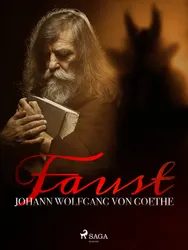
    Faust

    Johann Wolfgang Goethe

  2. 4.0

    Faust

    Johann Wolfgang Goethe

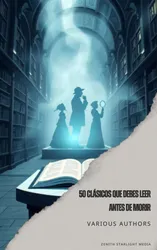
  3. 50 Clásicos que debes leer antes de morir

    Dante Alighieri, Aristóteles, Jane Austen, Charles Baudelaire, Giovanni Boccaccio, Anne Brontë, C. Collodi, James Fenimore Cooper, Fedor Mikhaïlovitch Dostoïevski, Arthur Conan Doyle, Alexandre Dumas, José de Espronceda, Gustave Flaubert, Sigmund Freud, Benito Pérez Galdós, Kahlil Gibran, Johann Wolfgang Goethe, Johann Wolfgang von Goethe, Victor Hugo, Thomas Hardy, Nathaniel Hawthorne, Vicente Blasco Ibáñez, Washington Irving, James Joyce, Mariano José de Larra, Jack London, Federico García Lorca, H.P. Lovecraft, Antonio Machado, Gustav Meyrink, John Stuart Mill, Amado Nervo, Friedrich Nietzsche, Solomon Northup, Alexander Sergeyevich Pushkin, Francisco de Quevedo, Walter Scott, William Shakespeare, Robert Louis Stevenson, Harriet Beecher Stowe, Jonathan Swift, Mark Twain, Miguel De Unamuno, Ramón María del Valle-Inclán, Julio Verne, Virginia Woolf

  4. 4.0

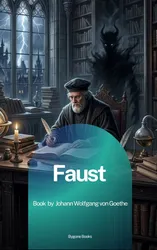
    Faust

    Johann Wolfgang Goethe

  5. Faust

    Johann Wolfgang Goethe

  6. Ny
    4.0

    Faust

    Johann Wolfgang Goethe

  7. Ny

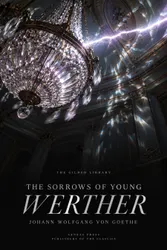
    The Sorrows of Young Werther : A Novel in Letters

    Johann Wolfgang Goethe

  8. Ny

    Las afinidades electivas

    Johann Wolfgang Goethe

  9. Ny

    100 Clásicos de la Literatura Universal

    Francis Scott Fitzgerald, Mary Shelley, Lyman Frank Baum, Louisa May Alcott, Dante Alighieri, Jane Austen, Ambrose Bierce, Emily Brontë, Edgar Rice Burroughs, Lewis Carroll, Wilkie Collins, René Descartes, Charles Dickens, Emily Dickinson, Alexandre Dumas, Gustave Flaubert, Benito Pérez Galdós, Johann Wolfgang Goethe, Thomas Hardy, E. T. Hoffmann, Washington Irving, Henry James, James Joyce, Franz Kafka

  10. Ny

    Harvard Classics : The Five-Foot Shelf of Books

    Aesop, Dante Alighieri, Hans Christian Andersen, Augustine of Hippo, Marcus Aurelius, Jane Austen, Francis Bacon, Honoré de Balzac, Francis Beaumont, Bjørnstjerne Bjørnson, Thomas Browne, Robert Browning, John Bunyan, EDMUND BURKE, Robert Burns, Lord Byron, Thomas Carlyle, Benvenuto Cellini, Miguel de Cervantes, Marcus Tullius Cicero, Richard Henry Jr., Charles Darwin, Alphonse Daudet, Thomas Dekker, Charles Dickens, Fyodor Dostoevsky, John Dryden, Charles W. Eliot, George Eliot, Ralph Waldo Emerson, Epictetus, John Fletcher, Theodor Fontane, Benjamin Franklin, Johann Wolfgang Goethe, Oliver Goldsmith, Jacob Grimm, Edward Everett Hale, Bret Harte, Nathaniel Hawthorne, Homer, Victor Hugo, Washington Irving, Henry James, Ben Jonson, Gottfried Keller, Thomas à Kempis, Alexander L. Kielland, Martin Luther, Niccolò Machiavelli, Alessandro Manzoni, Christopher Marlowe, Philip Massinger, Guy De Maupassant, John Stuart Mill, John Milton, Thomas More, William Morris, Alfred de Musset, William Allan Neilson, William Penn, Plato, Pliny the Younger, Plutarch, George Sand, Percy Bysshe Shelley, Richard Brinsley Sheridan, Adam Smith, Laurence Sterne, Theodor Storm, William Makepeace Thackeray, Leo Tolstoy, Ivan Turgenev, Mark Twain, Juan Valera, Virgil, Izaak Walton, John Webster, John Woolman

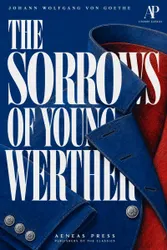
  11. The Sorrows of Young Werther

    Johann Wolfgang Goethe

  12. Faust

    Johann Wolfgang Goethe

Om den här boken

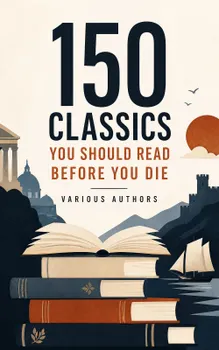
150 Classics You Should Read Before You Die surveys the capacious Western canon through epic, drama, philosophy, satire, Gothic romance, realism, adventure, children's fantasy, detective fiction, poetry, and modernist experiment. Its selections move from antiquity to the twentieth century, placing foundational meditations on civic life and moral responsibility beside narratives of social ambition, imperial encounter, domestic constraint, scientific speculation, and psychological interiority. Epic journeys, Shakespearean drama, Gothic terrors, and stream-of-consciousness innovations give the volume both historical scope and stylistic vitality. The contributors constitute an extraordinary transnational lineage: Greek and Roman thinkers and storytellers converse with British, Irish, French, German, American, and other Anglophone and European writers. Their careers intersect with Romanticism, Victorian realism, the Gothic revival, abolitionist writing, naturalism, symbolism, aestheticism, and modernism. Across differences of nation, class, gender, and genre, these voices register changing conceptions of individual freedom, faith, sexuality, industrial modernity, colonialism, and artistic form, making the anthology a compact map of literary history. Ideal for students, general readers, and established lovers of literature, this volume offers an inviting route into works that have shaped subsequent reading and writing. Its greatest value lies in the dialogue it creates among radically different sensibilities, enabling readers to compare forms, questions, and cultural inheritances within one richly varied library.