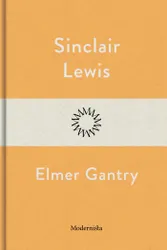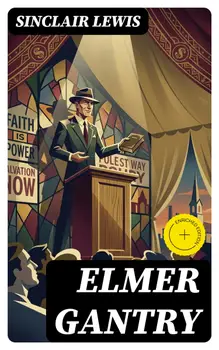
Elmer Gantry : Enriched edition.

In "Elmer Gantry," Sinclair Lewis presents a scathing critique of American religiosity through the eyes of its charismatic and morally ambiguous protagonist, Elmer Gantry. The novel, characterized by its sharp wit and keen social commentary, combines elements of realism and satire, reflecting the early 20th century's tensions between faith and commercialism. Lewis meticulously dissects the hypocrisy found within the religious establishment, showcasing how Gantry, a passionate yet unscrupulous preacher, manipulates the fervor of a gullible congregation to further his ambitions. The narrative style—vivid and incisive—captures the cacophony of voices in small-town America, painting a rich tapestry of religious fervor and political intrigue. Sinclair Lewis, the first American to win the Nobel Prize in Literature, drew upon his own experiences and observations of American society in crafting this novel. Born in 1885 in Minnesota, he was deeply influenced by the religious enthusiasm prevalent in his hometown, alongside his progressive views on social morality and individual integrity. These themes echo through "Elmer Gantry," as Lewis delved into the paradoxes of faith, ambition, and ethical ambiguity. Recommended for readers interested in a profound exploration of morality and hypocrisy, "Elmer Gantry" is a timeless work that resonates in today's sociopolitical climate. Lewis's powerful storytelling invites reflection on the complexities of faith and the often-murky intersection of religion and personal ambition, making it a compelling read for anyone seeking to understand the human condition.

In this enriched edition, we have carefully created added value for your reading experience:

- A succinct Introduction situates the work's timeless appeal and themes.

- The Synopsis outlines the central plot, highlighting key developments without spoiling critical twists.

- A detailed Historical Context immerses you in the era's events and influences that shaped the writing.

- An Author Biography reveals milestones in the author's life, illuminating the personal insights behind the text.

- A thorough Analysis dissects symbols, motifs, and character arcs to unearth underlying meanings.

- Reflection questions prompt you to engage personally with the work's messages, connecting them to modern life.

- Hand‐picked Memorable Quotes shine a spotlight on moments of literary brilliance.

- Interactive footnotes clarify unusual references, historical allusions, and archaic phrases for an effortless, more informed read.

Om den här boken

In "Elmer Gantry," Sinclair Lewis presents a scathing critique of American religiosity through the eyes of its charismatic and morally ambiguous protagonist, Elmer Gantry. The novel, characterized by its sharp wit and keen social commentary, combines elements of realism and satire, reflecting the early 20th century's tensions between faith and commercialism. Lewis meticulously dissects the hypocrisy found within the religious establishment, showcasing how Gantry, a passionate yet unscrupulous preacher, manipulates the fervor of a gullible congregation to further his ambitions. The narrative style—vivid and incisive—captures the cacophony of voices in small-town America, painting a rich tapestry of religious fervor and political intrigue. Sinclair Lewis, the first American to win the Nobel Prize in Literature, drew upon his own experiences and observations of American society in crafting this novel. Born in 1885 in Minnesota, he was deeply influenced by the religious enthusiasm prevalent in his hometown, alongside his progressive views on social morality and individual integrity. These themes echo through "Elmer Gantry," as Lewis delved into the paradoxes of faith, ambition, and ethical ambiguity. Recommended for readers interested in a profound exploration of morality and hypocrisy, "Elmer Gantry" is a timeless work that resonates in today's sociopolitical climate. Lewis's powerful storytelling invites reflection on the complexities of faith and the often-murky intersection of religion and personal ambition, making it a compelling read for anyone seeking to understand the human condition.

In this enriched edition, we have carefully created added value for your reading experience:

- A succinct Introduction situates the work's timeless appeal and themes.

- The Synopsis outlines the central plot, highlighting key developments without spoiling critical twists.

- A detailed Historical Context immerses you in the era's events and influences that shaped the writing.

- An Author Biography reveals milestones in the author's life, illuminating the personal insights behind the text.

- A thorough Analysis dissects symbols, motifs, and character arcs to unearth underlying meanings.

- Reflection questions prompt you to engage personally with the work's messages, connecting them to modern life.

- Hand‐picked Memorable Quotes shine a spotlight on moments of literary brilliance.

- Interactive footnotes clarify unusual references, historical allusions, and archaic phrases for an effortless, more informed read.

Kom igång med den här boken idag för 0 kr

  • Få full tillgång till alla böcker i appen under provperioden
  • Ingen bindningstid, avsluta när du vill
Prova gratis nu
Mer än 52 000 personer har gett Nextory 5 stjärnor i App Store och på Google Play.

  1. Nobelpriset
    2.5

    It Can't Happen Here

    Sinclair Lewis

  2. 3.5

    Sånt händer inte här

    Sinclair Lewis

  3. Nobelpriset
    5.0

    The Job

    Sinclair Lewis

  4. Nobelpriset
    3.5

    Sånt händer inte här

    Sinclair Lewis

  5. Nobelpriset

    Babbitt

    Sinclair Lewis

  6. 100 Masterpieces of Murder Mystery & Detective Fiction

    Fyodor Dostoyevsky, Sinclair Lewis, H.G. Wells, George Orwell, Robert Louis Stevenson, Jules Verne, Mark Twain, Charles Dickens, D. H. Lawrence, Oscar Wilde, Anton Chekhov, Nikolai Gogol, Charlotte Brontë, Emily Brontë, Anne Brontë, Frances Hodgson Burnett, Thomas Hardy, Joseph Conrad, Henry James, Arthur Conan Doyle, Edgar Allan Poe, G.K. Chesterton, Wilkie Collins, Walter Scott, Daniel Defoe, F. Scott Fitzgerald, Edgar Wallace, R Austin Freeman, Anna Katharine Green, Josephine Tey, Ethel Lina White, Sapper, Arthur Morrison, Marie Belloc Lowndes, John Buchan, Robert William Chambers, E. Phillips Oppenheim, J. S. Fletcher, Richard Marsh, Annie Haynes, Alexandre Dumas, Maurice Leblanc, Gaston Leroux, Émile Gaboriau, Bram Stoker, Sheridan Le Fanu, H.P. Lovecraft, William Hope Hodgson, Algernon Blackwood, Washington Irving, Guy De Maupassant, Frances Noyes Hart, Theodore Dreiser, Armitage Trail, EW Hornung, Earl Derr Biggers, S. S. Dine, Jeffery Farnol

  7. Nobelpriset

    Arrowsmith

    Sinclair Lewis

  8. Nobelpriset

    Mantrap

    Sinclair Lewis

  9. Nobelpriset

    The Collected Works of Sinclair Lewis (Annotated) : Enriched Edition. 30+ Novels & Short Stories: Babbitt, Main Street, The Willow Walk, Arrowsmith, It Can't Happen Here…

    Sinclair Lewis

  10. Nobelpriset
    5.0

    Arrowsmith

    Sinclair Lewis

  11. Nobelpriset
    5.0

    Free Air

    Sinclair Lewis

  12. 30 Humorous Masterpieces you have to read before you die

    Sinclair Lewis, P.G. Wodehouse, Oscar Wilde, H.G. Wells, Mark Twain, Frank R. Stockton, Jerome Klapka Jerome, Lewis Carroll, Gilbert Keith Chesterton, John Kendrick Bangs, Jane Austen, Edwin Abbott Abbott, Aldous Huxley, Natsume Sōseki