Betygsatt 4.0 av 5, 3 recensioner
Ljudbok E-bok

Om den här boken

"Purgatorio" is the second part of Alighieri’s poem "The Divine Comedy". The story of Dante travelling through the nine circles of Hell in "Inferno" continues as he survives the depths of hell and climbs the mountain Purgatory. The mountain has seven terraces which represent the seven deadly sins and the seven levels of suffering which lead to spiritual growth. The story depicts love as the initial reason for the arising of sins. On top of the mountain is the Earthly Paradise. If the soul is however going to reach it, depends on the choices one makes.Dante Alighieri was an Italian poet, philosopher, language and political theorist, born in Florence in 1265. He is one of the best known poets of the Middle Ages and his masterpiece "The Divine Comedy" is considered to be a representative of the medieval world-view. "The Divine Comedy" and "The New life" were written in vernacular, i.e. the speech variety that was used in everyday life. This made the literature accessible to most people and this is mainly why Dante is called "The father of Italian language". Dante’s life was divided by poetry and politics and the relationships between secular and religious authority were topics which were often depicted in his literary works.

Kom igång med den här boken idag för 0 kr

  • Få full tillgång till alla böcker i appen under provperioden
  • Ingen bindningstid, avsluta när du vill
Prova gratis nu
Mer än 52 000 personer har gett Nextory 5 stjärnor i App Store och på Google Play.

Liknande böcker

Mer av Dante Alighieri

  1. 3.0

    50 Masterpieces you have to read before you die vol: 1 (2020 Edition) : Included: Little Women, The Richest Man in Babylon Emma, The Call Of The Wild ....

    Louisa May Alcott, Dante Alighieri, Marcus Aurelius, Jane Austen, L. Frank Baum, Charlotte Brontë, Emily Brontë, Anne Brontë, Miguel de Cervantes, Agatha Christie, George S. Clason, Arthur Conan Doyle, Joseph Conrad, Charles Dickens, Fyodor Dostoyevsky, Alexandre Dumas, George Eliot, G.K. Chesterton, G.K. Chesterton, Zane Grey, Nathaniel Hawthorne, Napoleon Hill, Homer, Victor Hugo, Frances Hodgson Burnett, Washington Irving, Henry James, Franz Kafka, Rudyard Kipling, Jack London, Leo Tolstoy, H.P. Lovecraft, Lucy Maud Montgomery, Joseph Murphy, Robert Louis Stevenson, Edgar Allan Poe, Marcel Proust, Publius, Mary Shelley, Bram Stoker, Mark Twain, Sun Tzu, Lew Wallace, Wallace D. Wattles, H.G. Wells

  2. 1.5

    The Divine Comedy : Inferno

    Dante Alighieri

  3. 3.5

    Den gudomliga komedin

    Dante Alighieri

  4. 50 Masterpieces you have to read before you die

    Frances Hodgson Burnett, Homer, Charles Dickens, Lyman Frank Baum, Nathaniel Hawthorne, Thomas Hardy, Robert Louis Stevenson, Henry Haggard, Wilkie Collins, H.G. Wells, Sir Walter Scott, Lucy Maud Montgomery, Louisa May Alcott, Henry Fielding, Mary Shelley, Arthur Conan Doyle, Leo Tolstoy, Euripides, Fyodor Dostoevsky, Alexander Pushkin, James Fenimore Cooper, Daniel Defoe, Joseph Conrad, Jonathan Swift, William Shakespeare, Oscar Wilde, John Bunyan, Charles Darwin, Alfred Tennyson, Bram Stoker, James Joyce, Dante Alighieri, Howard Pyle, Jane Austen, Emily Bronte, Giovanni Boccaccio, Rudyard Kipling

  5. 3.0

    The Divine Comedy by Dante Alighieri :

    Dante Alighieri

  6. 3.0

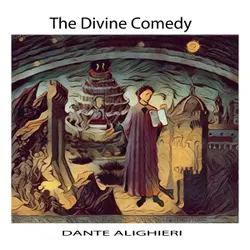
    The Divine Comedy

    Dante Alighieri

  7. 3.2
    #1

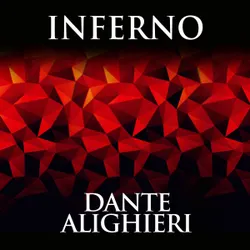
    Inferno

    Dante Alighieri

  8. 4.7
    #1

    The Inferno of Dante

    Dante Alighieri

  9. The Epic Poems Collection : Cinq chefs-d'oeuvre de la poesie epique occidentale

    Homer, Virgil, Dante Alighieri, William Shakespeare, John Milton

  10. Harvard Classics : The Five-Foot Shelf of Books

    Aesop, Dante Alighieri, Hans Christian Andersen, Augustine of Hippo, Marcus Aurelius, Jane Austen, Francis Bacon, Honoré de Balzac, Francis Beaumont, Bjørnstjerne Bjørnson, Thomas Browne, Robert Browning, John Bunyan, EDMUND BURKE, Robert Burns, Lord Byron, Thomas Carlyle, Benvenuto Cellini, Miguel de Cervantes, Marcus Tullius Cicero, Richard Henry Jr., Charles Darwin, Alphonse Daudet, Thomas Dekker, Charles Dickens, Fyodor Dostoevsky, John Dryden, Charles W. Eliot, George Eliot, Ralph Waldo Emerson, Epictetus, John Fletcher, Theodor Fontane, Benjamin Franklin, Johann Wolfgang Goethe, Oliver Goldsmith, Jacob Grimm, Edward Everett Hale, Bret Harte, Nathaniel Hawthorne, Homer, Victor Hugo, Washington Irving, Henry James, Ben Jonson, Gottfried Keller, Thomas à Kempis, Alexander L. Kielland, Martin Luther, Niccolò Machiavelli, Alessandro Manzoni, Christopher Marlowe, Philip Massinger, Guy De Maupassant, John Stuart Mill, John Milton, Thomas More, William Morris, Alfred de Musset, William Allan Neilson, William Penn, Plato, Pliny the Younger, Plutarch, George Sand, Percy Bysshe Shelley, Richard Brinsley Sheridan, Adam Smith, Laurence Sterne, Theodor Storm, William Makepeace Thackeray, Leo Tolstoy, Ivan Turgenev, Mark Twain, Juan Valera, Virgil, Izaak Walton, John Webster, John Woolman

  11. La Divina Commedia

    Dante Alighieri

  12. 100 Clásicos de la Literatura Universal

    Francis Scott Fitzgerald, Mary Shelley, Lyman Frank Baum, Louisa May Alcott, Dante Alighieri, Jane Austen, Ambrose Bierce, Emily Brontë, Edgar Rice Burroughs, Lewis Carroll, Wilkie Collins, René Descartes, Charles Dickens, Emily Dickinson, Alexandre Dumas, Gustave Flaubert, Benito Pérez Galdós, Johann Wolfgang von Goethe, Thomas Hardy, E T A Hoffmann, Washington Irving, Henry James, James Joyce, Franz Kafka, Gaston Leroux, Federico García Lorca, H.P. Lovecraft, Publio Virgilio Marón, Lucy Maud Montgomery, John William Polidori, Marco Polo, Antoine de Saint-Exupéry, Emilio Salgari, Walter Scott, Mark Twain, Jules Verne, Julio Verne, H.G. Wells, Edith Wharton, Mary Wollstonecraft, Stefan Zweig, Sun Tzu, Bram Stoker, - Aristoteles, George Bernard Shaw, Henryk Sienkiewicz, Concepción Arenal, Charlotte Brontë, Miguel de Cervantes, G.K. Chesterton, Daniel Defoe, Fyodor Mikhailovich Dostoyevsky, Arthur Conan Doyle, Sigmund Freud, H. Rider Haggard, Homero, Immanuel Kant, Rudyard Kipling, Molière, Friedrich Nietzsche, Fernando de Rojas, Sófocles, William Makepeace Thackeray, León Tolstói, Voltaire, Ramón María del Valle-Inclán, Oscar Wilde, Virginia Woolf