Om den här boken

‘How selfish soever man may be supposed, there are evidently some principles in his nature, which interest him in the fortune of others, and render their happiness necessary to him, though he derives nothing from it except the pleasure of seeing it.’

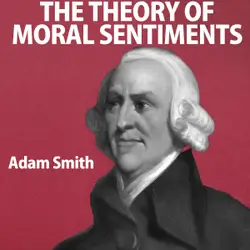
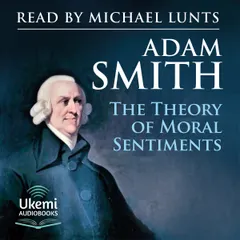
So begins The Theory of Moral Sentiments (1759), the first major text by Adam Smith, who, seven years later, was to publish what was to become one of the major economic classics, The Wealth of Nations (1776). However, Smith regarded The Theory of Moral Sentiments as his most important work because in it he identified the profound human instinct to act not necessarily in self-interest but through, as he phrased it, a ‘mutual sympathy of sentiments’.

The work is divided into seven parts, starting with Part 1: Of the Propriety of Action, in which Smith proposes the idea that ‘Sympathy’ can underlie human actions towards others, prompted by various emotions, be it perception of misfortune in others or simply ‘the pleasure of mutual sympathy’. Other parts include ‘Of the Effect of Utility upon the Sentiment of Approbation’, ‘Of the Character of Virtue’ and finally ‘Of Systems of Moral Philosophy’.

In this concluding section, Smith considers the views of other philosophers, including Epicurus, Zeno, Plato, Aristotle, Cicero and Hobbes, as well as the opinions of his mentor, Dr Francis Hutchison, an important influence. In short, Smith proposes that man’s sense of morality is interwoven with social instincts as much as reason or self-interest. Sympathy - the contemporary word we would use is empathy - is a universal and strongly held emotion in mankind, he says, imbued with virtue, prudence, justice and beneficence. The Theory of Moral Sentiments was, and remains, a milestone in Western philosophy.

Kom igång med den här boken idag för 0 kr

  • Få full tillgång till alla böcker i appen under provperioden
  • Ingen bindningstid, avsluta när du vill
Prova gratis nu
Mer än 52 000 personer har gett Nextory 5 stjärnor i App Store och på Google Play.

Mer av Adam Smith

  1. Harvard Classics : The Five-Foot Shelf of Books

    Aesop, Dante Alighieri, Hans Christian Andersen, Augustine of Hippo, Marcus Aurelius, Jane Austen, Francis Bacon, Honoré de Balzac, Francis Beaumont, Bjørnstjerne Bjørnson, Thomas Browne, Robert Browning, John Bunyan, EDMUND BURKE, Robert Burns, Lord Byron, Thomas Carlyle, Benvenuto Cellini, Miguel de Cervantes, Marcus Tullius Cicero, Richard Henry Jr., Charles Darwin, Alphonse Daudet, Thomas Dekker, Charles Dickens, Fyodor Dostoevsky, John Dryden, Charles W. Eliot, George Eliot, Ralph Waldo Emerson, Epictetus, John Fletcher, Theodor Fontane, Benjamin Franklin, Johann Wolfgang Goethe, Oliver Goldsmith, Jacob Grimm, Edward Everett Hale, Bret Harte, Nathaniel Hawthorne, Homer, Victor Hugo, Washington Irving, Henry James, Ben Jonson, Gottfried Keller, Thomas à Kempis, Alexander L. Kielland, Martin Luther, Niccolò Machiavelli, Alessandro Manzoni, Christopher Marlowe, Philip Massinger, Guy De Maupassant, John Stuart Mill, John Milton, Thomas More, William Morris, Alfred de Musset, William Allan Neilson, William Penn, Plato, Pliny the Younger, Plutarch, George Sand, Percy Bysshe Shelley, Richard Brinsley Sheridan, Adam Smith, Laurence Sterne, Theodor Storm, William Makepeace Thackeray, Leo Tolstoy, Ivan Turgenev, Mark Twain, Juan Valera, Virgil, Izaak Walton, John Webster, John Woolman

  2. 4.8

    The Wealth of Nations

    Adam Smith

  3. The Money Game

    Adam Smith

  4. The Theory of Moral Sentiments

    Adam Smith

  5. Buddha, Me, and a Cup of Tea : Finding Your True Zen

    Adam Smith

  6. The Harvard Classics & Fiction Collection [180 Books]

    Charles W. Eliot, Golden Deer Classics, John Milton, Plato, Benjamin Franklin, Adam Smith, Charles Darwin, Miguel de Cervantes, Virgil, Anonymous, Grimm Brothers, Hans Christian Andersen, Oliver Goldsmith, Dante Alighieri, Pierre Corneille, Jean Racine, Molière, Michel de Montaigne, Voltaire, Niccolò Machiavelli, Confucius, William Shakespeare, Eireann Press

  7. Ny

    The Wealth of Nations

    Adam Smith

  8. Ny

    An Inquiry into the Nature and Causes of the Wealth of Nations

    Adam Smith

  9. An Inquiry into the Nature and Causes of the Wealth of Nations

    Adam Smith

  10. Essays on Philosophical Subjects

    Adam Smith

  11. An Inquiry into the Nature and Causes of the Wealth of Nations

    Adam Smith

  12. The Wealth of Nations : An Inquiry into the Nature and Causes of the Wealth of Nations

    Adam Smith