Om den här boken

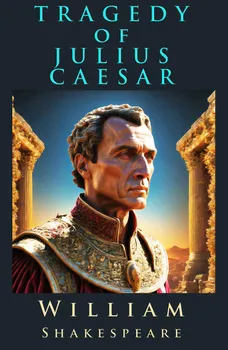
The Tragedy of Julius Caesar is a tragedy by William Shakespeare, believed to have been written in 1599. It portrays the 44 BC conspiracy against the Roman dictator Julius Caesar, his assassination and the defeat of the conspirators at the Battle of Philippi. It is one of several plays written by Shakespeare based on true events from Roman history, which also include Coriolanus and Antony and Cleopatra.

Although the title is Julius Caesar, Julius Caesar is not the most visible character in its action; he appears in only five scenes. Marcus Brutus speaks more than four times as many lines, and the central psychological drama is his struggle between the conflicting demands of honor, patriotism, and friendship.

Characters & Synopsis:

Marcus Brutus is Caesar's close friend and a Roman praetor. Brutus allows himself to be cajoled into joining a group of conspiring senators because of a growing suspicion—implanted by Caius Cassius—that Caesar intends to turn republican Rome into a monarchy under his own rule.

The early scenes deal mainly with Brutus's arguments with Cassius and his struggle with his own conscience. The growing tide of public support soon turns Brutus against Caesar (this public support was actually faked; Cassius wrote letters to Brutus in different handwritings over the next month in order to get Brutus to join the conspiracy). A soothsayer warns Caesar to "beware the Ides of March", which he ignores, culminating in his assassination at the Capitol by the conspirators that day, despite being warned by the soothsayer and Artemidorus, one of Caesar's supporters at the entrance of the Capitol.

Caesar's assassination is one of the most famous scenes of the play, occurring in Act 3 (the other is Marc Antony's oration "Friends, Romans, countrymen.") After ignoring the soothsayer as well as his wife's own premonitions, Caesar comes to the Senate. The conspirators create a superficial motive for the assassination by means of a petition brought by Metellus Cimber, pleading on behalf of his banished brother. As Caesar, predictably, rejects the petition, Casca grazes Caesar in the back of his neck, and the others follow in stabbing him; Brutus is last. At this point, Caesar utters the famous line "Et tu, Brute?" ("And you, Brutus?", i.e. "You too, Brutus?"). Shakespeare has him add, "Then fall, Caesar," suggesting that Caesar did not want to survive such treachery, therefore becoming a hero.

Kom igång med den här boken idag för 0 kr

  • Få full tillgång till alla böcker i appen under provperioden
  • Ingen bindningstid, avsluta när du vill
Prova gratis nu
Mer än 52 000 personer har gett Nextory 5 stjärnor i App Store och på Google Play.

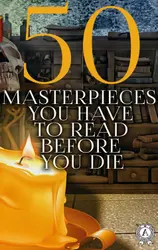
  1. 50 Masterpieces you have to read before you die

    Frances Hodgson Burnett, Homer, Charles Dickens, Lyman Frank Baum, Nathaniel Hawthorne, Thomas Hardy, Robert Louis Stevenson, Henry Haggard, Wilkie Collins, H.G. Wells, Sir Walter Scott, Lucy Maud Montgomery, Louisa May Alcott, Henry Fielding, Mary Shelley, Arthur Conan Doyle, Leo Tolstoy, Euripides, Fyodor Dostoevsky, Alexander Pushkin, James Fenimore Cooper, Daniel Defoe, Joseph Conrad, Jonathan Swift, William Shakespeare, Oscar Wilde, John Bunyan, Charles Darwin, Alfred Tennyson, Bram Stoker, James Joyce, Dante Alighieri, Howard Pyle, Jane Austen, Emily Bronte, Giovanni Boccaccio, Rudyard Kipling

  2. Santa's Christmas Library : An Illustrated Treasury of Holiday Tales, Poems & Carols

    O.Henry, Mark Twain, Beatrix Potter, Louisa May Alcott, Charles Dickens, William Shakespeare, Harriet Beecher Stowe, Emily Dickinson, Robert Louis Stevenson, Rudyard Kipling, Hans Christian Andersen, Selma Lagerlöf, Fyodor Dostoevsky, Martin Luther, Walter Scott, J.M. Barrie, Anthony Trollope, Brothers Grimm, L. Frank Baum, Lucy Maud Montgomery, George MacDonald, Leo Tolstoy, Henry van Dyke, E. T. Hoffmann, Clement Moore, Henry Wadsworth Longfellow, William Wordsworth, Alfred Lord Tennyson, William Butler Yeats, Eleanor H. Porter, Jacob A. Riis, Susan Anne Livingston, Ridley Sedgwick, Sophie May, Lucas Malet, Juliana Horatia Ewing, Alice Hale Burnett, Ernest Ingersoll, Annie F. Johnston, Amanda M. Douglas), Amy Ella Blanchard, Carolyn Wells, Walter Crane, Thomas Nelson Page, Florence L. Barclay, A. S. Boyd, Edward A. Rand, Max Brand, William John Locke, Nora A. Smith, Nellie C. King, Booker T. Washington, Lucy Wheelock, Aunt Hede, Frederick E. Dewhurst, Maud Lindsay, Marjorie L. Pickthall, Jay T. Stocking, Anna Robinson, Phebe A. Curtiss, Florence M. Kingsley, Olive Thorne Miller, M. A. Lane, Elizabeth Harkison, Raymond Mcalden, F. E. Mann, Winifred M. Kirkland, François Coppée, Katherine Pyle, Grace Margaret Gallaher, Elia W. Peattie, F. Arnstein, James Weber Linn, Anne Hollingsworth Wharton, Elbridge S. Brooks, Isabel Cecilia Williams, Anton Chekhov, Armando Palacio Valdés, André Theuriet, Alphonse Daudet, Benito Pérez Galdós, Antonio Maré, Pedro A. Alarcón, Jules Simon, Marcel Prévost, Gustavo Adolfo Bécquer, Maxime Du Camp, Mary Hartwell Catherwood, F. L. Stealey, Kate Upson Clark, Marion Clifford, E. E. Hale, Willis Boyd Allen, Edgar Wallace, Georg Schuster, Harrison S. Morris, Bjørnstjerne Bjørnson, Matilda Betham Edwards, Angelo J. Lewis, Vernon Lee, Guy De Maupassant, Saki, Bret Harte, Robert E. Howard, William Francis Dawson, Hamilton Wright Mabie, Christopher North, Susan Coolidge, Oliver Bell Bunce, Phillips Brooks, William Drummond, James Russell Lowell, Alfred Domett, Reginald Heber, Dinah Maria Mulock, Margaret Deland, John Addington Symonds, Edward Thring, Cecil Frances Alexander, Mary Austin, James S. Park, Isaac Watts, Robert Herrick, Edmund Hamilton Sears, Ben Jonson, Edmund Bolton, Robert Southwell, C.s. Stone, James Whitcomb Riley, Frances Ridley Havergal, William Morris, Charles Mackay, Harriet F. Blodgett, Eliza Cook, George Wither, John G. Whittier, Richard Watson Gilder, Tudor Jenks, William Makepeace Thackeray, Henry Vaughan, Christian Burke, Andrew Lang, Emily Huntington Miller, Cyril Winterbotham, Enoch Arnold Bennett, Mary Louisa Molesworth, Meredith Nicholson, A.M. Williamson, C.N. Williamson, Elizabeth Cleghorn Gaskell, James Selwin Tait, Booth Tarkington, Evaleen Stein, Frances Hodgson Burnett, Frank Samuel Child, Samuel McChord Crothers, Sarah Orne Jewett, Georgianna M. Bishop, Sarah P. Doughty, John Punnett Peters, Mary E. Freeman, Selma Lagerlof

  3. 3.8

    Hamlet

    William Shakespeare

  4. 5.0

    Hamlet

    William Shakespeare

  5. 3.6

    Romeo och Julia

    William Shakespeare

  6. 3.0

    Romeo och Julia

    William Shakespeare

  7. 3.3

    Romeo and Juliet

    William Shakespeare

  8. 2.7

    A Midsummer Night’s Dream

    William Shakespeare

  9. Ny
    3.3

    Macbeth

    William Shakespeare

  10. 13 nov.

    Dramer II. Strö lycka, féer : Komiska förväxlingar, Så tuktas en argbigga, Två gentlemän från Verona, Kärleks möda är förgäves, En midsommarnattsdröm, Muntra fruarna i Windsor.

    William Shakespeare

  11. 4.0

    3500 Final Quotes

    Marcus Aurelius, Jane Austen, Beaumarchais, Napoleon Bonaparte, Buddha, Winston Churchill, Cicero, Confucius, Nicolas de Chamfort, Charles de Gaulle, Antoine de Saint-Exupéry, Denis Diderot, Fyodor Dostoevsky, Albert Einstein, Ralph Waldo Emerson, Anne Frank, Mahatma Gandhi, Immanuel Kant, Søren Kierkegaard, Martin Luther King, Georg Christoph Lichtenberg, Abraham Lincoln, Montesquieu, Friedrich Nietzsche, Plato, Marcel Proust, Arthur Schopenhauer, William Shakespeare, Socrates, Baruch Spinoza, Henry David Thoreau, Leonardo da Vinci, Voltaire, Oscar Wilde, Laozi

  12. Macbeth

    William Shakespeare