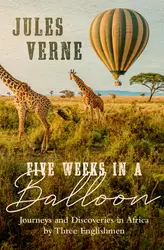
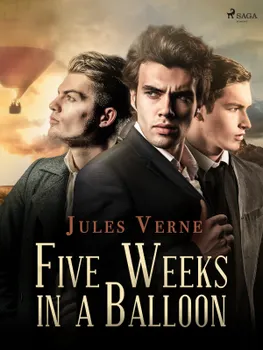
Five Weeks in a Balloon

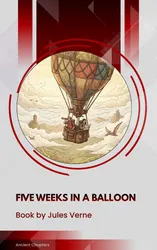
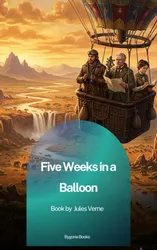
Adventure, discoveries, exploration and dangers which hold your attention to the last page. Jules Verne’s "Five Weeks in a Balloon" from 1865 combines all of them successfully. It tells the story of the explorer Dr. Fergusson who together with a few more people embark on a scientific expedition with a balloon. Their main goal is to study the then-called "dark continent" Africa which few knew anything of. The mission is not without obstacles as they have to experience windless days, face conflicts with natives and even try to escape a military army.

Will the balloon take them safely home or their expedition will be doomed to failure? Is their perseverance and determination enough to find work-arounds or there are higher powers watching over them?
Jules Verne (1828-1905) was a French novelist who mostly wrote adventure fiction inspired by the scientific advances of the 19th century. With the help of editor Pierre-Jules Hetzel he wrote a series of books called "Extraordinary Travels", which includes "Journey to the Center of the Earth" (1864), "Twenty Thousand Leagues Under the Sea" (1870), and "Around the World in Eighty Days" (1873). Widely popular with both children and adults, Verne is one of the most translated authors of all times, and still inspires people the world over.

À propos de ce livre

Adventure, discoveries, exploration and dangers which hold your attention to the last page. Jules Verne’s "Five Weeks in a Balloon" from 1865 combines all of them successfully. It tells the story of the explorer Dr. Fergusson who together with a few more people embark on a scientific expedition with a balloon. Their main goal is to study the then-called "dark continent" Africa which few knew anything of. The mission is not without obstacles as they have to experience windless days, face conflicts with natives and even try to escape a military army.

Will the balloon take them safely home or their expedition will be doomed to failure? Is their perseverance and determination enough to find work-arounds or there are higher powers watching over them?
Jules Verne (1828-1905) was a French novelist who mostly wrote adventure fiction inspired by the scientific advances of the 19th century. With the help of editor Pierre-Jules Hetzel he wrote a series of books called "Extraordinary Travels", which includes "Journey to the Center of the Earth" (1864), "Twenty Thousand Leagues Under the Sea" (1870), and "Around the World in Eighty Days" (1873). Widely popular with both children and adults, Verne is one of the most translated authors of all times, and still inspires people the world over.

Commencez ce livre dès aujourd'hui pour 0 €

  • Accédez à tous les livres de l'app pendant la période d'essai
  • Sans engagement, annulez à tout moment
Essayer gratuitement
Plus de 52 000 personnes ont noté Nextory 5 étoiles sur l'App Store et Google Play.

  1. 4.5

    Vingt mille lieues sous les mers

    Jules Verne

  2. 3.9

    Vingt mille lieues sous les mers - Livre Audio

    Jules Verne, Livres audio en français

  3. Les mieux notés
    4.7

    Voyage au centre de la Terre

    Jules Verne

  4. 5.0

    vingt-mille lieues sous les mers (version2)

    Jules Verne

  5. Nouveau
    4.0

    Jules Verne: The Collection

    Jules Verne

  6. Nouveau

    Jules Verne: The Collection (20.000 Leagues Under the Sea, Journey to the Interior of the Earth, Around the World in 80 Days, The Mysterious Island...)

    Jules Verne

  7. Nouveau
    3.0

    50 Masterpieces you have to read before you die vol: 2

    Lewis Carroll, Mark Twain, Jules Verne, Oscar Wilde, Arthur Conan Doyle, Louisa May Alcott, Jane Austen, G.K. Chesterton, Wilkie Collins, Charles Dickens, Fyodor Dostoyevsky, Alexandre Dumas, F. Scott Fitzgerald, E. M. Forster, Thomas Hardy, Hermann Hesse, James Joyce, Jack London, H.P. Lovecraft, Lucy Maud Montgomery, Edgar Allan Poe, Marcel Proust, William Shakespeare, Robert Louis Stevenson, H.G. Wells, Virginia Woolf, Rudyard Kipling, D. H. Lawrence, Thomas Mann, William Somerset Maugham, Herman Melville, George Sand, Mary Shelley, Walter Scott, Leo Tolstoy, Bram Stoker

  8. Nouveau

    Jorden runt på 80 dagar

    Jules Verne, Crys Millien

  9. Nouveau

    Les voyages Fabuleux de Jules Verne

    Jules Verne

  10. 4.3

    20 000 lieues sous les mers

    Jules Verne

  11. Nouveau

    100 Obras Maestras Que Debes Leer Antes De Morir

    Francis Scott Fitzgerald, Mary Shelley, Lyman Frank Baum, Edith Nesbit, Dante Alighieri, Jane Austen, Ambrose Bierce, Emily Brontë, Edgar Rice Burroughs, Lewis Carroll, Wilkie Collins, René Descartes, Charles Dickens, Emily Dickinson, Alexandre Dumas, Gustave Flaubert, Benito Pérez Galdós, Johann Wolfgang von Goethe, Thomas Hardy, E T A Hoffmann, Washington Irving, Henry James, James Joyce, Franz Kafka, Gaston Leroux, Federico García Lorca, H.P. Lovecraft, Publio Virgilio Marón, Lucy Maud Montgomery, John William Polidori, Marco Polo, Antoine de Saint-Exupéry, Emilio Salgari, Walter Scott, Mark Twain, Jules Verne, H.G. Wells, Edith Wharton, Mary Wollstonecraft, Fernando de Rojas

  12. Nouveau

    100 Clásicos de la Literatura Universal

    Francis Scott Fitzgerald, Mary Shelley, Lyman Frank Baum, Louisa May Alcott, Dante Alighieri, Jane Austen, Ambrose Bierce, Emily Brontë, Edgar Rice Burroughs, Lewis Carroll, Wilkie Collins, René Descartes, Charles Dickens, Emily Dickinson, Alexandre Dumas, Gustave Flaubert, Benito Pérez Galdós, Johann Wolfgang von Goethe, Thomas Hardy, E T A Hoffmann, Washington Irving, Henry James, James Joyce, Franz Kafka, Gaston Leroux, Federico García Lorca, H.P. Lovecraft, Publio Virgilio Marón, Lucy Maud Montgomery, John William Polidori, Marco Polo, Antoine de Saint-Exupéry, Emilio Salgari, Walter Scott, Mark Twain, Jules Verne, Julio Verne, H.G. Wells, Edith Wharton, Mary Wollstonecraft, Stefan Zweig, Sun Tzu, Bram Stoker, - Aristoteles, George Bernard Shaw, Henryk Sienkiewicz, Concepción Arenal, Charlotte Brontë, Miguel de Cervantes, G.K. Chesterton, Daniel Defoe, Fyodor Mikhailovich Dostoyevsky, Arthur Conan Doyle, Sigmund Freud, H. Rider Haggard, Homero, Immanuel Kant, Rudyard Kipling, Molière, Friedrich Nietzsche, Fernando de Rojas, Sófocles, William Makepeace Thackeray, León Tolstói, Voltaire, Ramón María del Valle-Inclán, Oscar Wilde, Virginia Woolf