À propos de ce livre

Bringing together Mary Shelley's Frankenstein and Percy Bysshe Shelley's St. Irvyne, this volume illuminates the darker currents of British Romanticism: forbidden knowledge, transgression, ambition, mortality, and the unstable boundary between scientific inquiry and supernatural dread. Across the philosophical novel, Gothic romance, confessional fragment, and sensational adventure, the collection reveals how Romantic literature transformed terror into a vehicle for probing ethical responsibility, alienation, and the limits of human aspiration. The Shelleys stand at the center of a radical literary milieu shaped by revolutionary politics, skepticism toward inherited authority, and fascination with the sublime. Read together, these works show two closely connected yet distinct engagements with Gothic convention: one pursuing the moral and intellectual consequences of creation, the other exploring secrecy, desire, and occult restlessness. Their combined presence enriches our understanding of how early nineteenth-century writers negotiated Enlightenment reason, Romantic imagination, and cultural anxieties about power and identity. This collection is recommended for readers seeking a compact yet richly suggestive encounter with Romantic Gothic literature. It offers students, scholars, and general readers alike an opportunity to compare styles, themes, and philosophical preoccupations within a single volume, fostering a compelling dialogue between two works that continue to shape discussions of horror, science, authorship, and the modern self.

This enriched edition has been carefully crafted to add value to your reading experience.

- An Introduction draws the threads together, discussing why these diverse authors and texts belong in one collection.

- Historical Context explores the cultural and intellectual currents that shaped these works, offering insight into the shared (or contrasting) eras that influenced each writer.

- A combined Synopsis (Selection) briefly outlines the key plots or arguments of the included pieces, helping readers grasp the anthology's overall scope without giving away essential twists.

- A collective Analysis highlights common themes, stylistic variations, and significant crossovers in tone and technique, tying together writers from different backgrounds.

- Reflection questions encourage readers to compare the different voices and perspectives within the collection, fostering a richer understanding of the overarching conversation.
Commencez ce livre dès aujourd'hui pour 0 €

  • Accédez à tous les livres de l'app pendant la période d'essai
  • Sans engagement, annulez à tout moment
Essayer gratuitement
Plus de 52 000 personnes ont noté Nextory 5 étoiles sur l'App Store et Google Play.

  1. 4.3
    #1

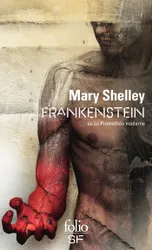
    Frankenstein ou Le Prométhée moderne (Tome 1)

    Mary Shelley

  2. 5.0
    #3

    Frankenstein ou Le Prométhée moderne (Tome 3)

    Mary Shelley

  3. 4.3

    Frankenstein ou Le Prométhée moderne (nouvelle traduction)

    Mary Shelley

  4. 1 mai
    4.3

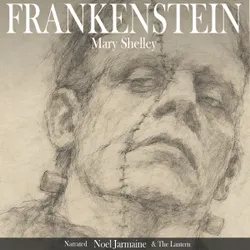
    Frankenstein

    Mary Shelley

  5. Nouveau
    3.0

    50 Masterpieces you have to read before you die vol: 2

    Lewis Carroll, Mark Twain, Jules Verne, Oscar Wilde, Arthur Conan Doyle, Louisa May Alcott, Jane Austen, G.K. Chesterton, Wilkie Collins, Charles Dickens, Fyodor Dostoyevsky, Alexandre Dumas, F. Scott Fitzgerald, E. M. Forster, Thomas Hardy, Hermann Hesse, James Joyce, Jack London, H.P. Lovecraft, Lucy Maud Montgomery, Edgar Allan Poe, Marcel Proust, William Shakespeare, Robert Louis Stevenson, H.G. Wells, Virginia Woolf, Rudyard Kipling, D. H. Lawrence, Thomas Mann, William Somerset Maugham, Herman Melville, George Sand, Mary Shelley, Walter Scott, Leo Tolstoy, Bram Stoker

  6. Nouveau
    3.9
    #1

    Frankenstein

    Mary Shelley

  7. Nouveau
    3.9

    Frankenstein

    Mary Shelley

  8. Nouveau

    Gothic Shadows : 15 Essential Tales of Horror and the Supernatural

    Washington Irving, Edgar Allan Poe, Charles Dickens, Oscar Wilde, Henry James, M. R. James, William Hope Hodgson, Arthur Machen, Ann Radcliffe, Gaston Leroux, Sheridan Le Fanu, Robert Louis Stevenson, Mary Shelley, Bram Stoker

  9. Nouveau

    100 Obras Maestras Que Debes Leer Antes De Morir

    Francis Scott Fitzgerald, Mary Shelley, L. Frank Baum, Edith Nesbit, Dante Alighieri, Jane Austen, Ambrose Bierce, Emily Brontë, Edgar Rice Burroughs, Lewis Carroll, Wilkie Collins, René Descartes, Charles Dickens, Emily Dickinson, Alexandre Dumas

  10. Nouveau

    100 Clásicos de la Literatura Universal

    Francis Scott Fitzgerald, Mary Shelley, Lyman Frank Baum, Louisa May Alcott, Dante Alighieri, Jane Austen, Ambrose Bierce, Emily Brontë, Edgar Rice Burroughs, Lewis Carroll, Wilkie Collins, René Descartes, Charles Dickens, Emily Dickinson, Alexandre Dumas, Gustave Flaubert, Benito Pérez Galdós, Johann Wolfgang Goethe, Thomas Hardy, E. T. Hoffmann, Washington Irving, Henry James, James Joyce, Franz Kafka

  11. Nouveau

    50 Masterpieces You Have to Read : Volume Two - A Second Library of World Literature

    Joseph Sheridan Fanu, Madame de Fayette, Jerome K Jerome, James Joyce, Charles Kingsley, Rudyard Kipling, Pierre Choderlos Laclos, D. H. Lawrence, Matthew Gregory Lewis, Sinclair Lewis, Jack London, H.P. Lovecraft, Thomas Mann, W. Somerset Maugham, Guy De Maupassant, Herman Melville, Edgar Allan Poe, Marcel Proust, Ann Radcliffe, Samuel Richardson, George Sand, Walter Scott, Mary Shelley, Henryk Sienkiewicz, May Sinclair, Upton Sinclair, Stendhal, Laurence Sterne, Robert Louis Stevenson, Bram Stoker, Harriet Beecher Stowe, Jonathan Swift, Rabindranath Tagore, William Makepeace Thackeray, Leo Tolstoy, Anthony Trollope, Ivan Turgenev, Mark Twain, Jules Verne, Lew Wallace, H.G. Wells, Rebecca West, Edith Wharton, Oscar Wilde, Cao Xueqin, Émile Zola

  12. Nouveau

    50 Masterpieces You Have to Read : Volume One - An Essential Library of World Literature

    Louisa May Alcott, Jane Austen, Honoré de Balzac, Henri Barbusse, Anne Brontë, Charlotte Brontë, Emily Brontë, Edgar Rice Burroughs, Samuel Butler, Lewis Carroll, Willa Cather, Miguel de Cervantes, Kate Chopin, John Cleland, Wilkie Collins, Joseph Conrad, Charles Dickens, Fyodor Dostoevsky, Alexandre Dumas, George Eliot, Ralph Waldo Emerson, Gustave Flaubert, E. M. Forster, H. Rider Haggard, Thomas Hardy, Nathaniel Hawthorne, Robert Heinlein, Victor Hugo, Aldous Huxley, Henry James, D. H. Lawrence, H.P. Lovecraft, Herman Melville, John Milton, Robert Musil, Vladimir Nabokov, George Orwell, Edgar Allan Poe, Marcel Proust, William Shakespeare, Mary Shelley, Leo Tolstoy