À propos de ce livre

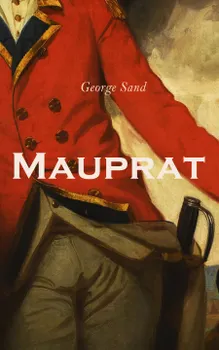
Published in 1837, George Sand's *Mauprat* is at once a Gothic family saga, a Bildungsroman, and a philosophical romance of moral transformation. Its narrator, Bernard de Mauprat, recounts his emergence from a brutal, feudal lineage into ethical and intellectual maturity under the influence of his cousin Edmée, whose independence, rationality, and compassion challenge the violence of aristocratic patriarchy. Combining adventure, suspense, psychological introspection, and dialogue shaped by Enlightenment ideals, Sand places a sensational plot within the literary context of French Romanticism while questioning the inherited privileges, sexual codes, and social hierarchies that Romantic fiction often sentimentalized. The novel's movement from predation to education gives its Gothic darkness a distinctly reformist purpose. George Sand, the pen name of Amantine Aurore Dupin, was one of nineteenth-century France's most influential novelists and a forceful advocate of personal, intellectual, and social emancipation. Her unconventional life, public rejection of restrictive gender expectations, engagement with republican and socialist ideas, and sustained interest in the condition of women inform *Mauprat*'s critique of domination. Sand's characteristic sympathy for self-education and humane social relations transforms the novel's love story into an argument for civilization through education and equality. Readers interested in Romantic fiction, feminist literary history, or the relationship between literature and social reform will find *Mauprat* especially rewarding. Its vivid atmosphere and narrative momentum make it accessible as a novel of adventure, while its treatment of gender, class, inheritance, and moral responsibility invites sustained scholarly reflection. It is a compelling introduction to Sand's daring vision of individual and collective liberation.
Commencez ce livre dès aujourd'hui pour 0 €

  • Accédez à tous les livres de l'app pendant la période d'essai
  • Sans engagement, annulez à tout moment
Essayer gratuitement
Plus de 52 000 personnes ont noté Nextory 5 étoiles sur l'App Store et Google Play.

Plus de George Sand

  1. 14 oct.

    Relation d'un voyage chez les sauvages de Paris

    George Sand

  2. Nouveau
    3.0

    50 Masterpieces you have to read before you die vol: 2

    Lewis Carroll, Mark Twain, Jules Verne, Oscar Wilde, Arthur Conan Doyle, Louisa May Alcott, Jane Austen, G.K. Chesterton, Wilkie Collins, Charles Dickens, Fyodor Dostoyevsky, Alexandre Dumas, F. Scott Fitzgerald, E. M. Forster, Thomas Hardy, Hermann Hesse, James Joyce, Jack London, H.P. Lovecraft, Lucy Maud Montgomery, Edgar Allan Poe, Marcel Proust, William Shakespeare, Robert Louis Stevenson, H.G. Wells, Virginia Woolf, Rudyard Kipling, D. H. Lawrence, Thomas Mann, William Somerset Maugham, Herman Melville, George Sand, Mary Shelley, Walter Scott, Leo Tolstoy, Bram Stoker

  3. Nouveau

    Indiana : A Creole Wife and Her Two Devotions

    George Sand

  4. 50 Masterpieces You Have to Read : Volume Two - A Second Library of World Literature

    Joseph Sheridan Fanu, Madame de Fayette, Jerome K Jerome, James Joyce, Charles Kingsley, Rudyard Kipling, Pierre Choderlos Laclos, D. H. Lawrence, Matthew Gregory Lewis, Sinclair Lewis, Jack London, H.P. Lovecraft, Thomas Mann, W. Somerset Maugham, Guy De Maupassant, Herman Melville, Edgar Allan Poe, Marcel Proust, Ann Radcliffe, Samuel Richardson, George Sand, Walter Scott, Mary Shelley, Henryk Sienkiewicz, May Sinclair, Upton Sinclair, Stendhal, Laurence Sterne, Robert Louis Stevenson, Bram Stoker, Harriet Beecher Stowe, Jonathan Swift, Rabindranath Tagore, William Makepeace Thackeray, Leo Tolstoy, Anthony Trollope, Ivan Turgenev, Mark Twain, Jules Verne, Lew Wallace, H.G. Wells, Rebecca West, Edith Wharton, Oscar Wilde, Cao Xueqin, Émile Zola

  5. Harvard Classics : The Five-Foot Shelf of Books

    Aesop, Dante Alighieri, Hans Christian Andersen, Augustine of Hippo, Marcus Aurelius, Jane Austen, Francis Bacon, Honoré de Balzac, Francis Beaumont, Bjørnstjerne Bjørnson, Thomas Browne, Robert Browning, John Bunyan, EDMUND BURKE, Robert Burns, Lord Byron, Thomas Carlyle, Benvenuto Cellini, Miguel de Cervantes, Marcus Tullius Cicero, Richard Henry Jr., Charles Darwin, Alphonse Daudet, Thomas Dekker, Charles Dickens, Fyodor Dostoevsky, John Dryden, Charles W. Eliot, George Eliot, Ralph Waldo Emerson, Epictetus, John Fletcher, Theodor Fontane, Benjamin Franklin, Johann Wolfgang Goethe, Oliver Goldsmith, Jacob Grimm, Edward Everett Hale, Bret Harte, Nathaniel Hawthorne, Homer, Victor Hugo, Washington Irving, Henry James, Ben Jonson, Gottfried Keller, Thomas à Kempis, Alexander L. Kielland, Martin Luther, Niccolò Machiavelli, Alessandro Manzoni, Christopher Marlowe, Philip Massinger, Guy De Maupassant, John Stuart Mill, John Milton, Thomas More, William Morris, Alfred de Musset, William Allan Neilson, William Penn, Plato, Pliny the Younger, Plutarch, George Sand, Percy Bysshe Shelley, Richard Brinsley Sheridan, Adam Smith, Laurence Sterne, Theodor Storm, William Makepeace Thackeray, Leo Tolstoy, Ivan Turgenev, Mark Twain, Juan Valera, Virgil, Izaak Walton, John Webster, John Woolman

  6. Un invierno en Mallorca

    George Sand

  7. Un hiver à Majorque

    George Sand

  8. François le Champi

    George Sand

  9. Indiana

    George Sand

  10. Lélia : Drama psicológico y crítica feminista en la sociedad francesa del siglo XIX

    George Sand

  11. 2.0
    #12

    Un invierno en Mallorca

    George Sand

  12. Un invierno en Mallorca

    George Sand