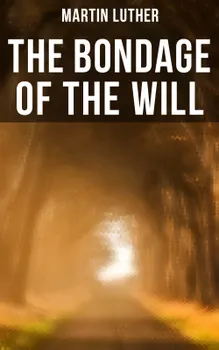
THE BONDAGE OF THE WILL : Enriched edition. Luther's Reply to Erasmus' On Free Will

In 'The Bondage of the Will', Martin Luther explores the theology of predestination and free will, engaging in a theological debate with Erasmus over the nature of human choice and God's sovereignty. Written in a clear and persuasive style, Luther presents his arguments with biblical references and logical reasoning, making it a seminal work in the development of Protestant theology. The book is a crucial text in understanding the Reformation movement and its implications on Christian beliefs. The arguments presented are structured and thought-provoking, challenging readers to reexamine their views on salvation and human agency. Martin Luther, a German theologian and key figure in the Protestant Reformation, wrote 'The Bondage of the Will' in response to Erasmus' views on free will. Luther's background as a monk and scholar influenced his strong convictions on the relationship between God's grace and human obedience, shaping his theological writings. I highly recommend 'The Bondage of the Will' to readers interested in philosophy, theology, and the history of Christianity. Luther's insights into the complexities of divine sovereignty and human will offer valuable perspectives on faith and salvation.

In this enriched edition, we have carefully created added value for your reading experience:

- A succinct Introduction situates the work's timeless appeal and themes.

- The Synopsis outlines the central plot, highlighting key developments without spoiling critical twists.

- A detailed Historical Context immerses you in the era's events and influences that shaped the writing.

- An Author Biography reveals milestones in the author's life, illuminating the personal insights behind the text.

- A thorough Analysis dissects symbols, motifs, and character arcs to unearth underlying meanings.

- Reflection questions prompt you to engage personally with the work's messages, connecting them to modern life.

- Hand‐picked Memorable Quotes shine a spotlight on moments of literary brilliance.

- Interactive footnotes clarify unusual references, historical allusions, and archaic phrases for an effortless, more informed read.

À propos de ce livre

In 'The Bondage of the Will', Martin Luther explores the theology of predestination and free will, engaging in a theological debate with Erasmus over the nature of human choice and God's sovereignty. Written in a clear and persuasive style, Luther presents his arguments with biblical references and logical reasoning, making it a seminal work in the development of Protestant theology. The book is a crucial text in understanding the Reformation movement and its implications on Christian beliefs. The arguments presented are structured and thought-provoking, challenging readers to reexamine their views on salvation and human agency. Martin Luther, a German theologian and key figure in the Protestant Reformation, wrote 'The Bondage of the Will' in response to Erasmus' views on free will. Luther's background as a monk and scholar influenced his strong convictions on the relationship between God's grace and human obedience, shaping his theological writings. I highly recommend 'The Bondage of the Will' to readers interested in philosophy, theology, and the history of Christianity. Luther's insights into the complexities of divine sovereignty and human will offer valuable perspectives on faith and salvation.

In this enriched edition, we have carefully created added value for your reading experience:

- A succinct Introduction situates the work's timeless appeal and themes.

- The Synopsis outlines the central plot, highlighting key developments without spoiling critical twists.

- A detailed Historical Context immerses you in the era's events and influences that shaped the writing.

- An Author Biography reveals milestones in the author's life, illuminating the personal insights behind the text.

- A thorough Analysis dissects symbols, motifs, and character arcs to unearth underlying meanings.

- Reflection questions prompt you to engage personally with the work's messages, connecting them to modern life.

- Hand‐picked Memorable Quotes shine a spotlight on moments of literary brilliance.

- Interactive footnotes clarify unusual references, historical allusions, and archaic phrases for an effortless, more informed read.

Commencez ce livre dès aujourd'hui pour 0 €

  • Accédez à tous les livres de l'app pendant la période d'essai
  • Sans engagement, annulez à tout moment
Essayer gratuitement
Plus de 52 000 personnes ont noté Nextory 5 étoiles sur l'App Store et Google Play.

  1. Nouveau

    Le petit catéchisme

    Martin Luther

  2. lettre à mon barbier : une manière simple de prier

    Martin Luther

  3. 95 Theses

    Martin Luther

  4. Address to the Christian Nobility of the German Nation

    Martin Luther, J.H. Robinson

  5. On Indulgences

    Martin Luther, Adolph Spaeth

  6. 95 Theses

    Martin Luther, Adolph Spaeth

  7. Martin Luther : Pensées et Colères d’un Moine Contre l’Église

    Martin Luther

  8. The Bondage of the Will

    Martin Luther

  9. The Big Book of Christmas : A Treasure Trove of Holiday Magic

    Hans Christian Andersen, Charles Dickens, Louisa May Alcott, O.Henry, Mark Twain, Beatrix Potter, William Shakespeare, Harriet Beecher Stowe, Emily Dickinson, Robert Louis Stevenson, Rudyard Kipling, Selma Lagerlöf, Martin Luther, Walter Scott

  10. #9

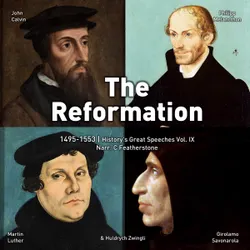
    The Reformation, 1495-1553 : The Thinkers That Changed Christianity

    Martin Luther, Phillip Melanchthon, John Calvin, Girolamo Savonarola, Huldrych Zwingli

  11. The Ultimate Luther Collection : Enriched edition. Unleashing the Power of Reformation Thought: Luther's Revolutionary Insights and Religious Impact

    Martin Luther

  12. 4.0

    The Most Wonderful Christmas Tales Of All Time : A Multicultural Tapestry of Festive Fiction and Timeless Tales

    Bjørnstjerne Bjørnson, Selma Lagerlöf, Charles Dickens, Mark Twain, Harriet Beecher Stowe, Martin Luther, Robert Louis Stevenson, William Shakespeare, Henry Wadsworth Longfellow, Max Brand, William Wordsworth, Carolyn Wells, Charles Mackay, John Addington Symonds, Sophie May, Louisa May Alcott, Henry van Dyke, Arthur Conan Doyle, Frances Hodgson Burnett, Andrew Lang, Frances Ridley Havergal, Alphonse Daudet, William John Locke, Walter Scott, Gustavo Adolfo Bécquer, John Leighton, Booth Tarkington, Ralph Henry Barbour, Benito Pérez Galdós, Ruth McEnery Stuart, Alice Duer Miller, Elizabeth Cleghorn Gaskell, Armando Palacio Valdés, William Morris, Anthony Trollope, Marcel Prévost, Rudyard Kipling, Beatrix Potter, Robert Herrick, Mary Hartwell Catherwood, Emily Dickinson, Bret Harte, Hamilton Wright Mabie, Meredith Nicholson, Lucas Malet, Ellis Parker Butler, Washington Irving, Isaac Watts, James Russell Lowell, Willa Cather, Nathaniel Hawthorne, James Whitcomb Riley, Thomas Nelson Page, O.Henry, Phillips Brooks, Saki, Cyrus Townsend Brady, William Makepeace Thackeray, Mary Stewart Cutting, Sarah Orne Jewett, François Coppée, Oliver Bell Bunce, Susan Coolidge, Samuel McChord Crothers, Maud Lindsay, Alice Hale Burnett, Walter Crane, André Theuriet, Amy Ella Blanchard, Isabel Cecilia Williams, Evaleen Stein, Nell Speed, Amanda M. Douglas), Edgar Wallace, George Wither, Booker T. Washington, Olive Thorne Miller, Margaret Sidney, William Douglas O'Connor, Vernon Lee, Anne Hollingsworth Wharton, Henry Vaughan, Eliza Cook, Kate Upson Clark, Ben Jonson, Ernest Ingersoll, Frank Samuel Child, Willis Boyd Allen, Georgianna M. Bishop, Edward Thring, F. L. Stealey, James Selwin Tait, Tudor Jenks, L. Frank Baum, C.N. Williamson, A.M. Williamson, J.M. Barrie, Eleanor H. Porter, Annie F. Johnston, Jacob A. Riis, S. Weir Mitchell, Elbridge S. Brooks, Edward A. Rand, W.H. Murray, Florence L. Barclay, E. T. Hoffmann, Harrison S. Morris, Robert E. Howard, Marjorie L. Pickthall, Sarah P. Doughty, Hans Christian Andersen, William Butler Yeats, Richard Watson Gilder, Lucy Maud Montgomery, Anton Chekhov, Mary Elizabeth Braddon, Mary Louisa Molesworth, Leo Tolstoy, Fyodor Dostoevsky, Cecil Frances Alexander, Mary E. Freeman, Margaret Deland, William Drummond, Robert Southwell, Reginald Heber, Alfred Lord Tennyson, George MacDonald, A. S. Boyd, Maxime Du Camp, Mary Austin, Juliana Horatia Ewing, Guy De Maupassant, Brothers Grimm, Clement Moore, Susan Anne Livingston, Ridley Sedgwick, Nora A. Smith, Phebe A. Curtiss, Nellie C. King, Lucy Wheelock, Aunt Hede, Frederick E. Dewhurst, Jay T. Stocking, Anna Robinson, Florence M. Kingsley, M. A. Lane, Elizabeth Harkison, Raymond Mcalden, F. E. Mann, Winifred M. Kirkland, Katherine Pyle, Grace Margaret Gallaher, Elia W. Peattie, F. Arnstein, James Weber Linn, Antonio Maré, Pedro A. Alarcón, Jules Simon, Marion Clifford, E. E. Hale, Georg Schuster, Matilda Betham Edwards, Angelo J. Lewis, William Francis Dawson, Christopher North, Alfred Domett, Dinah Maria Mulock, James S. Park, Edmund Hamilton Sears, Edmund Bolton, C.s. Stone, Harriet F. Blodgett, John G. Whittier, Christian Burke, Emily Huntington Miller, Cyril Winterbotham, Enoch Arnold Bennett, John Punnett Peters, Laura Elizabeth Richards