À propos de ce livre

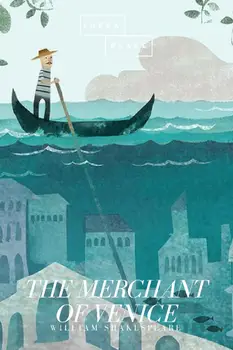
The Merchant of Venice is a 16th-century play by William Shakespeare in which a merchant in Venice must default on a large loan provided by an abused Jewish moneylender. It is believed to have been written between 1596 and 1599. Though classified as a comedy in the First Folio and sharing certain aspects with Shakespeare's other romantic comedies, the play is perhaps most remembered for its dramatic scenes, and is best known for Shylock and the famous "Hath not a Jew eyes?" speech. Also notable is Portia's speech about "the quality of mercy". Critic Harold Bloom listed it among Shakespeare's great comedies. Bassanio, a young Venetian of noble rank, wishes to woo the beautiful and wealthy heiress Portia of Belmont. Having squandered his estate, he needs 3,000 ducats to subsidise his expenditures as a suitor. Bassanio approaches his friend Antonio, a wealthy merchant of Venice who has previously and repeatedly bailed him out. Antonio agrees, but since he is cash-poor – his ships and merchandise are busy at sea – he promises to cover a bond if Bassanio can find a lender, so Bassanio turns to the Jewish moneylender Shylock and names Antonio as the loan's guarantor. Antonio has already antagonized Shylock through his outspoken antisemitism, and because Antonio's habit of lending money without interest forces Shylock to charge lower rates. Shylock is at first reluctant to grant the loan, citing abuse he has suffered at Antonio's hand. He finally agrees to lend the sum to Bassanio without interest upon one condition: if Bassanio is unable to repay it at the specified date, Shylock may take a pound of Antonio's flesh. Bassanio does not want Antonio to accept such a risky condition; Antonio is surprised by what he sees as the moneylender's generosity (no "usance" – interest – is asked for), and he signs the contract. With money at hand, Bassanio leaves for Belmont with his friend Gratiano, who has asked to accompany him.
Commencez ce livre dès aujourd'hui pour 0 €

  • Accédez à tous les livres de l'app pendant la période d'essai
  • Sans engagement, annulez à tout moment
Essayer gratuitement
Plus de 52 000 personnes ont noté Nextory 5 étoiles sur l'App Store et Google Play.

  1. Le Conte d'hiver

    William Shakespeare, Ligaran

  2. 1 mars
    #4

    Romeo y Julieta

    William Shakespeare

  3. 13 nov.

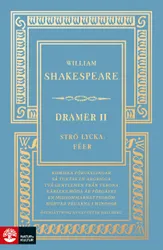
    Dramer II. Strö lycka, féer : Komiska förväxlingar, Så tuktas en argbigga, Två gentlemän från Verona, Kärleks möda är förgäves, En midsommarnattsdröm, Muntra fruarna i Windsor.

    William Shakespeare

  4. 25 sept.

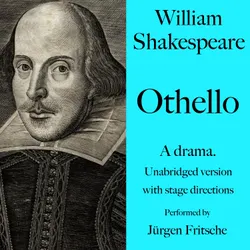
    William Shakespeare : Unabridged version with stage directions

    William Shakespeare

  5. Nouveau

    The Epic Poems Collection : Cinq chefs-d'oeuvre de la poesie epique occidentale

    Homer, Virgil, Dante Alighieri, William Shakespeare, John Milton

  6. Nouveau
    3.0
    #1

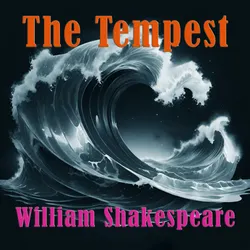
    The Tempest

    William Shakespeare

  7. Nouveau

    The Complete Works of William Shakespeare

    William Shakespeare

  8. Nouveau

    50 Masterpieces You Have to Read : Volume One - An Essential Library of World Literature

    Louisa May Alcott, Jane Austen, Honoré de Balzac, Henri Barbusse, Anne Brontë, Charlotte Brontë, Emily Brontë, Edgar Rice Burroughs, Samuel Butler, Lewis Carroll, Willa Cather, Miguel de Cervantes, Kate Chopin, John Cleland, Wilkie Collins, Joseph Conrad, Charles Dickens, Fyodor Dostoevsky, Alexandre Dumas, George Eliot, Ralph Waldo Emerson, Gustave Flaubert, E. M. Forster, H. Rider Haggard, Thomas Hardy, Nathaniel Hawthorne, Robert Heinlein, Victor Hugo, Aldous Huxley, Henry James, D. H. Lawrence, H.P. Lovecraft, Herman Melville, John Milton, Robert Musil, Vladimir Nabokov, George Orwell, Edgar Allan Poe, Marcel Proust, William Shakespeare, Mary Shelley, Leo Tolstoy

  9. Nouveau
    3.0

    The Tempest

    William Shakespeare

  10. Nouveau
    2.5

    Othello

    William Shakespeare

  11. Nouveau
    4.1

    Hamlet

    William Shakespeare

  12. Nouveau
    3.8

    Macbeth

    William Shakespeare