3.8(4)

A Confession

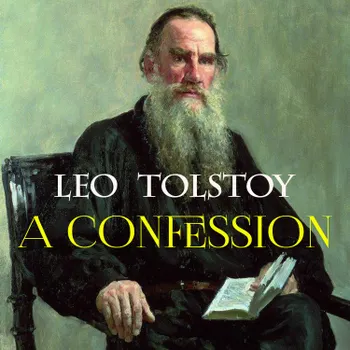
A Confession, or My Confession, is a short work on the subject of melancholia, philosophy and religion by the acclaimed Russian novelist Leo Tolstoy. It was written in 1879 to 1880, when Tolstoy was in his early fifties.

The book is a brief autobiographical story of the author's struggle with a mid-life existential crisis. It describes his search for the answer to the ultimate philosophical question: "If God does not exist, since death is inevitable, what is the meaning of life?." Without the answer to this, for him, life had become "impossible".

The story begins with the Eastern fable of the dragon in the well. A man is chased by a beast into a well, at the bottom of which is a dragon. The man clings to a branch that is being gnawed on by two mice (one black, one white, representing night and day and the relentless march of time). The man is able to lick two drops of honey (representing Tolstoy's love of his family and his writing), but because death is inevitable, he no longer finds the honey sweet.

Tolstoy goes on to describe four possible attitudes towards this dilemma. The first is ignorance. If one is oblivious to the fact that death is approaching, life becomes bearable. The problem with this for him personally is that he is not ignorant. Having become conscious of the reality of death, there is no going back.
Tietoa kirjasta

A Confession, or My Confession, is a short work on the subject of melancholia, philosophy and religion by the acclaimed Russian novelist Leo Tolstoy. It was written in 1879 to 1880, when Tolstoy was in his early fifties.

The book is a brief autobiographical story of the author's struggle with a mid-life existential crisis. It describes his search for the answer to the ultimate philosophical question: "If God does not exist, since death is inevitable, what is the meaning of life?." Without the answer to this, for him, life had become "impossible".

The story begins with the Eastern fable of the dragon in the well. A man is chased by a beast into a well, at the bottom of which is a dragon. The man clings to a branch that is being gnawed on by two mice (one black, one white, representing night and day and the relentless march of time). The man is able to lick two drops of honey (representing Tolstoy's love of his family and his writing), but because death is inevitable, he no longer finds the honey sweet.

Tolstoy goes on to describe four possible attitudes towards this dilemma. The first is ignorance. If one is oblivious to the fact that death is approaching, life becomes bearable. The problem with this for him personally is that he is not ignorant. Having become conscious of the reality of death, there is no going back.
Aloita kirja saman tien hintaan 0 €

  • Kokeilujakson aikana käytössäsi on kaikki sovelluksen kirjat
  • Ei sitoumusta, voit perua milloin vain
Kokeile nyt ilmaiseksi
Yli 52 000 ihmistä on antanut Nextorylle viisi tähteä App Storessa ja Google Playssä.

  1. Anna Karenina

    Leo Tolstoy

  2. 4.0

    Anna Karenina

    Leo Tolstoy

  3. 5.0

    50 Masterpieces You Must Read Before You Die: Volume 2 : Unleash Your Inner Bookworm

    Louisa May Alcott, Jane Austen, Joseph Conrad, D. H. Lawrence, George Eliot, Leo Tolstoy, James Joyce, Charles Dickens, Bram Stoker, Oscar Wilde, Honoré de Balzac, Edgar Rice Burroughs, Anne Brontë, Charlotte Brontë, Emily Brontë, Lewis Carroll, Willa Cather, Miguel de Cervantes, E. E. Cummings, Fyodor Dostoyevsky, Daniel Defoe, Arthur Conan Doyle, Alexandre Dumas, Gustave Flaubert, Henry James, Victor Hugo, Pocket Classic

  4. 3.0

    50 Masterpieces you have to read before you die vol: 1 (2020 Edition) : Included: Little Women, The Richest Man in Babylon Emma, The Call Of The Wild ....

    Louisa May Alcott, Dante Alighieri, Marcus Aurelius, Jane Austen, L. Frank Baum, Charlotte Brontë, Emily Brontë, Anne Brontë, Miguel de Cervantes, Agatha Christie, George S. Clason, Arthur Conan Doyle, Joseph Conrad, Charles Dickens, Fyodor Dostoyevsky, Alexandre Dumas, George Eliot, G.K. Chesterton, G.K. Chesterton, Zane Grey, Nathaniel Hawthorne, Napoleon Hill, Homer, Victor Hugo, Frances Hodgson Burnett, Washington Irving, Henry James, Franz Kafka, Rudyard Kipling, Jack London, Leo Tolstoy, H.P. Lovecraft, Lucy Maud Montgomery, Joseph Murphy, Robert Louis Stevenson, Edgar Allan Poe, Marcel Proust, Publius, Mary Shelley, Bram Stoker, Mark Twain, Sun Tzu, Lew Wallace, Wallace D. Wattles, H.G. Wells

  5. 5.0

    Anna Karenina - Audiobook

    Leo Tolstoy, Classic Audiobooks

  6. War and Peace : The Graphic Novel

    Leo Tolstoy

  7. 4.7

    How Much Land Does a Man Need : The Deadly Price of Greed and the Illusion of More

    Leo Tolstoy, Tim Zengerink

  8. 12 Masterpieces You Have to Read Before You Die. Philosophy

    Niccolo Machiavelli, Tommaso Campanella, Francis Bacon, Thomas More, John Stuart Mill, Immanuel Kant, Kahlil Gibran, Leo Tolstoy, G.K. Chesterton, Henry David Thoreau

  9. World's Greatest Short Stories

    Daniel Defoe, Benjamin Franklin, Washington Irving, Mateo Falcone, Charlotte Bronte, Mary Shelley, Nathaniel Hawthorne, Nikolai Gogol, Edgar Allan Poe, Fyodor Dostoyevsky, Charles Dickens, Herman Melville, Mark Twain, Guy De Maupassant, Oscar Wilde, Leo Tolstoy, H.G. Wells, Ambrose Bierce, Stephen Crane, Kate Chopin, Jack London, E. M. Forster

  10. 50 Masterpieces you have to read before you die vol: 2

    Louisa, Jane Austen, Joseph Conrad, D. H. Lawrence, George Eliot, Leo Tolstoy, James Joyce, Charles Dickens, Bram Stoker, Oscar Wilde, Honoré de Balzac, Edgar Rice Burroughs, Anne Brontë, Charlotte Brontë, Emily Brontë, Lewis Carroll, Willa Cather, Miguel de Cervantes, E. E. Cummings, Fyodor Dostoyevsky, Daniel Defoe, Arthur Conan Doyle, Alexandre Dumas, Gustave Flaubert, Henry James, Victor Hugo, Bookish

  11. #1

    War and Peace (Book One: 1805)

    Leo Tolstoy

  12. #1

    Anna Karenina (Part 1)

    Leo Tolstoy