In "The Queen of the Air: Being a Study of the Greek Myths of Cloud and Storm," John Ruskin offers a compelling exploration of the intersections between mythology, nature, and art. Through a meticulous analysis of Greek myths related to the elemental forces of air and storm, Ruskin delineates the profound connections between the natural world and human perception. His poetic yet analytical prose reflects the Victorian literary tendency to celebrate nature while grappling with its sublime aspects, positioning the work within the broader context of Romanticism. The text serves as a critical examination of the underlying philosophies that inform artistic representation and human emotion, demonstrating Ruskin's belief in the moral significance of beauty within nature. John Ruskin, a prominent art critic, social thinker, and philanthropist, was profoundly influenced by his passion for nature and the visual arts. His extensive background in art history and profound admiration for Gothic architecture informed his views on beauty and its moral implications. Ruskin's critiques of industrialization and its dehumanizing effects are evident in this work, making it a reflection of his ongoing dialogue with the shifting paradigms of his time. For readers interested in the interplay between mythology, nature, and art, "The Queen of the Air" is an enriching text that challenges conventional notions of beauty and invites a deeper understanding of the elemental forces shaping our world. Ruskin's meticulous scholarship and lyrical style will captivate not only mythology enthusiasts but also anyone seeking a deeper connection with the natural environment.
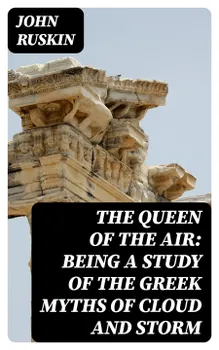
The Queen of the Air: Being a Study of the Greek Myths of Cloud and Storm
Tietoa kirjasta
In "The Queen of the Air: Being a Study of the Greek Myths of Cloud and Storm," John Ruskin offers a compelling exploration of the intersections between mythology, nature, and art. Through a meticulous analysis of Greek myths related to the elemental forces of air and storm, Ruskin delineates the profound connections between the natural world and human perception. His poetic yet analytical prose reflects the Victorian literary tendency to celebrate nature while grappling with its sublime aspects, positioning the work within the broader context of Romanticism. The text serves as a critical examination of the underlying philosophies that inform artistic representation and human emotion, demonstrating Ruskin's belief in the moral significance of beauty within nature. John Ruskin, a prominent art critic, social thinker, and philanthropist, was profoundly influenced by his passion for nature and the visual arts. His extensive background in art history and profound admiration for Gothic architecture informed his views on beauty and its moral implications. Ruskin's critiques of industrialization and its dehumanizing effects are evident in this work, making it a reflection of his ongoing dialogue with the shifting paradigms of his time. For readers interested in the interplay between mythology, nature, and art, "The Queen of the Air" is an enriching text that challenges conventional notions of beauty and invites a deeper understanding of the elemental forces shaping our world. Ruskin's meticulous scholarship and lyrical style will captivate not only mythology enthusiasts but also anyone seeking a deeper connection with the natural environment.

Aloita tämä kirja jo tänään, hintaan 0€
- Kokeilujakson aikana käytössäsi on kaikki sovelluksen kirjat
- Ei sitoumusta, voit perua milloin vain
Kirjailija:
Kieli:
englanti
Muoto:

Ariadne Florentina: Six Lectures on Wood and Metal Engraving

Työ, talous ja sielu

The Elements of Drawing

The Elements of Drawing : (In Three Letters to Beginners)

The King of the Golden River :

The Stones of Venice : Study of Venetian Architecture

The Stones of Venice (Vol. 1-3) : Enriched edition. Study of Venetian Architecture

The Stones of Venice : Enriched edition. Study of Venetian Architecture

Praeterita: souvenirs de jeunesse : Édition enrichie.

Hortus Inclusus : Messages from the Wood to the Garden, Sent in Happy Days / to the Sister Ladies of the Thwaite, Coniston

The Pleasures of England : Lectures given in Oxford