À propos de ce livre

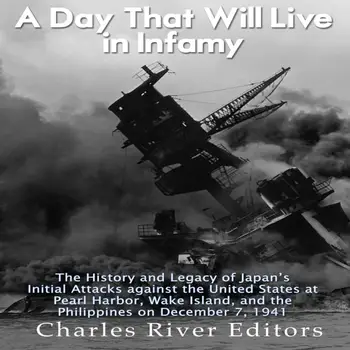
All Americans are familiar with the “day that will live in infamy.” At 9:30 a.m. on Sunday, December 7, 1941, Pearl Harbor, the advanced base of the United States Navy’s Pacific Fleet, was ablaze. It had been smashed by aircraft launched by the carriers of the Imperial Japanese Navy. All eight battleships had been sunk or badly damaged, 350 aircraft had been knocked out, and over 2,000 Americans lay dead. Indelible images of the USS Arizona exploding and the USS Oklahoma capsizing and floating upside down have been ingrained in the American conscience ever since. In less than an hour and a half the Japanese had almost wiped out America’s entire naval presence in the Pacific.

Less than 24 hours earlier, Japanese and American negotiators had been continuing their diplomatic efforts to stave off conflict in the region, but as they did, President Roosevelt and his inner circle had seen intelligence reports strongly suggesting an imminent attack - though they did not know where. The U.S. rightly believed that Japan would take action to prevent the Americans from interfering with their military activities in Southeast Asia, and American military forces in the Philippines were already bracing for a potential attack. However, as the negotiations were ongoing, the powerful Japanese carrier fleet had been surging southwards through the Pacific while maintaining radio silence, preparing to strike the blow that would ignite war in an area spanning half the globe.

Posted on the other side of the world, it was early on the morning of December 8 in the Philippines when American general Douglas MacArthur received news of the Japanese attack on Pearl Harbor hours earlier. With that, it could only be a matter of time before the Japanese attacked the Philippines. Although MacArthur and Allied forces tried to hold out, they could only fight a delaying action, and the Japanese managed to subdue all resistance by the spring of 1942.
Commencez ce livre dès aujourd'hui pour 0 €

  • Accédez à tous les livres de l'app pendant la période d'essai
  • Sans engagement, annulez à tout moment
Essayer gratuitement
Plus de 52 000 personnes ont noté Nextory 5 étoiles sur l'App Store et Google Play.

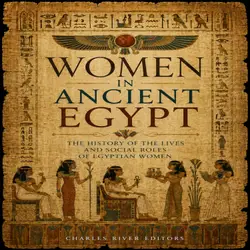
  1. Women in Ancient Egypt: The History of the Lives and Social Roles of Egyptian Women

    Charles River Editors

  2. 4.3

    The Life and Trial of Lizzie Borden : The History of 19th Century America's Most Famous Murder Case

    Charles River Editors

  3. The 332nd Fighter Group: The History of the Tuskegee Airmen’s Fighter Unit during World War II

    Charles River Editors

  4. 4.0

    The Roma: The History of the Romani People and the Controversial Persecutions of Them across Europe

    Charles River Editors

  5. Douglas Bader: The Life and Legacy of One of the Royal Air Force’s Most Famous Fighter Aces

    Charles River Editors

  6. 4.0

    Medieval England: The History of England from the Fall of Rome to the Rise of the Tudor Dynasty

    Charles River Editors

  7. 4.4

    South Africa: The History and Legacy of the Nation from European Colonization to the End of the Apartheid Era

    Charles River Editors

  8. The Making of Modern China: The History of the World’s Most Populous Country from the Qing Dynasty to Today

    Charles River Editors

  9. The Osage Indian Murders: The History of the Notorious Killing Spree and the Federal Investigations in the Early 20th Century

    Charles River Editors

  10. 4.3

    Project MK-Ultra: The History of the CIA’s Controversial Human Experimentation Program

    Charles River Editors

  11. The Pacific Theater in 1944: The History of the Decisive Campaigns that Contributed to the Allies’ Victory over Japan

    Charles River Editors

  12. 3.5

    The Portuguese Empire and Africa: The History and Legacy of Portugal’s Exploration and Colonization of the West African Coast

    Charles River Editors