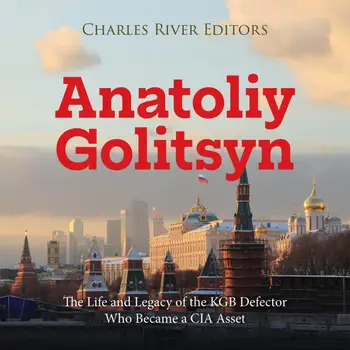
Anatoliy Golitsyn: The Life and Legacy of the KGB Defector Who Became a CIA Asset

Many people remain fascinated by stories about the Cold War, particularly the espionage that was covertly conducted across the globe by both sides. Indeed, from the beginning of the Cold War, there were hundreds if not thousands of spies positioned in each side’s governments. Some worked as double agents, while others worked to plant pivotal pieces of information or disinformation to persuade government officials within these warring countries.

Inevitably, some of the Cold War’s most shadowy actions involved trying to turn Soviet assets, whether for propaganda or intelligence purposes, but the Soviet system constantly had to worry about defections, as evidenced by the construction of the Berlin Wall in the early 1960s. That said, while the whistleblowers may be celebrated if they damage the public relations of an adversary, they can be controversial if they damage one’s own country, as evidenced by the polarizing reputations of individuals like Edward Snowden and Julian Assange.

During Congressional testimony concerning President Kennedy’s assassination many years after Anatoliy Golitsyn’s defection, James Jesus Angleton claimed he was “probably without any question the most major defection since World War II as far as Soviet intentions, Soviet organization, and Soviet operations are concerned.” He would later become a voice for the Soviets’ disinformation strategy through his studies and his work as a KGB agent and with the CIA’s Counterintelligence Unit. Golitsyn became disenchanted with Moscow and the Soviet way of life after having spent his life protecting it.

Thanks to his schooling and training, Golitsyn had deep inside knowledge of the USSR’s (communist) strategy to rule the world. Angleton, the chief of the CIA’s Counterintelligence Unit, was a huge supporter and believer of Golitsyn’s ideas and theories.
À propos de ce livre

Many people remain fascinated by stories about the Cold War, particularly the espionage that was covertly conducted across the globe by both sides. Indeed, from the beginning of the Cold War, there were hundreds if not thousands of spies positioned in each side’s governments. Some worked as double agents, while others worked to plant pivotal pieces of information or disinformation to persuade government officials within these warring countries.

Inevitably, some of the Cold War’s most shadowy actions involved trying to turn Soviet assets, whether for propaganda or intelligence purposes, but the Soviet system constantly had to worry about defections, as evidenced by the construction of the Berlin Wall in the early 1960s. That said, while the whistleblowers may be celebrated if they damage the public relations of an adversary, they can be controversial if they damage one’s own country, as evidenced by the polarizing reputations of individuals like Edward Snowden and Julian Assange.

During Congressional testimony concerning President Kennedy’s assassination many years after Anatoliy Golitsyn’s defection, James Jesus Angleton claimed he was “probably without any question the most major defection since World War II as far as Soviet intentions, Soviet organization, and Soviet operations are concerned.” He would later become a voice for the Soviets’ disinformation strategy through his studies and his work as a KGB agent and with the CIA’s Counterintelligence Unit. Golitsyn became disenchanted with Moscow and the Soviet way of life after having spent his life protecting it.

Thanks to his schooling and training, Golitsyn had deep inside knowledge of the USSR’s (communist) strategy to rule the world. Angleton, the chief of the CIA’s Counterintelligence Unit, was a huge supporter and believer of Golitsyn’s ideas and theories.

Commencez ce livre dès aujourd'hui pour 0 €

  • Accédez à tous les livres de l'app pendant la période d'essai
  • Sans engagement, annulez à tout moment
Essayer gratuitement
Plus de 52 000 personnes ont noté Nextory 5 étoiles sur l'App Store et Google Play.

  1. Persepolis and Susa: The History of the Achaemenid Persian Empire’s Capitals

    Charles River Editors

  2. 4.0

    The Quakers and the Amish: The History and Legacy of the Two Unique Religious Communities

    Charles River Editors

  3. The Making of Modern China: The History of the World’s Most Populous Country from the Qing Dynasty to Today

    Charles River Editors

  4. The Life and Death of John F. Kennedy: The Remarkable Life and Shocking Assassination of America’s Youngest President

    Charles River Editors

  5. Douglas Bader: The Life and Legacy of One of the Royal Air Force’s Most Famous Fighter Aces

    Charles River Editors

  6. 4.0

    Medieval England: The History of England from the Fall of Rome to the Rise of the Tudor Dynasty

    Charles River Editors

  7. 3.5

    Sigmund Freud and Carl Jung: The Pioneering Lives and Works of History’s Most Influential Psychologists

    Charles River Editors

  8. Ellington and Armstrong: The Lives and Careers of America’s Most Famous Jazz Performers

    Charles River Editors

  9. 5.0

    The Evolution of Modern Mathematics: The Lives of Influential Mathematicians Who Helped Bring Math into the Computer Age Kindle

    Charles River Editors

  10. The Ottoman Empire’s Worst Defeats: The History and Legacy of the Decisive Battles that Checked the Ottomans’ Expansion into Europe

    Charles River Editors

  11. The Ottoman Empire’s Greatest Sultans: The Lives and Legacies of Osman I, Mehmed II, and Suleiman the Magnificent

    Charles River Editors

  12. 5.0

    NASA’s Space Race Programs: The History and Legacy of NASA Missions in the 1950s and 1960s

    Charles River Editors