À propos de ce livre

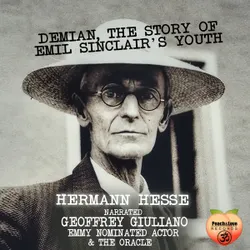
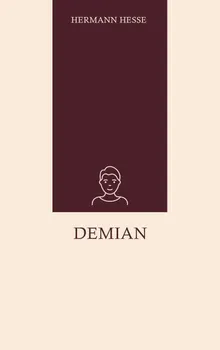
Demian by Hermann Hesse is a profound and psychologically rich novel that explores the turbulent journey from childhood innocence to spiritual and intellectual awakening. First published in 1919, this timeless coming-of-age story delves into themes of identity, self-discovery, duality, and the search for authentic individuality in a world bound by convention.

The novel follows Emil Sinclair, a sensitive and introspective young boy raised in a sheltered, morally upright household. From an early age, Sinclair perceives the world as divided into two realms: one of light, order, and goodness represented by his family, and another of darkness, chaos, and forbidden desire that both frightens and fascinates him. His life begins to shift dramatically when he meets the enigmatic and charismatic Max Demian, a fellow student who challenges Sinclair's conventional understanding of morality, religion, and destiny.

Demian introduces Sinclair to a new way of thinking—one that questions accepted beliefs and encourages him to embrace both the light and shadow within himself. Through this transformative friendship, Sinclair begins a profound inner journey. He wrestles with guilt, temptation, love, loneliness, and the longing to discover his true self. Along the way, he encounters influential figures and symbolic experiences that push him further toward spiritual awakening.

At its core, Demian is a deeply philosophical novel influenced by Carl Jung's analytical psychology. It examines the idea that true growth requires breaking free from societal expectations and confronting one's inner contradictions. Hesse weaves powerful symbolism throughout the narrative, including the motif of the sparrow hawk breaking free from its shell—an image that represents the painful yet necessary destruction of old identities to allow rebirth into a higher state of consciousness.

Set against the backdrop of pre–World War I Europe, the novel also captures the generational unrest and shifting cultural values of the time. Yet its message remains strikingly relevant today. Sinclair's struggle mirrors the universal human quest for meaning, belonging, and authenticity in a complex world.

Lyrical, introspective, and deeply spiritual, Demian speaks to readers who have ever felt divided between who they are and who they are expected to be. It is a novel about courage—the courage to question, to break away, and ultimately, to become oneself.

Both a philosophical exploration and an intimate portrait of personal transformation, Demian continues to resonate as a powerful testament to the lifelong journey of self-realization.
Commencez ce livre dès aujourd'hui pour 0 €

  • Accédez à tous les livres de l'app pendant la période d'essai
  • Sans engagement, annulez à tout moment
Essayer gratuitement
Plus de 52 000 personnes ont noté Nextory 5 étoiles sur l'App Store et Google Play.

Plus de Hermann Hesse

  1. Prix Nobel
    4.5

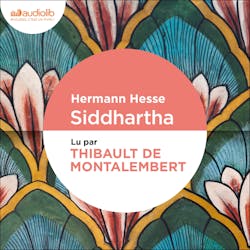
    Siddhartha

    Hermann Hesse

  2. Prix Nobel
    4.2

    Siddhartha : Préface de Jacques Brenner

    Hermann Hesse

  3. 50 Masterpieces you have to read before you die Vol: 2 [newly updated] (Golden Deer Classics)

    Lewis Carroll, Mark Twain, Jules Verne, Oscar Wilde, Golden Deer, Arthur Conan Doyle, Louisa May Alcott, Jane Austen, J.M. Barrie, B.M. Bower, Frances Hodgson Burnett, Robert William Chambers, G.K. Chesterton, Wilkie Collins, Charles Darwin, Daniel Defoe, Margaret Deland, Charles Dickens, Fyodor Dostoyevsky, Alexandre Dumas, Francis Scott Fitzgerald, E. M. Forster, Sigmund Freud, Thomas Hardy, Hermann Hesse, James Joyce, Andrew Lang, Jack London, H.P. Lovecraft, Lucy Maud Montgomery, Friedrich Wilhelm Nietzsche, Edgar Allan Poe, Marcel Proust, William Shakespeare, Robert Louis Stevenson, William Strunk Jr., Vatsyayana, H.G. Wells, Virginia Woolf

  4. 3.0

    50 Masterpieces you have to read before you die vol: 2

    Lewis Carroll, Mark Twain, Jules Verne, Oscar Wilde, Arthur Conan Doyle, Louisa May Alcott, Jane Austen, G.K. Chesterton, Wilkie Collins, Charles Dickens, Fyodor Dostoyevsky, Alexandre Dumas, F. Scott Fitzgerald, E. M. Forster, Thomas Hardy, Hermann Hesse, James Joyce, Jack London, H.P. Lovecraft, Lucy Maud Montgomery, Edgar Allan Poe, Marcel Proust, William Shakespeare, Robert Louis Stevenson, H.G. Wells, Virginia Woolf, Rudyard Kipling, D. H. Lawrence, Thomas Mann, William Somerset Maugham, Herman Melville, George Sand, Mary Shelley, Walter Scott, Leo Tolstoy, Bram Stoker

  5. Narcissus and Goldmund

    Hermann Hesse

  6. Prix Nobel
    4.2

    Siddhartha :

    Hermann Hesse

  7. 5.0

    Narcissus and Goldmund

    Hermann Hesse

  8. Prix Nobel
    3.3

    Demian, The Story Of Emil Sinclair's Youth :

    Hermann Hesse

  9. Prix Nobel
    4.0

    Siddartha

    Hermann Hesse

  10. 33 Human Science Masterpieces You Must Read Before You Die. Illustrated : The Art of Public Speaking, The Meditations, The Kama Sutra and other masterpieces

    Edwin A. Abbott, Aristotle, Dale Carnegie, Gilbert Chesterton, René Descartes, Epictetus, Marcus Aurelius Antoninus, Sigmund Freud, Hermann Hesse, David Hume, Lao Tzu, Confucius, Swami Abhedananda, Anonimous, David Herbert Lawrence, Niccolò Machiavelli, Benedictus de Spinoza, John Mill, Prentice Mulford, Thomas More, Friedrich Nietzsche, J. Allanson Picton, Plato, Sun Tzu, Vatsyayana, Voltaire, H.G. Wells, Frances Bacon

  11. 33 Masterpieces of Philosophy and Science to Read Before You Die (Illustrated) : Utopia, The Meditations, The Art of War, The Kama Sutra, Candide

    Thomas More, Marcus Aurelius Antoninus, Sun Tzu, Vatsyayana, Voltaire, Edwin A. Abbott, Aristotle, Dale Carnegie, Gilbert Keith Chesterton, René Descartes, Epictetus, Sigmund Freud, Hermann Hesse, David Hume, Lao Tzu, David Herbert Lawrence, Niccolò Machiavelli, John Mill, Prentice Mulford, Friedrich Nietzsche, Plato, Bertrand Russell, H.G. Wells, Frances Bacon

  12. 5.0

    Siddhartha

    Hermann Hesse