À propos de ce livre

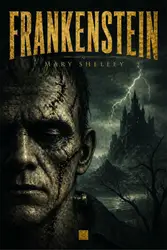
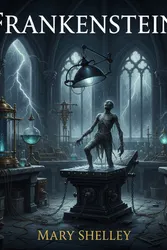
The premier monster story of English literature—a tale of science pursued to horrifying extremes

An origin story nearly as famous as the book itself: One dreary summer on the shores of Lake Geneva, amid discussions of galvanism and the occult and fireside readings from a collection of German ghost stories, Lord Byron proposed a game. Each of his guests—eighteen-year-old Mary Godwin and her future husband, the poet Percy Bysshe Shelley, among them—would try their hand at writing a tale of the supernatural. Unable at first to think of a plot, Mary was visited one sleepless night by the terrible vision of a corpse, a "hideous phantasm of a man," lurching to life with the application of some unknown, powerful force. The man responsible, a "pale student of unhallowed arts," fled in horror from his creation, leaving it to return to the dead matter from which it had been born. But the monster did not die. It followed the man to his bedside, where it stood watching him with "yellow, watery, but speculative eyes"—eyes of one who thought, and felt.

The novel that Mary Shelley would go on to publish, the legend of Victor Frankenstein and his unholy creation, and their obsessive, murderous pursuit of each other from Switzerland to the North Pole, has been the stuff of nightmares for nearly two centuries. A masterpiece of Romantic literature, it is also one of the most enduring horror stories ever written.

This ebook has been professionally proofread to ensure accuracy and readability on all devices.

Commencez ce livre dès aujourd'hui pour 0 €

  • Accédez à tous les livres de l'app pendant la période d'essai
  • Sans engagement, annulez à tout moment
Essayer gratuitement
Plus de 52 000 personnes ont noté Nextory 5 étoiles sur l'App Store et Google Play.

  1. 50 Chefs-D'œuvre Que Vous Devez Lire Avant De Mourir : Vol 1 (Golden Deer Classics)

    Mark Twain, Stendhal, Edgar Allan Poe, Victor Hugo, Gustave Flaubert, Alexandre Dumas, Arthur Conan Doyle, René Descartes, Lewis Carroll, Charles Baudelaire, Guillaume Apollinaire, Golden Deer, Alain-Fournier, Jules Amédée d'Aurevilly, Paul Bourget, Charlotte Brontë, Emily Brontë, Pierre Corneille, Nikolai Gogol, Gustave Leroux, Marquis De Sade, Jack London, Sinclair Lewis, Daniel Lesueur, Marcel Proust, Edmond Rostand, Jean-Jacques Rousseau, Mary Shelley, Bram Stoker, Sun Tzu, Rodolphe Töpffer, Vatsyayana, Jules Verne, Voltaire, H.G. Wells, Oscar Wilde, Emile Zola

  2. 4.0

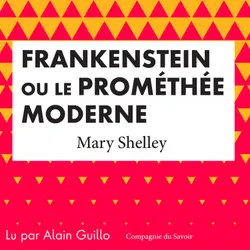
    Frankenstein ou le Prométhée moderne

    Mary Shelley

  3. 4.5

    Frankenstein ou le Prométhée moderne

    Mary Shelley

  4. 3.9

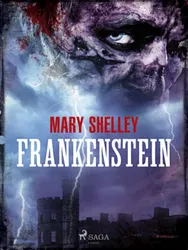
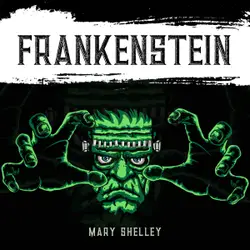
    Frankenstein

    Mary Shelley

  5. 4.3
    #1

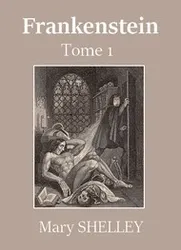
    Frankenstein ou Le Prométhée moderne (Tome 1)

    Mary Shelley

  6. Frankenstein

    Mary Shelley

  7. 4.5

    Frankenstein :

    Mary Shelley

  8. 3.9

    Frankenstein

    Mary Shelley

  9. On Ghosts : The Woman Who Wrote Frankenstein Explains Why She Still Wants to Believe in Ghosts

    Mary Shelley

  10. 100 obras maestras que debes leer antes de morir

    Francis Scott Fitzgerald, Mary Shelley, Lyman Frank Baum, Edith Nesbit, Dante Alighieri, Jane Austen, Ambrose Bierce, Emily Brontë, Edgar Rice Burroughs, Lewis Carroll, Wilkie Collins, René Descartes, Charles Dickens, Emily Dickinson, Alexandre Dumas, Gustave Flaubert, Benito Pérez Galdós, Johann Wolfgang Goethe, Thomas Hardy, E. T. Hoffmann, Washington Irving, Henry James, James Joyce, Franz Kafka, Gaston Leroux, Federico García Lorca, H.P. Lovecraft, Publio Virgilio Marón, Lucy Maud Montgomery, John William Polidori, Marco Polo, Antoine de Saint-Exupéry, Emilio Salgari, Walter Scott, Mark Twain, Jules Verne

  11. 3.0

    50 Masterpieces you have to read before you die vol: 2

    Lewis Carroll, Mark Twain, Jules Verne, Oscar Wilde, Arthur Conan Doyle, Louisa May Alcott, Jane Austen, G.K. Chesterton, Wilkie Collins, Charles Dickens, Fyodor Dostoyevsky, Alexandre Dumas, F. Scott Fitzgerald, E. M. Forster, Thomas Hardy, Hermann Hesse, James Joyce, Jack London, H.P. Lovecraft, Lucy Maud Montgomery, Edgar Allan Poe, Marcel Proust, William Shakespeare, Robert Louis Stevenson, H.G. Wells, Virginia Woolf, Rudyard Kipling, D. H. Lawrence, Thomas Mann, William Somerset Maugham, Herman Melville, George Sand, Mary Shelley, Walter Scott, Leo Tolstoy, Bram Stoker

  12. 3.9
    #8

    Frankenstein

    Mary Shelley