Évaluation de 2.0 sur 5, basée sur 1 avis
Livre audio E-book

À propos de ce livre

Sir Derek Jacobi and cast perform another Shakespeare classic which has been released for the first time as a digital download.

The play opens with the King of Navarre and three noble companions, Berowne, Dumaine, and Longaville, taking an oath to devote themselves to three years of study, promising not to give in to the company of women — Berowne somewhat more hesitantly than the others. Berowne reminds the king that the princess and her three ladies are coming to the kingdom and it would be suicidal for the King to agree to this law. The King denies what Berowne says, insisting that the ladies make their camp in the field outside of his court. The King and his men comically fall in love with the princess and her ladies.

The main story is assisted by many other humorous sub-plots. A rather heavy-accented Spanish swordsman, Don Adriano de Armado, tries and fails to woo a country wench, Jaquenetta, helped by Moth, his page, and rivaled by Costard, a country idiot. We are also introduced to two scholars, Holofernes and Sir Nathaniel, and we see them converse with each other in schoolboy Latin. In the final act, the comic characters perform a play to entertain the nobles, an idea conceived by Holofernes, where they represent the Nine Worthies. The four Lords — as well as the Ladies' manservant Boyet — mock the play, and Armado and Costard almost come to blows.

At the end of this 'play' within the play, there is a bitter twist in the story. News arrives that the Princess's father has died and she must leave to take the throne. The king and his nobles swear to remain faithful to their ladies, but the ladies, unconvinced that their love is that strong, claim that the men must wait a whole year and a day to prove what they say is true. This is an unusual ending for Shakespeare and Elizabethan comedy. A play mentioned by Francis Meres, Love's Labour's Won, is sometimes believed to be a sequel to this play
Commencez ce livre dès aujourd'hui pour 0 €

  • Accédez à tous les livres de l'app pendant la période d'essai
  • Sans engagement, annulez à tout moment
Essayer gratuitement
Plus de 52 000 personnes ont noté Nextory 5 étoiles sur l'App Store et Google Play.

  1. 3500 citations ultimes

    Marc Aurèle, Jane Austen, Beaumarchais, Napoléon Bonaparte, Bouddha, Winston Churchill, Cicéron, Confucius, Nicolas de Chamfort, Charles de Gaulle, Antoine de Saint-Exupéry, Léonard de Vinci, Denis Diderot, Fiodor Dostoïevski, Albert Einstein, Ralph Waldo Emerson, Anne Frank, Mahatma Gandhi, Emmanuel Kant, Søren Kierkegaard, Martin Luther King, Georg Christoph Lichtenberg, Abraham Lincoln, Montesquieu, Friedrich Nietzsche, Platon, Marcel Proust, Arthur Schopenhauer, William Shakespeare, – Socrate, Baruch Spinoza, Henry David Thoreau, Lao Tseu, Voltaire, Oscar Wilde

  2. 1.0

    Othello

    William Shakespeare

  3. 5.0

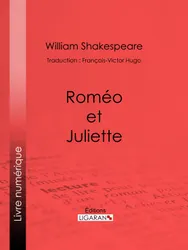
    Roméo et Juliette

    William Shakespeare

  4. 4.0

    Roméo et Juliette - Livre Audio

    William Shakespeare, Livres audio en français

  5. Roméo et Juliette

    William Shakespeare

  6. 3.4

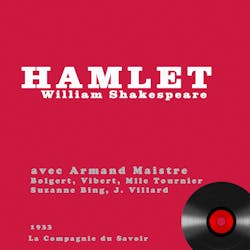
    Hamlet - Livre Audio

    William Shakespeare, Livres audio en français

  7. Roméo et Juliette

    William Shakespeare, Ligaran

  8. 4.0

    Hamlet

    William Shakespeare

  9. Macbeth

    William Shakespeare, Sheba Blake

  10. 4.7

    Le Songe d'une Nuit d'Eté

    William Shakespeare

  11. 3.8

    Hamlet

    William Shakespeare

  12. Nouveau

    50 Masterpieces you have to read before you die vol: 1

    Louisa May Alcott, Jane Austen, Honoré de Balzac, Henri Barbusse, Anne Brontë, Charlotte Brontë, Emily Brontë, Edgar Rice Burroughs, Samuel Butler, Lewis Carroll, Willa Cather, Miguel de Cervantes, Kate Chopin, John Cleland, Wilkie Collins, Joseph Conrad, Charles Dickens, Fyodor Dostoevsky, Alexandre Dumas, George Eliot, Ralph Waldo Emerson, Gustave Flaubert, E. M. Forster, H. Rider Haggard, Thomas Hardy, Nathaniel Hawthorne, Robert Heinlein, Victor Hugo, Aldous Huxley, Henry James, D. H. Lawrence, H.P. Lovecraft, Herman Melville, John Milton, Robert Musil, Vladimir Nabokov, George Orwell, Edgar Allan Poe, Marcel Proust, William Shakespeare, Mary Shelley, Leo Tolstoy