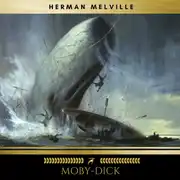
Moby-Dick

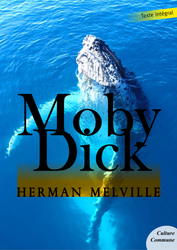
Moby-Dick; or, The Whale is a novel by American writer Herman Melville, published in 1851 during the period of the American Renaissance. Sailor Ishmael tells the story of the obsessive quest of Ahab, captain of the whaler Pequod, for revenge on Moby Dick, the white whale which on an earlier voyage destroyed his ship and severed his leg at the knee. The novel was a commercial failure and out of print at the time of the author's death in 1891, but during the 20th century its reputation as a Great American Novel was established. William Faulkner confessed he wished he had written it himself, and D. H. Lawrence called it "one of the strangest and most wonderful books in the world", and "the greatest book of the sea ever written". "Call me Ishmael" is among world literature's most famous opening sentences.

The product of a year and a half of writing, the book draws on Melville's experience at sea, on his reading in whaling literature, and on literary inspirations such as Shakespeare and the Bible. The detailed and realistic descriptions of whale hunting and of extracting whale oil, as well as life aboard ship among a culturally diverse crew, are mixed with exploration of class and social status, good and evil, and the existence of God. In addition to narrative prose, Melville uses styles and literary devices ranging from songs, poetry, and catalogs to Shakespearean stage directions, soliloquies, and asides.

À propos de ce livre

Moby-Dick; or, The Whale is a novel by American writer Herman Melville, published in 1851 during the period of the American Renaissance. Sailor Ishmael tells the story of the obsessive quest of Ahab, captain of the whaler Pequod, for revenge on Moby Dick, the white whale which on an earlier voyage destroyed his ship and severed his leg at the knee. The novel was a commercial failure and out of print at the time of the author's death in 1891, but during the 20th century its reputation as a Great American Novel was established. William Faulkner confessed he wished he had written it himself, and D. H. Lawrence called it "one of the strangest and most wonderful books in the world", and "the greatest book of the sea ever written". "Call me Ishmael" is among world literature's most famous opening sentences.

The product of a year and a half of writing, the book draws on Melville's experience at sea, on his reading in whaling literature, and on literary inspirations such as Shakespeare and the Bible. The detailed and realistic descriptions of whale hunting and of extracting whale oil, as well as life aboard ship among a culturally diverse crew, are mixed with exploration of class and social status, good and evil, and the existence of God. In addition to narrative prose, Melville uses styles and literary devices ranging from songs, poetry, and catalogs to Shakespearean stage directions, soliloquies, and asides.
Commencez ce livre dès aujourd'hui pour 0 €

  • Accédez à tous les livres de l'app pendant la période d'essai
  • Sans engagement, annulez à tout moment
Essayer gratuitement
Plus de 52 000 personnes ont noté Nextory 5 étoiles sur l'App Store et Google Play.

  1. 4.4

    Moby Dick - Livre Audio

    Herman Melville, Livres audio en français, Moby Dick

  2. 4.8

    Moby Dick

    Herman Melville

  3. Nouveau
    3.0

    50 Masterpieces you have to read before you die vol: 2

    Lewis Carroll, Mark Twain, Jules Verne, Oscar Wilde, Arthur Conan Doyle, Louisa May Alcott, Jane Austen, G.K. Chesterton, Wilkie Collins, Charles Dickens, Fyodor Dostoyevsky, Alexandre Dumas, F. Scott Fitzgerald, E. M. Forster, Thomas Hardy, Hermann Hesse, James Joyce, Jack London, H.P. Lovecraft, Lucy Maud Montgomery, Edgar Allan Poe, Marcel Proust, William Shakespeare, Robert Louis Stevenson, H.G. Wells, Virginia Woolf, Rudyard Kipling, D. H. Lawrence, Thomas Mann, William Somerset Maugham, Herman Melville, George Sand, Mary Shelley, Walter Scott, Leo Tolstoy, Bram Stoker

  4. World's Greatest Short Stories

    Daniel Defoe, Benjamin Franklin, Washington Irving, Mateo Falcone, Charlotte Bronte, Mary Shelley, Nathaniel Hawthorne, Nikolai Gogol, Edgar Allan Poe, Fyodor Dostoyevsky, Charles Dickens, Herman Melville, Mark Twain, Guy De Maupassant, Oscar Wilde, Leo Tolstoy, H.G. Wells, Ambrose Bierce, Stephen Crane, Kate Chopin, Jack London, E. M. Forster

  5. 100 Obras Maestras de la Literatura Universal : Edición enriquecida. Viaje intertemporal por iconos mundiales y el diálogo cultural histórico

    Johann Wolfgang von Goethe, Gustave Flaubert, Franz Kafka, Lewis Carroll, Sigmund Freud, Henrik Ibsen, Charles Dickens, Honoré de Balzac, Mark Twain, Immanuel Kant, Friedrich Schiller, Harriet Beecher Stowe, Oscar Wilde, Robert Louis Stevenson, Edgar Allan Poe, William Shakespeare, Dante Alighieri, Giovanni Boccaccio, Bram Stoker, Charlotte Brontë, Emily Brontë, Jack London, Henry James, Louisa May Alcott, Victor Hugo, Arthur Conan Doyle, Joseph Conrad, Jane Austen, José Rizal, Edgar Rice Burroughs, Herman Melville, Jonathan Swift, Gustavo Adolfo Bécquer, Vicente Blasco Ibáñez, Benito Pérez Galdós, Jean-Jacques Rousseau, Daniel Defoe, Pedro Calderón de la Barca, Virginia Woolf, Washington Irving, Juan Valera, Horacio Quiroga, Nathaniel Hawthorne, Charles Baudelaire, Wilkie Collins, William Makepeace Thackeray, Voltaire, Apuleius, Leopoldo Alas, John Milton, José Martí, Lope de Vega, Emilio Salgari, Francisco de Quevedo, Rubén Darío, Antonio Machado, José Zorrilla, Tirso de Molina, Emilia Pardo Bazán, Fernando de Rojas, L. Frank Baum, H.G. Wells, J.M. Barrie, H. Rider Haggard, H.P. Lovecraft, Seneca, Hans Christian Andersen, Friedrich Nietzsche, Mary Shelley, Baltasar Gracián, Sófocles, Sun Tzu, Fiódor Dostoyevski, Antón Chéjov, León Tolstoi, Tomás Moro, San Agustín, Nikolái Gógol, Julio Verne, Homero, Platón, Alejandro Dumas, Aristóteles, Hermanos Grimm, Jorge Isaacs, Ignacio De Loyola, Nicolás Maquiavelo, Miguel Cervantes, Teresa de Jesús, Alejandro Dumas hijo, Mijaíl Bakunin, Miguel De Unamuno, Duque de Rivas, Ramón María del Valle-Inclán, Federico García Lorca, Gibrán Jalil Gibrán

  6. 5.0

    Moby Dick

    Herman Melville

  7. 3.3

    Moby-Dick

    Herman Melville

  8. Moby-Dick (Best Navigation, Free AudioBook) (A to Z Classics)

    Herman Melville

  9. 4.5

    Bartleby, le scribe / Bartleby, the Scrivener : Édition bilingue: français - anglais / Bilingual Edition: French - English

    Herman Melville

  10. Résumé
    4.2

    Moby Dick

    Herman Melville

  11. 3.0

    Moby Dick

    Herman Melville