À propos de ce livre

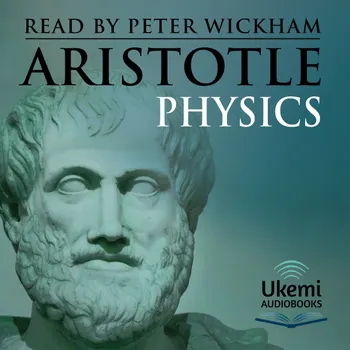
No less a figure than Bertrand Russell remarked that Aristotle’s Physics was ‘extremely influential and dominated science until the time of Galileo’. This was despite the fact that this work is as much a collection of ‘lectures on nature’ rather than dealing with the science of physics as we understand the term.

Aristotle considers ‘the principles and causes of change, or movement’ behind both animate and inanimate things. It is philosophy, not science, but over centuries affected the views of those involved in the ‘natural sciences’.

The text emerged from the Lyceum, the school founded by Aristotle, and is accepted to be a compilation of texts, some of which - but perhaps not all - is by Aristotle. Regardless of authorship, its importance is unquestioned.

It is divided into eight books (and further divided into shorter chapters) and begins with an examination into change - and Aristotle’s main ideas of matter and form. The investigative net is thrown wide to encompass infinity, causation, movement, void, time and continuity. The study concludes in book VIII (the longest book) with a consideration of the universe and its nature - eternal or finite - and questions the existence of gods, God (a Prime Mover figure?) and the continued existence of motion.

Translation: R. P. Hardie and R. K Gaye.
Commencez ce livre dès aujourd'hui pour 0 €

  • Accédez à tous les livres de l'app pendant la période d'essai
  • Sans engagement, annulez à tout moment
Essayer gratuitement
Plus de 52 000 personnes ont noté Nextory 5 étoiles sur l'App Store et Google Play.

Plus de Aristotle

  1. Nicomachean Ethics - Audiobook

    Aristotle, Classic Audiobooks

  2. Poetics : The Foundations of Storytelling and Dramatic Theory

    Aristotle, Tim Zengerink

  3. 10 Masterpieces You Have to Read Before You Die, Vol.5 : The Odyssey, The Republic, Meditations, The Divine Comedy, Faust and others

    Homer, Plato, Aristotle, Marcus Aurelius, Niccolo Machiavelli, Dante Alighieri, Johann Wolfgang von Goethe, Leo Tolstoy

  4. 500 citations pour apprendre la sagesse avec les philosophes grecs classiques

    Aristotle, Épictète, Héraclite, Platon, – Socrate

  5. 700 citations de la philosophie ancienne

    Aristotle, Marc Aurèle, Cicéron, Épictète, Héraclite, Platon, Sénèque .

  6. 33 Human Science Masterpieces You Must Read Before You Die. Illustrated : The Art of Public Speaking, The Meditations, The Kama Sutra and other masterpieces

    Edwin A. Abbott, Aristotle, Dale Carnegie, Gilbert Chesterton, René Descartes, Epictetus, Marcus Aurelius Antoninus, Sigmund Freud, Hermann Hesse, David Hume, Lao Tzu, Confucius, Swami Abhedananda, Anonimous, David Herbert Lawrence, Niccolò Machiavelli, Benedictus de Spinoza, John Mill, Prentice Mulford, Thomas More, Friedrich Nietzsche, J. Allanson Picton, Plato, Sun Tzu, Vatsyayana, Voltaire, H.G. Wells, Frances Bacon

  7. 33 Masterpieces of Philosophy and Science to Read Before You Die (Illustrated) : Utopia, The Meditations, The Art of War, The Kama Sutra, Candide

    Thomas More, Marcus Aurelius Antoninus, Sun Tzu, Vatsyayana, Voltaire, Edwin A. Abbott, Aristotle, Dale Carnegie, Gilbert Keith Chesterton, René Descartes, Epictetus, Sigmund Freud, Hermann Hesse, David Hume, Lao Tzu, David Herbert Lawrence, Niccolò Machiavelli, John Mill, Prentice Mulford, Friedrich Nietzsche, Plato, Bertrand Russell, H.G. Wells, Frances Bacon

  8. Nouveau

    The Complete Works of Aristotle

    Aristotle

  9. Nouveau

    Ethics of Aristotle

    Aristotle

  10. Nouveau

    The Poetics of Aristotle

    Aristotle

  11. The Complete Works of Aristotle

    Aristotle

  12. The Complete Works of Aristotle

    Aristotle