À propos de ce livre

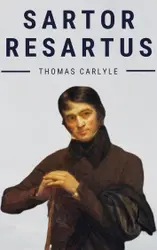
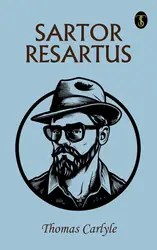
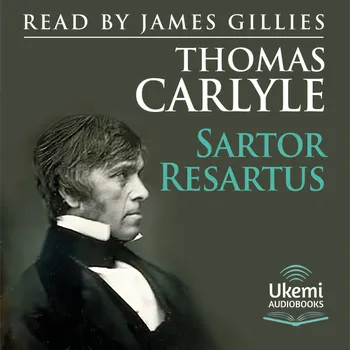
Sartor Resartus is one of the most unusual, even quirky, British novels to emerge from the first half of the 19th century. Published in 1836, its varied heritage reflects the earlier eccentricities of Sterne and Swift, curiously mixed with influences from Goethe.

Its subject matter is strange: it concerns a book called Clothes: Their Origin and Influence by one Diogenes Teufelsdröckh, a German philosopher. And though Thomas Carlyle (1795-1881) became a household name in his lifetime, especially for his essays, and his work as an historian and philosopher, his comic novel Sartor Resartus would prove to have a lasting effect on contemporary writers. American figures in particular - Emerson, Dickinson, Melville and Twain among them - acknowledged its influence.

In addition, Jorge Luis Borges was among the 20th-century writers to salute the work, which he encountered aged 17. Borges reflects: 'I read Sartor Resartus, and I can recall many of its pages; I know them by heart.' Sartor Resartus (which means 'The Tailor Re-tailored') chronicles the struggles of an unnamed editor attempting to produce an English-language edition of a publication, which, according to the man who has sent it to him, is 'a work of philosophy which has taken all Europe by storm'.

This is the book on clothes by Teufelsdröckh, with whom the editor was briefly acquainted on his travels. However, the more vigorously the editor sets himself to his task, the more thankless and perhaps impossible it proves. In frustration, he shares fragments of the translated work with his readers, in the search for some collective insight. When a biography of the author arrives, promising to bring some context to the work, the editor finds himself even further at a loss. His trust in Teufelsdröckh begins to unravel, and he becomes suspicious that nothing about this book, not even its author, is as it appears to be. Is it a work of genius? A palimpsest with a secret hidden in its depths? Or is the editor in receipt of something completely different and wholly unexpected? Sartor Resartus may now largely exist in the shadows of On Heroes, Hero-Worship, and the Heroic in History, and his account of the French Revolution, but this early novel represents an interesting phase in Carlyle’s literary output.
Commencez ce livre dès aujourd'hui pour 0 €

  • Accédez à tous les livres de l'app pendant la période d'essai
  • Sans engagement, annulez à tout moment
Essayer gratuitement
Plus de 52 000 personnes ont noté Nextory 5 étoiles sur l'App Store et Google Play.

Plus de Thomas Carlyle

  1. Nouveau

    The Life of Friedrich Schiller : A Study of Genius and Perseverance

    Thomas Carlyle

  2. Sartor Resartus : And On Heroes, Hero-Worship, and the Heroic in History

    Thomas Carlyle

  3. Harvard Classics : The Five-Foot Shelf of Books

    Aesop, Dante Alighieri, Hans Christian Andersen, Augustine of Hippo, Marcus Aurelius, Jane Austen, Francis Bacon, Honoré de Balzac, Francis Beaumont, Bjørnstjerne Bjørnson, Thomas Browne, Robert Browning, John Bunyan, EDMUND BURKE, Robert Burns, Lord Byron, Thomas Carlyle, Benvenuto Cellini, Miguel de Cervantes, Marcus Tullius Cicero, Richard Henry Jr., Charles Darwin, Alphonse Daudet, Thomas Dekker, Charles Dickens, Fyodor Dostoevsky, John Dryden, Charles W. Eliot, George Eliot, Ralph Waldo Emerson, Epictetus, John Fletcher, Theodor Fontane, Benjamin Franklin, Johann Wolfgang Goethe, Oliver Goldsmith, Jacob Grimm, Edward Everett Hale, Bret Harte, Nathaniel Hawthorne, Homer, Victor Hugo, Washington Irving, Henry James, Ben Jonson, Gottfried Keller, Thomas à Kempis, Alexander L. Kielland, Martin Luther, Niccolò Machiavelli, Alessandro Manzoni, Christopher Marlowe, Philip Massinger, Guy De Maupassant, John Stuart Mill, John Milton, Thomas More, William Morris, Alfred de Musset, William Allan Neilson, William Penn, Plato, Pliny the Younger, Plutarch, George Sand, Percy Bysshe Shelley, Richard Brinsley Sheridan, Adam Smith, Laurence Sterne, Theodor Storm, William Makepeace Thackeray, Leo Tolstoy, Ivan Turgenev, Mark Twain, Juan Valera, Virgil, Izaak Walton, John Webster, John Woolman

  4. The French Revolution

    Thomas Carlyle

  5. The Gift of Friendship : What the Wisest Minds Said About Our Deepest Bonds Across Two Thousand Years

    Alfred H. Hyatt, Henry David Thoreau, Thomas Carlyle, Henry Mackenzie, Oliver Goldsmith, Samuel Johnson, George Berkeley, Richard Steele, Joseph Addison, Francis Bacon, Michel de Montaigne, Anthusa, Aristotle

  6. Sartor Resartus

    Thomas Carlyle

  7. Sartor Resartus

    Thomas Carlyle

  8. History of Friedrich II of Prussia Frederick The Great Volume IV

    Thomas Carlyle

  9. History of Friedrich II of Prussia Frederick The Great Volume I

    Thomas Carlyle

  10. History of Friedrich II of Prussia Frederick The Great Volume XIII

    Thomas Carlyle

  11. History of Friedrich II of Prussia Frederick The Great Volume XX

    Thomas Carlyle