Second Treatise of Government :

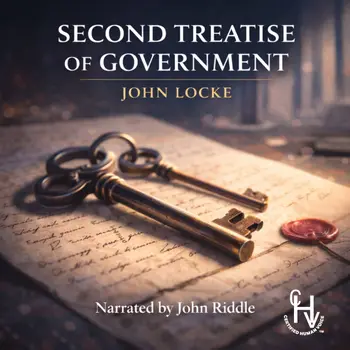
"Second Treatise of Government" by John Locke is a political philosophy work published in 1689. Writing anonymously during England's turbulent revolution, Locke outlines a radical vision of society founded on natural rights and government by consent rather than divine authority. His ideas challenge the established order, arguing that legitimate power flows from the people, not kings claiming God-given rule. This foundational text of liberal political theory emerged from dangerous conspiracies and exile, so controversial that Locke never acknowledged authorship during his lifetime.
Commencez ce livre dès aujourd'hui pour 0 €

  • Accédez à tous les livres de l'app pendant la période d'essai
  • Sans engagement, annulez à tout moment
Essayer gratuitement
Plus de 52 000 personnes ont noté Nextory 5 étoiles sur l'App Store et Google Play.

  1. 1800 Citations de philosophes

    Aristote, Épicure, Platon, Thalès de Milet, – Socrate, Protagoras, Anaximandre, Épictète, Héraclite, Marc Aurèle, René Descartes, Michel de Montaigne, Alexis de Tocqueville, Voltaire, Charles De Montesquieu, Jean-Jacques Rousseau, Emmanuel Kant, Hannah Arendt, Gottfried Wilhelm Leibniz, Georg Wilhelm Friedrich Hegel, Friedrich Nietzsche, Arthur Schopenhauer, David Hume, John Locke, Francis Bacon, Thomas Hobbes, Thomas More, Confucius, Érasme, Lao Tseu, Baruch Spinoza, Søren Kierkegaard, Nicolas Machiavel, Thomas d'Aquin, Henry David Thoreau

  2. 250 citations de philosophes anglais

    David Hume, John Locke, Francis Bacon, Thomas Hobbes, Thomas More

  3. 3.0

    Two Treatises of Government

    John Locke

  4. Second Treatise of Government

    John Locke

  5. 50 citations de John Locke

    John Locke

  6. An Essay Concerning Human Understanding (Vol. 1) : Exploring Empiricism and the Philosophy of Mind by John Locke

    John Locke

  7. Muutamia mietteitä kasvatuksesta

    John Locke

  8. 50 Meisterwerke der Philosophie : Metaphysik, Das Gastmahl, Bhagavadgita, Tractatus logico-philosophicus, Kritik der reinen Vernunft, Also sprach Zarathustra, Selbstbetrachtungen von Marcus Aurelius

    Ludwig Wittgenstein, Edmund Husserl, Karl Marx, Søren Kierkegaard, Friedrich Nietzsche, Ralph Waldo Emerson, John Stuart Mill, Georg Wilhelm Friedrich Hegel, Friedrich Schelling, Johann Gottlieb Fichte, Immanuel Kant, John Locke, Montesquieu, Jean-Jacques Rousseau, David Hume, Gottfried Wilhelm Leibniz, Baruch Spinoza, - Konfuzius, Lao Tse, Platon, Xenophon, - Aristoteles, Marcus Tullius Cicero, Seneca, Epiktet, Marc Aurel, Plotin, Thomas von Aquin, Nicolaus von Cues, - Erasmus von Rotterdam, Niccolò Machiavelli, Tommaso Campanella, Martin Luther, Giordano Bruno, Samuel von Pufendorf, Abbé Castel de Saint-Pierre, Michel de Montaigne, René Descartes, Francis Bacon, Blaise Pascal

  9. Die größten Philosophen der Aufklärung : Neues Organon, Kritik der reinen Vernunft, Der Gesellschaftsvertrag, Candide, Monadologie, Mathematische Principien der Naturlehre

    Jean-Jacques Rousseau, Voltaire, Denis Diderot, David Hume, Johann Gottfried Herder, John Locke, Thomas Hobbes, Benjamin Franklin, Francis Bacon, Immanuel Kant, Montesquieu, Baruch Spinoza, Isaac Newton, Freiherr von Gottfried Wilhelm Leibniz, René Descartes

  10. Philosophie der Aufklärung : Die wichtigsten Werke von Immanuel Kant, John Locke, Rousseau, Voltaire, Denis Diderot, David Hume, Leibniz, Johann Gottfried Herder

    Johann Gottfried Herder, Montesquieu, David Hume, Denis Diderot, Jean-Jacques Rousseau, John Locke, Thomas Hobbes, Benjamin Franklin, Francis Bacon, Immanuel Kant, Baruch Spinoza, Isaac Newton, Freiherr von Gottfried Wilhelm Leibniz, Voltaire, René Descartes

  11. Gesammelte Werke von John Locke : Bereicherte Ausgabe. Brief über die Toleranz + Ein Versuch über den menschlichen Verstand + Gedanken über Erziehung

    John Locke