ou

Trouvez une histoire immédiatement

  1. 50 Chefs-D'œuvre Que Vous Devez Lire Avant De Mourir : Vol 1 (Golden Deer Classics)

    Mark Twain, Stendhal, Edgar Allan Poe, Victor Hugo, Gustave Flaubert, Alexandre Dumas, Arthur Conan Doyle, René Descartes, Lewis Carroll, Charles Baudelaire, Guillaume Apollinaire, Golden Deer, Alain-Fournier, Jules Amédée d'Aurevilly, Paul Bourget, Charlotte Brontë, Emily Brontë, Pierre Corneille, Nikolai Gogol, Gustave Leroux, Marquis De Sade, Jack London, Sinclair Lewis, Daniel Lesueur, Marcel Proust, Edmond Rostand, Jean-Jacques Rousseau, Mary Shelley, Bram Stoker, Sun Tzu, Rodolphe Töpffer, Vatsyayana, Jules Verne, Voltaire, H.G. Wells, Oscar Wilde, Emile Zola

  2. 4.2

    Dracula

    Bram Stoker

  3. Nouveau

    50 Masterpieces you have to read before you die vol: 1

    Joseph Conrad, D. H. Lawrence, George Eliot, Leo Tolstoy, James Joyce, Charles Dickens, Jane Austen, Bram Stoker, Oscar Wilde, Louisa May Alcott, Honoré de Balzac, Edgar Rice Burroughs, Anne Brontë, Charlotte Brontë, Emily Brontë, Lewis Carroll, Willa Cather, Miguel de Cervantes, E. E. Cummings, Fyodor Dostoyevsky, Daniel Defoe, Arthur Conan Doyle, Alexandre Dumas, Gustave Flaubert, Henry James, Victor Hugo

  4. 4.0

    Dracula

    Bram Stoker

  5. 4.1

    Dracula

    Bram Stoker

  6. 4.1

    Dracula

    Bram Stoker

  7. 4.2

    Dracula

    Bram Stoker

  8. 4.1

    Dracula

    Bram Stoker

  9. 4.2

    Dracula : Enriched edition.

    Bram Stoker

  10. 3.3

    Dracula

    Bram Stoker

  11. Nouveau
    3.0

    50 Masterpieces you have to read before you die vol: 2

    Lewis Carroll, Mark Twain, Jules Verne, Oscar Wilde, Arthur Conan Doyle, Louisa May Alcott, Jane Austen, G.K. Chesterton, Wilkie Collins, Charles Dickens, Fyodor Dostoyevsky, Alexandre Dumas, F. Scott Fitzgerald, E. M. Forster, Thomas Hardy, Hermann Hesse, James Joyce, Jack London, H.P. Lovecraft, Lucy Maud Montgomery, Edgar Allan Poe, Marcel Proust, William Shakespeare, Robert Louis Stevenson, H.G. Wells, Virginia Woolf, Rudyard Kipling, D. H. Lawrence, Thomas Mann, William Somerset Maugham, Herman Melville, George Sand, Mary Shelley, Walter Scott, Leo Tolstoy, Bram Stoker

  12. 50 Masterpieces You Have to Read : Volume Two - A Second Library of World Literature

    Joseph Sheridan Fanu, Madame de Fayette, Jerome K Jerome, James Joyce, Charles Kingsley, Rudyard Kipling, Pierre Choderlos Laclos, D. H. Lawrence, Matthew Gregory Lewis, Sinclair Lewis, Jack London, H.P. Lovecraft, Thomas Mann, W. Somerset Maugham, Guy De Maupassant, Herman Melville, Edgar Allan Poe, Marcel Proust, Ann Radcliffe, Samuel Richardson, George Sand, Walter Scott, Mary Shelley, Henryk Sienkiewicz, May Sinclair, Upton Sinclair, Stendhal, Laurence Sterne, Robert Louis Stevenson, Bram Stoker, Harriet Beecher Stowe, Jonathan Swift, Rabindranath Tagore, William Makepeace Thackeray, Leo Tolstoy, Anthony Trollope, Ivan Turgenev, Mark Twain, Jules Verne, Lew Wallace, H.G. Wells, Rebecca West, Edith Wharton, Oscar Wilde, Cao Xueqin, Émile Zola

À propos de ce livre

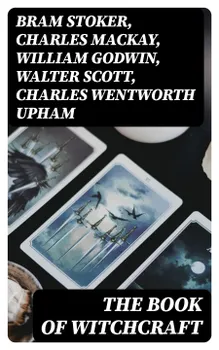
The Book of Witchcraft is a rich tapestry of narratives, essays, and historical accounts that collectively explore the multifaceted phenomenon of witchcraft through an array of literary styles. It seamlessly blends folklore, sociology, and cultural analysis to unveil the haunting allure and societal fears surrounding witches across centuries. In this anthology, readers encounter spellbinding tales and meticulous historical recollections that reveal the pervasive influence of witchcraft in literature and history. Some pieces stand out for their vivid storytelling and critical insight, offering a lush panorama of themes such as power, subversion, and the supernatural. The anthology gathers works from an impressive roster of authors, including Bram Stoker, Walter Scott, and Margaret Murray, who each contribute to a complex dialogue on witchcraft's role in shaping cultural and historical paradigms. These writers, with origins and perspectives rooted in various literary, cultural, and historical traditions, enrich the reader's understanding of witchcraft's diverse interpretations. The collection not only aligns with periods such as the Romantic and Gothic movements but also draws from the Enlightenment's quest for truth, thereby representing the zeitgeist of different eras while maintaining a cohesive thematic focus. As an essential compendium for those intrigued by the occult, The Book of Witchcraft offers a unique opportunity to explore a multiplicity of perspectives and styles within a single volume. This anthology provides invaluable educational insights and encourages a thoughtful examination of how witchcraft has been perceived and portrayed across time. By engaging with the storied past and nuanced interpretations these works present, readers will find themselves invited into an enriching dialogue that transcends the pages, sparking intellectual curiosity and an appreciation for the intricate dance between myth and reality.