3.5(4)

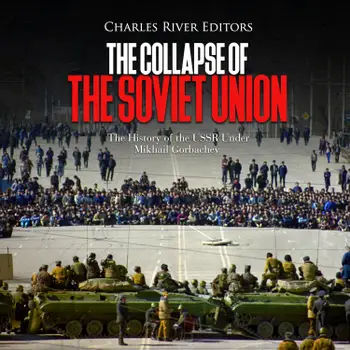
The Collapse of the Soviet Union: The History of the USSR Under Mikhail Gorbachev

The Cold War moved into one of its most dangerous phases after Brezhnev’s death as both sides deployed nuclear weapons within alarming proximity in Europe. A NATO exercise, “Operation Able Archer,” almost led to a Soviet miscalculation, and when the Soviets shot down a South Korean airliner in September 1983, claiming it had strayed into Soviet airspace, the Cold War became very tense indeed.

After going through three elderly leaders in three years, Mikhail Gorbachev was chosen as the new General Secretary at the relatively youg age of 54 in March 1985. Gorbachev hoped to build the Soviet economy to relieve the persistent shortages of consumer goods it faced, which were caused by enormous military spending of the Soviet Union. Gorbachev tried to introduce some economic reforms, but they were blocked by communist hardliners. Gorbachev then came to the belief that the Soviet economy could not improved without political reform as well. Limited political reforms, such as broadcasting uncensored debates in which politicians openly questioned government policy, backfired when they energized eastern European opposition movements which began to overthrow their communist governments in 1989. Gorbachev was unwilling to reoccupy these eastern European nations and use the Soviet army to put down these revolts.

In comparison with other Soviet leaders, Gorbachev was leader of the USSR for a relatively short period, but the changes that took place under his leadership were monumental, including some that were intended and others that were unforeseen. Gorbachev oversaw the end of the Cold War and the peaceful transition away from communism in Central and Eastern Europe, and he ended the war in Afghanistan and many other proxy conflicts in the developing world.

Commencez ce livre dès aujourd'hui pour 0 €

  • Accédez à tous les livres de l'app pendant la période d'essai
  • Sans engagement, annulez à tout moment
Essayer gratuitement
Plus de 52 000 personnes ont noté Nextory 5 étoiles sur l'App Store et Google Play.

  1. Nouveau

    The Janissaries and Sipahi: The History of the Elite Infantry and Cavalry that Fueled the Ottoman Empire’s Expansion

    Charles River Editors

  2. Nouveau

    Ancient Egyptian Language and Writing: The History and Legacy of Hieroglyphs and Scripts in Ancient Egypt

    Charles River Editors

  3. Nouveau

    Germany vs. Great Britain in the Air: The History of the Enemy Air Forces in World War I and World War II

    Charles River Editors

  4. Nouveau

    Napoleon Bonaparte’s Most Decisive Land Battles: The History of Austerlitz, the French Invasion of Russia, Leipzig, and Waterloo

    Charles River Editors

  5. Nouveau

    The Biggest Tank Battles of the World Wars: Tank Warfare in History’s Deadliest Conflicts

    Charles River Editors

  6. Nouveau

    The History and Legacy of the Greatest Battles of the Napoleonic Wars

    Charles River Editors

  7. Nouveau

    World War II in 1940: The History of the Fighting that Culminated with the German Conquest of Western Europe and the Battle of Britain

    Charles River Editors

  8. Nouveau

    The Mosque-Cathedral of Córdoba and Mosque of Cristo de la Luz: The History the Moors’ Most Famous Mosques in Spain

    Charles River Editors

  9. Nouveau

    The Biggest Battles of the Pacific Theater: The History of the Decisive Campaigns that Led to Victory Over Japan in World War II

    Charles River Editors

  10. Nouveau
    3.0

    The Triassic Period: The History and Legacy of the Geologic Era that Witnessed the Rise of Dinosaurs

    Charles River Editors

  11. Nouveau

    The Cretaceous Period: The History and Legacy of the Geologic Era that Ended with the Extinction of Dinosaurs

    Charles River Editors

  12. Nouveau

    Papa Doc and Baby Doc Duvalier: The Lives and Legacies of Haiti’s Most Notorious Rulers

    Charles River Editors